Tag: First Timers

  • Skin Clinics In Seoul: How To Choose Safely And The Red Flags

    Skin Clinics In Seoul: How To Choose Safely And The Red Flags

    TL;DR

    To choose a skin clinic in Seoul safely, check that a licensed doctor, ideally a certified dermatology specialist, consults you in person, get the price in writing before treatment, and never book through an unregistered broker. You can verify registered medical facilitators on medicalkorea.or.kr or call the Medical Korea Support Center on 1577-7129.

    Last checked: 16 Oct 2026 What is a Beep Check?

    Picture your first afternoon in Gangnam: every second building has a clinic sign, someone in a group chat has sent you a “special price”, and your flight home is in four days. This guide is for that moment.

    Sunbae Says: Read the sign. In Korea, “피부과의원” in the clinic’s name signals a dermatology specialist. “진료과목: 피부과” in small print usually means the doctor is not one.

    This is general information, not medical advice. I will not name, rank or recommend any clinic, and we never take commissions from clinics or hospitals.

    Why This Matters More Than Ever

    Skin is now Korea’s biggest medical tourism draw by far. Of the 2.01 million foreign patients in 2025, about 1.31 million, or 62.9%, came for dermatology, and 87.2% of all foreign patients were treated in Seoul, according to Ministry of Health and Welfare figures reported by Korea Biomedical Review.

    That boom brings crowding, fast turnover and people trying to profit from confused visitors. The good news is that Korea has real safeguards. You just need to know where they are.

    How To Tell A Specialist From A General Doctor

    Here’s what most visitors miss: under Korean medical law, any licensed doctor can perform cosmetic procedures, whatever their specialty. General practitioners without a specialty are estimated at about 10% of Korea’s doctors.

    The sign is your first clue. As Uisinmun reported from the Korean Dermatological Association’s guidance (in Korean), a specialist clinic’s name reads “OO피부과의원”. A nonspecialist listing skin treatment must show it as “진료과목: 피부과” (treatment area: dermatology), in letters no larger than half the size of the clinic name, a rule under the Medical Service Act’s enforcement rules that Joongbu Ilbo confirmed in May 2026 (in Korean). The article also points to the certification mark of the Korean Dermatologists Association (대한피부과의사회) at the entrance.

    A change is coming. The Hankook Ilbo reported in June 2026 (in Korean) that the health ministry expects to amend the Medical Service Act’s enforcement rules by the end of 2026 so that newly opened or relocated clinics run by general practitioners can no longer show specialties like dermatology on their signs. Existing clinics keep their signs, and window advertising can still list specialties, so the confusion will be around for years.

    A nonspecialist is not automatically unsafe. But you deserve to know who is holding the laser, so ask.

    Pick Your Route In

    Route Best For Cost Risk My Take
    Book direct after checking the doctor Most visitors Lowest: written price from the clinic itself My pick. Consultation first, decision the next day
    Registered facilitator (agency) Complex plans, language help Agency margin on top Fine if it’s in the Medical Korea directory and the clinic issues the receipt
    Listings on beauty booking platforms Comparing options Prices shown may not include extras Useful for research; still confirm the doctor and the written quote
    A broker in your DMs or a group chat Nobody Highest Skip it. No registration, no protection

    The 2026 Rules On Price

    Prices must be disclosed. Article 45 of the Medical Service Act (in Korean) requires clinics to tell patients the cost of treatments not covered by national insurance, and bars them from charging more than the price they disclosed. Almost everything cosmetic falls into that noncovered category. Ask for the itemised price in writing before anyone touches your face.

    The tax refund is gone. From 2016, foreign patients could reclaim the 10% VAT on many cosmetic treatments. The Korea Herald reported that the scheme ended on 31 December 2025. Bills to bring it back have been introduced, Hankyung reported (in Korean), but none had passed as of mid October 2026.

    Heads Up: Some clinic and agency pages, and even some official information pages, still mention a cosmetic tax refund. It ended on 31 December 2025. If a pitch includes “and you get the tax back”, it’s out of date or misleading.

    Offers Worth Knowing

    I don’t pass on clinic deals, and I never will. The honest list of “offers” is short: the written price a clinic must disclose is your protection, Medical Korea’s consultation and the national dispute agency’s free phone advice are there when things go wrong, and paying by card to the clinic itself leaves a paper trail.

    The Red Flags

    After more than 20 years in Seoul, these are the signals I’d walk away from:

    1. You never meet the doctor. A consultant or coordinator explains everything and the doctor appears only for the procedure, or not at all.
    2. Same day pressure. “This price is only for today” is a sales line, not medical advice.
    3. A broker in your DMs. Al Jazeera found foreign patients relying on open chat groups and forums for facilitators who often lacked the required registration. Reports of illegal patient solicitation rose from 11 cases in 2021 to 59 in 2023.
    4. Cash to a third party. Payment should go to the clinic, with a receipt in the clinic’s name.
    5. A verbal price only. No written, itemised quote means no protection under the disclosure rules.
    6. Free treatment for content. Al Jazeera reviewed a contract requiring an influencer to post promotional content before the results were known.
    7. No written consent or aftercare plan. You should leave knowing what was done, what to expect and who to call.
    8. A procedure squeezed in before your flight. Ask the doctor about flying, sun and swelling, and leave recovery days in your plan.

    Heads Up: A deposit sent to a stranger’s bank account or a messaging app “to hold your slot” is the oldest trick going. Pay the clinic, in person, by card, after you have the written quote.

    What Locals Know

    Most of the market isn’t run by dermatologists. A 2026 Korean trade press series found that 46% of Korea’s aesthetic clinic revenue comes from clinics run by general practitioners and only 19% from dermatology specialist clinics, Medical Times reports (in Korean). A Korean doctor quoted in the piece warns that as nonspecialist procedures grow, side effects are rising and not always discussed. That’s why the sign check matters.

    Koreans compare prices on a government site. The Health Insurance Review and Assessment Service published prices for 753 noncovered items at 74,449 medical institutions on 3 Sep 2026, on hira.or.kr and its 건강e음 app (both in Korean). Not every cosmetic treatment is on that list, but if yours is, you’ll see what clinics actually charge.

    The crackdown is real. On 18 May 2026, prosecutors, police, the health ministry and four other agencies formed a 30 person joint task force against illegal “phantom clinics” run by nonmedical people, Seoul Economic Daily reports. Since 2009, 1,805 illegal institutions have been caught.

    Late hours are part of the business model. Medical Times counted 176 of 261 network clinic branches in Seoul and Gyeonggi and notes that clinics under revenue pressure readily open at night. Late hours suit your itinerary, but a rushed 9pm consult is still a rushed consult.

    Pick Your Version

    If It’s Your First Time. In Korea, that is. I’d keep any treatment out of the first two days while you find your feet, and never book anything from abroad through a stranger online. My Start Here hub covers the travel basics, including the e-Arrival Card you’ll need before you land.

    If You’re Travelling Solo. Bring your questions written down in English and, with Papago from my Korea travel apps guide, in Korean. Take the written quote back to your hotel before deciding. My solo Seoul guide has ideas for the evening after, when you should be resting, not partying.

    If You’re Here For A Reset. Wellness in Seoul doesn’t have to be clinical. A temple evening, a park walk from the city’s Seoul Wellness 100 or a traditional soak from my jjimjilbang guide may be the reset you wanted. Just don’t soak or sauna straight after a skin procedure without the doctor’s okay. More ideas in The Reset.

    Sunbae’s Picks

    My rule for any clinic visit: consultation first, decision the next day. The written quote travels back to your hotel with you.

    My one question: “피부과 전문의세요?” (Are you a dermatology specialist?). A good clinic will answer happily.

    What I’d check before booking any agency: its name in the Medical Korea registered facilitators directory. Two minutes, and it filters out a lot of noise.

    What I’d skip: anything booked in the last 48 hours of a trip. In late autumn you’ll also be out in cold, dry wind, which my what to wear guide plans for; ask your doctor how that affects aftercare.

    What’s Changing In 2026

    The system is scaling up fast. From 1 October 2026, 112 certified medical institutions and agencies can use a fast track route with three day electronic visa processing for foreign patients, and medical visas issued through certified channels rose 40% year on year to 9,804, The Korea Times reported. The aim is to spread medical tourism beyond Seoul. My read: more choice outside the capital, but the same checks apply everywhere.

    Enforcement is tightening. The phantom clinic task force and the sign rule change expected from the end of 2026 both point one way. The fastest safeguard is still in your hands: ask, check, get it in writing.

    The Safeguards You Can Use

    Korea has required medical institutions and agencies that attract foreign patients to register with the Ministry of Health and Welfare since 2009. Medical Korea listed 3,114 registered institutions and 1,927 registered agencies as of March 2025; registered providers must carry malpractice liability insurance, required since 2016. Unregistered brokering can bring up to three years in prison or a 30 million won fine, and the government offers rewards of up to 10 million won (about US$8,000) for reports of illegal brokers.

    Use these:

    • Medical Korea (medicalkorea.or.kr): verify registered facilitators and look up registered institutions.
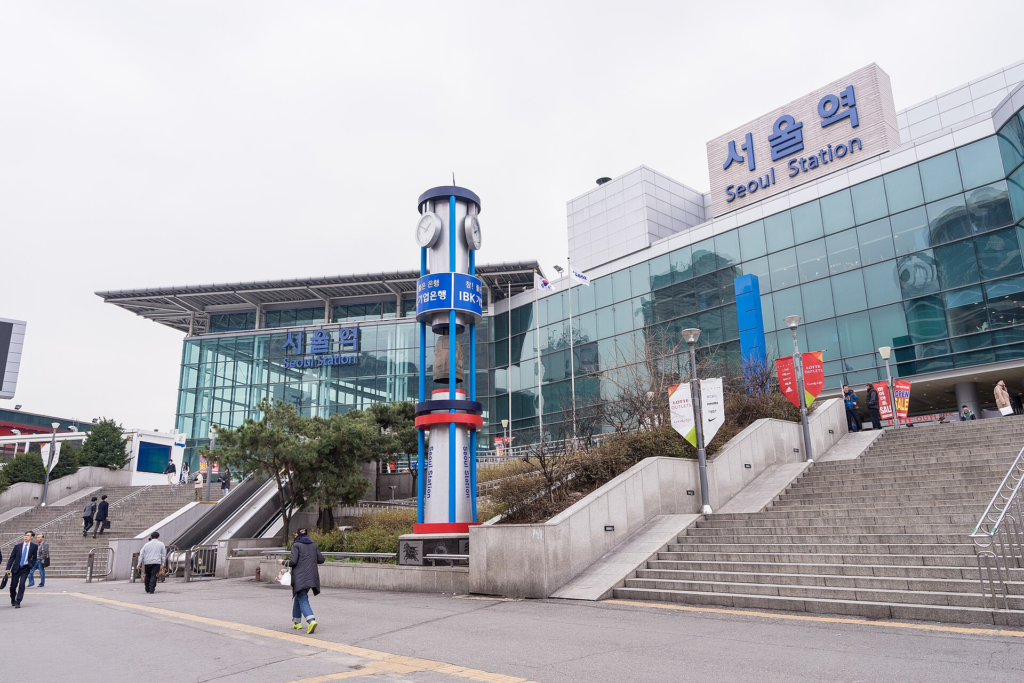
    • Medical Korea Support Center: 1577-7129 (+82-2-1577-7129 from abroad). The Seoul Information Center is on B2 at Seoul Station, on the Airport Railroad (blue) (AREX, blue) level, daily 9am to 6pm, in English, Chinese, Japanese and Korean. It handles complaints and medical dispute consultations.
    • Korea Medical Dispute Mediation and Arbitration Agency: the national dispute agency offers free phone consultation on weekdays, 9am to 6pm, in Korean, English and Chinese (+82-2-1670-2545).
    • medicalkorea.or.kr/kmediwatch/en: Medical Korea’s channel for reporting suspicious brokers.

    If you’re also considering a checkup, the same checks apply; see my guide to health checkups for foreigners.

    Worth It / Skip It

    Worth It: Booking a consultation first, meeting the doctor, taking the written quote back to your hotel and deciding the next day.

    Skip It: “Package deals” arranged over Instagram or messaging apps by someone who can’t show registration on Medical Korea.

    Skip It: Chasing the lowest price in the neighbourhood. The cheapest offer is often cheapest because someone is cutting a corner you can’t see.

    Word Of The Stop

    전문의 (jeonmunui): specialist doctor. Ask “피부과 전문의세요?” (pibugwa jeonmunuiseyo?), meaning “Are you a dermatology specialist?”


    Map And Directions

    1. 1
      Medical Korea Support Center, Seoul Information Center (Seoul Station) 메디컬코리아 서울 안내센터 (서울역)Area pin
      ASeoul StationB2, Airport Railroad level (check Naver Map for the nearest exit)

      Daily 9am to 6pm; English, Chinese, Japanese, Korean; complaints and medical dispute consultations; 1577-7129

    2. 2
      Medical Korea desk, Incheon Airport Terminal 1 메디컬코리아 인천공항 안내센터
      Incheon Int'l Airport Terminal 1 Station1F arrivals near Gate 7

      Daily 9am to 9pm; adds Russian; check a facilitator before you leave the airport

    Your Tickets

    AREX공항철도
    Incheon Airport Terminal 1→Seoul Station
    Timeabout 1 hour on the all stop train
    FarePay with T-money (check the fare at the gate)
    The Seoul Information Center is on the B2 Airport Railroad level
    SEOUL SUNBAE829-1승차권

    Last Mile

    • Gangnam Station → Seoul Station check Naver Map
    Get the map appsNNaver Map App Store Google PlayKKakaoMap App Store Google PlayBoth work in English. With the app installed, the Naver Map and KakaoMap buttons open directions straight to the pin.

    Tap a button to open directions on your phone. In Korea, Naver Map and KakaoMap give full walking directions; Google Maps covers subway and bus but, as of September 2026, still has no turn by turn walking or driving here. Pins marked “Area pin” show a neighbourhood, not a door.

    Frequently Asked Questions

    How Do I Know If A Seoul Skin Clinic Is Run By A Dermatologist?

    Look for “피부과의원” in the clinic’s name and the Korean Dermatologists Association (대한피부과의사회) certification mark at the entrance, and ask to see the doctor’s specialist credentials. “진료과목: 피부과” in small print usually means a nonspecialist.

    Can Foreigners Still Get A Tax Refund On Skin Treatments In Korea?

    No. The VAT refund for foreign patients on cosmetic procedures ended on 31 December 2025 and was not renewed. Bills to revive it are pending in the National Assembly, so check again before you travel.

    Is It Safe To Book A Skin Clinic Through An Agency?

    Only if the agency is registered. Check it on medicalkorea.or.kr or call 1577-7129. Unregistered brokering of foreign patients is illegal in Korea.

    What Should I Do If Something Goes Wrong After A Procedure?

    Contact the clinic first and keep every receipt and document. For complaints or disputes, call the Medical Korea Support Center on 1577-7129 or the national dispute agency on +82-2-1670-2545. For anything urgent, call 119.

    Next Stop

    Resources

    • Medical Korea registered facilitators: check any agency before you pay.
    • Medical Korea Support Center: 1577-7129, or +82-2-1577-7129 from abroad; Seoul Station B2, daily 9am to 6pm.
    • Korea Medical Dispute Mediation and Arbitration Agency: +82-2-1670-2545, weekdays 9am to 6pm.
    • 119: emergencies. 1330: Korea Travel Hotline, English interpretation, 24 hours.
    • Papago: translate your questions and the written quote.

    How I Checked This

    On 16 Oct 2026 I rechecked the registration figures, insurance rule, penalties and reward on Medical Korea, the patient statistics against Korea Biomedical Review, the VAT refund end against The Korea Herald and the revival bills against Hankyung, the sign rule against the Hankook Ilbo and Joongbu Ilbo, the task force against Seoul Economic Daily, the fast track change against The Korea Times, the dispute agency on its English site, and the market split and price disclosure figures in Korean trade press and Korean search results. The 10% general practitioner estimate comes from Korean press rather than an official dataset.

    Sources


    Written by your sunbae. Over 20 years in Korea. We learned the lessons the hard way, so you don’t have to, and we’re here to guide you and help you enjoy Korea. Every fact here is checked against official sources and, wherever possible, on the ground.

    Beep Check: verified 16 Oct 2026. Rules, prices and dates change; confirm with the official source before you travel.

    Seoul Sunbae never takes commissions from clinics or hospitals. This is general information, not medical advice.
  • The Unglamorous Guide: Toilets, Trash And Recycling In Korea

    The Unglamorous Guide: Toilets, Trash And Recycling In Korea

    TL;DR

    Public toilets in Korea are free, common and mostly clean. Almost every Seoul subway station has one, and since 1 January 2018 the rule in public restrooms has been to flush your toilet paper, not bin it. The harder part is rubbish: street bins are scarce, so carry your trash until you find one, and never flush wet wipes.

    Last checked: 16 Oct 2026 What is a Beep Check?

    You’re three hours into a palace day, two coffees down, and you need a toilet now. Relax. This is the practical sequel to my guide to the unwritten rules of Korea.

    Sunbae Says: Buy a pack of pocket tissues at the first convenience store you pass. Most public toilets have paper, but the one time it doesn’t will be the time you needed it.

    Where To Find A Toilet

    The subway is your best friend. Seoul Metro, which runs Lines 1 to 8, lists 312 station restrooms in its February 2026 open data file, with details like baby changing tables, emergency bells and CCTV. The catch: many sit outside the ticket gates. In 2023 the city said 82% of the stations it runs had their toilets on the far side of the gates.

    Your map app knows. Search “화장실” (toilet) in Naver Map or KakaoMap and nearby restrooms pop up. That’s exactly what Seoul’s own health page (in Korean) tells residents to do, alongside the public toilet layer in the city’s Smart Seoul Map. My Korea travel apps guide covers which map app to install.

    Big buildings are fair game. Department stores, large malls, museums and district offices generally have clean toilets you can use without buying anything.

    Small cafés may lock theirs. A door code printed on the receipt is your hint that the toilet is for customers.

    Here’s how the options stack up when you’re caught short:

    Option Best For Cost Time To Find My Take
    Subway station restroom Anywhere in the city Free 2 to 5 min My default. Check the signs for 개찰구 밖 (outside the gates) or 안 (inside)
    Department store or big mall Families, nappy changes Free 5 to 10 min Cleanest, with changing rooms, but often on an upper floor
    Map app search “화장실” Unfamiliar areas Free 1 min to search Brilliant in Korean, patchy in English mode
    Café toilet Combining with a coffee A drink Instant Fine if you’re buying anyway; don’t sneak in
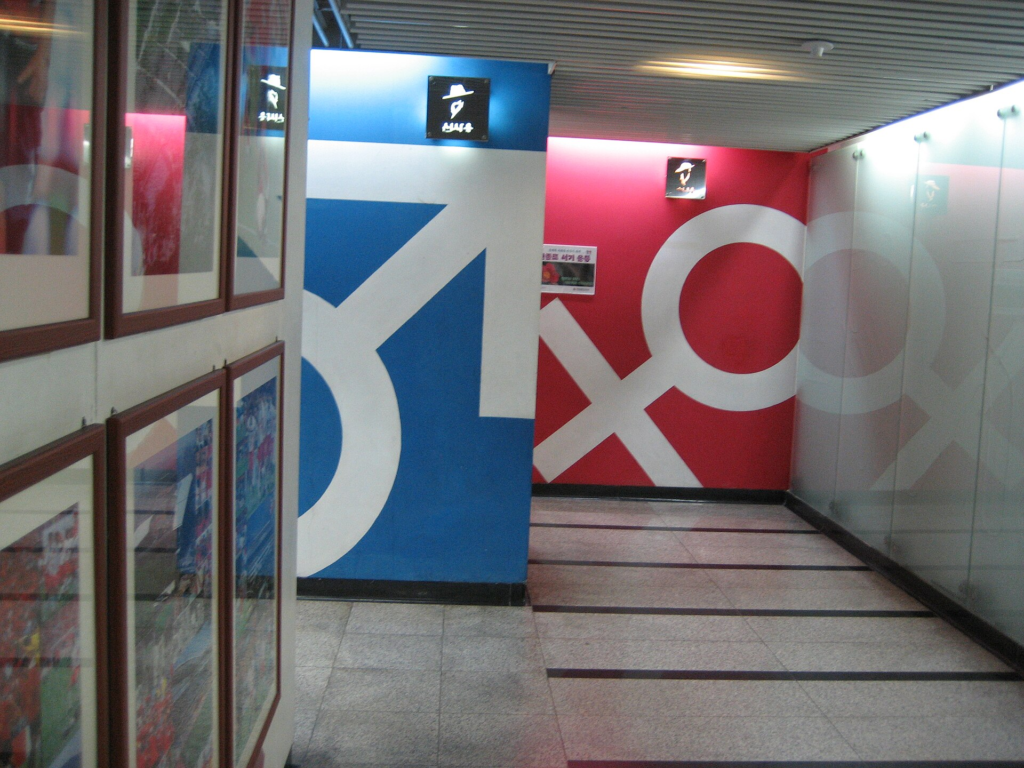
    Public toilets in Seoul World Cup Stadium
    Public toilets in Seoul World Cup Stadium. Photo: Jogungagon, Public domain, via Wikimedia Commons.

    Offers Worth Knowing

    Needing a toilet outside the gates used to cost you a second fare. Not anymore. Since 7 October 2023, Seoul lets transit card users exit and come back in at the same station within 15 minutes (in Korean) without paying a new base fare, on Lines 1 to 9 plus the Ui Sinseol and Sillim lines. The city specifically cited stations where the toilet is more than 100 m from the gates.

    From 20 June 2026 the same 15 minute rule reached KORAIL run sections of Line 1 (dark blue), Line 3 (orange) and Line 4 (sky blue), plus the Suin-Bundang Line (yellow) and Gyeongui-Jungang Line (teal), the Kyunghyang Shinmun reported. It does not cover the AREX (blue) airport railroad (blue) or the Shinbundang Line (red). My transit card guide explains which card to get.

    Heads Up: The free return only works with a transit card such as T-money, once per trip, through the gate for the same line at the same station. Single journey tickets don’t qualify, and if you take longer than 15 minutes you pay the 1,550 won base fare again.

    The Toilet Paper Question

    On 1 January 2018, the Ministry of the Interior and Safety’s amended rules for public toilets took effect, and bins beside the toilet in public restroom stalls went. The government’s own policy briefing (in Korean) gives the reason: less smell and fewer pests, timed for the PyeongChang Winter Olympics. You flush the paper.

    The rule sits in Article 7 of the Enforcement Decree of the Public Toilets Act, which the government’s Easy Law service summarises plainly: no bin inside a toilet stall, and a sanitary product bin in every women’s stall. Bins are still allowed in stalls with facilities for disabled people, older people or pregnant women, and in stalls with baby changing tables. Managers who ignore an order to fix a breach of the standards can be fined up to 1 million won.

    What that means for you:

    1. In public restrooms (subway, parks, government buildings, big stations): flush the paper.
    2. The small bin in a women’s stall is for sanitary products, not paper.
    3. In an older café or small private building, if a sign asks you to put paper in the bin, follow the sign. Old pipes are old pipes.
    4. Never flush wet wipes, sanitary products or paper towels. A year after the bins went, the Korea Herald reported cleaners unblocking toilets at least twice a day, mostly from things that should never have been flushed.

    The full myth check is in Korea myths checked.

    Squat Toilets And Bidets

    Yes, squat toilets still exist. As of May 2025, 33% of toilets in Seoul subway stations were squat style, and the city ordered them all replaced with sit down toilets by 2028 (in Korean). If you get a squat stall, check the next door along; many restrooms have both.

    The work is visible. In July 2026 Seoul Metro reopened the restroom at Seongsu Station (Line 2, green), one of the city’s busiest shopping stops, at 1.6 times the size, with women’s stalls up from 11 to 21 and every squat toilet swapped for a sit down one (in Korean).

    Bidets are common in hotels, homes and newer buildings. The control panel is usually in Korean. The one button to know is 정지 (jeongji): stop. Heated bidet seats are among the small things that surprise first timers here.

    Why There Are So Few Bins

    You’ll walk a long way with an empty cup in Seoul. The reason goes back to 1 January 1995, when Korea started charging households for rubbish through designated pay as you throw bags. People began dumping household rubbish in free street bins, so cities removed the bins. Seoul went from 7,607 street bins in 1995 to 3,707 by 2007, according to the city’s own figures.

    The good news: they’re coming back. Street bins in Seoul rose from 4,656 in June 2023 to a planned 7,085 by the end of 2025, with 470 more slated for 2026, Seoul Shinmun reported (in Korean). New ones go near subway entrances, busy bus stops and tourist areas, not residential lanes.

    Until you spot one, carry your rubbish. Don’t dump it in a convenience store bin without asking; those are for things bought in the store. Ask “여기 버려도 돼요?” (can I throw this here?) and most staff will point you somewhere.

    Heads Up: Dropping a cigarette butt or a tissue on the street carries a 50,000 won fine under the Waste Control Act, and leaving a bag of rubbish somewhere it shouldn’t be is 200,000 won, per Seocho District’s fine schedule (in Korean). Fines are set by each district, so amounts can differ slightly.

    Bring a spare bag to big outdoor events like the Haneul Park silver grass festival, so your snack wrappers ride home with you instead of piling up beside a full bin.

    Sorting Rubbish At Your Stay

    In a hotel, use the room bin. Staff sort it for you; large accommodation is legally required to separate waste and gets inspected, as the Korea JoongAng Daily explained in September 2026. In a serviced apartment, Airbnb or guesthouse, you’ll be asked to sort.

    General waste goes in the designated bag, 종량제 봉투 (jongnyangje bongtu), sold at convenience stores and supermarkets for a few hundred won. Bags are specific to each district, so use the ones your host gives you. Receipts and flyers are general waste, not paper recycling.

    Recyclables go out separately, free: plastic, cans, glass, paper, styrofoam and vinyl or film. Clear PET bottles are their own category, separated nationwide since December 2021 (in Korean) for houses and a year earlier for apartments. Rinse them and peel off the label. Greasy pizza boxes go in general waste.

    Food waste is separate again. Seoul’s guide for foreign residents lists what doesn’t count: bones, shellfish shells, tea leaves, fruit stones and onion skins go in general waste. Drain off liquid first.

    What Locals Know

    Locals pocket it. Koreans grew up with few bins, so wrappers go in a pocket or bag without a second thought. Copy that.

    Put rubbish out at the right time. Districts set collection nights. Seocho, for one, wants bags out between 6pm and 1am on your street’s designated days. Ask your host which night, because putting it out at noon is the classic guest mistake that earns a note from the neighbours.

    Wrong sorting costs the host. Household sorting violations run 100,000 to 300,000 won on the same Seocho schedule. That’s why some hosts leave long sorting notes. Read them.

    “Sorted” doesn’t always mean recycled. A 2022 report cited by the JoongAng Daily found 34.3% of what arrived at public recycling facilities was reclassified as general waste because it was dirty or mixed. A quick rinse matters.

    What’s Changing In 2026

    Two changes you’ll see: more street bins and fewer squat toilets. Some experts argued in September 2025 for keeping a few squat stalls for people who’d rather not touch a shared seat, so expect a mix for a few years yet.

    The big one behind the scenes: since 1 January 2026, rubbish from Seoul, Gyeonggi and Incheon can no longer go straight into landfill. It has to be sorted and burned first, and in the first half of 2026 about 57,000 tonnes had to be trucked to other regions for processing (in Korean), Energy Daily reported on 5 Oct 2026. That’s why districts are pushing sorting campaigns harder than ever, and why your host may be stricter than a guidebook from 2023 suggests.

    Pick Your Version

    If It’s Your First Time. Use the subway station toilet before you exit and set out for a palace or market. Carry tissues. If you’re here in November, the cold makes you need it more often, so plan a station stop every couple of hours. Start with the basics in my first timer hub.

    If You’re Bringing Kids. Kids never need the toilet at a convenient moment. Seoul Metro’s data records which station restrooms have baby changing tables, and department stores are the easiest place for a nappy change and a sit down. More in my Seoul with kids guide.

    If You’re Travelling Solo. The same open data tracks which station toilets have emergency bells and CCTV at the entrance. At night I’d use a station or a busy building rather than an isolated park toilet. My solo Seoul guide has more on getting around late.

    Sunbae’s Picks

    My pick when you’re caught short: go down into the nearest subway station. If the toilet is outside the gates, you haven’t even tapped in yet.

    If you’ve already tapped in, use the 15 minute free return with your transit card instead of holding on for three more stops.

    I’d skip the “always bin your paper” advice you’ll still read online. In public restrooms, flush. My subway etiquette guide covers the rest of station life.

    Worth It / Skip It

    Worth It: A pack of pocket tissues, a small bottle of hand sanitiser and a folded plastic bag in your day bag. Total cost under 3,000 won at any convenience store.

    Skip It: Hunting for a bin for every wrapper. Pocket it and move on.

    Word Of The Stop

    화장실 어디예요? (hwajangsil eodiyeyo?): Where’s the toilet? Works in any shop, café or station office.


    Map And Directions

    1. 1
      Seongsu Station restroom (rebuilt 2026) 성수역 화장실Area pin
      2Seongsu StationInside the station (check Naver Map for the restroom)

      Reopened 21 Jul 2026 at 1.6 times the size; women's stalls up from 11 to 21; all sit down toilets; free

    2. 2
      Myeong-dong Tourist Information Center 명동관광정보센터
      2Euljiro 1-ga StationEXIT5

      Multilingual staff for directions, maps and help finding facilities; open 9am to 6pm daily, free

    3. 3
      Gyeongbokgung Station (toilet before a palace day) 경복궁역
      3Gyeongbokgung StationEXIT5 for the palace

      Use the station restroom before you exit; with a transit card you can step out and back in within 15 minutes free

    Last Mile

    • Any Seoul Metro station → Station restroom outside the gates 15 min window
    • Gyeongbokgung Station EXIT5 → Gyeongbokgung Palace about 7 min
    Get the map appsNNaver Map App Store Google PlayKKakaoMap App Store Google PlayBoth work in English. With the app installed, the Naver Map and KakaoMap buttons open directions straight to the pin.

    Tap a button to open directions on your phone. In Korea, Naver Map and KakaoMap give full walking directions; Google Maps covers subway and bus but, as of September 2026, still has no turn by turn walking or driving here. Pins marked “Area pin” show a neighbourhood, not a door.

    Frequently Asked Questions

    Can You Flush Toilet Paper In Korea?

    Yes, in public restrooms. Since 1 January 2018, public toilet stalls have no bins beside the toilet and paper is flushed. In older private buildings, follow any sign asking you to use the bin.

    Are Public Toilets Free In Korea?

    Public toilets in subway stations, parks and public buildings are free to use. Some small cafés keep theirs for customers only.

    Why Are There No Trash Cans In Seoul?

    Bins were cut after the 1995 pay as you throw system, because people dumped household trash in them. Seoul is adding them back, with a planned 7,085 by the end of 2025 and 470 more in 2026.

    Do Seoul Subway Stations Have Toilets?

    Yes. Seoul Metro lists 312 restrooms across Lines 1 to 8, but many are outside the gates. With a transit card you can exit and come back in at the same station within 15 minutes without a new base fare.

    What Should I Do With Rubbish At My Airbnb Or Guesthouse?

    Sort it into general waste (in the district bag), recyclables and food waste, and put it out on the right night. Ask your host for bags and the spot.

    Next Stop

    Resources

    How I Checked This

    On 16 Oct 2026 I rechecked the 2018 bin rule against the government policy briefing and the Easy Law summary of the Enforcement Decree, the 15 minute return rules against Seoul city and Kyunghyang Shinmun, the station restroom count against Seoul Metro’s open data (last modified 26 Feb 2026), the Seongsu restroom against Money Today, the bin and squat toilet numbers against Seoul Shinmun and Munhwa Ilbo, the fines against Seocho District, and the landfill ban against Energy Daily. I could not find an official count of every public toilet open to visitors in Seoul, so the field test boxes ask for a real walk.

    Sources


    Written by your sunbae. Over 20 years in Korea. We learned the lessons the hard way, so you don’t have to, and we’re here to guide you and help you enjoy Korea. Every fact here is checked against official sources and, wherever possible, on the ground.

    Beep Check: verified 16 Oct 2026. Rules, prices and dates change; confirm with the official source before you travel.

  • What To Wear To Korean Temples And Palaces

    What To Wear To Korean Temples And Palaces

    TL;DR

    For a Korean temple, wear clean, modest clothes that cover your shoulders and knees, skip anything sleeveless or very short, and bring socks, because shoes come off before every hall and bare feet aren’t allowed inside. Palaces have no dress code at all. Wear a complete hanbok there and your entry is free, at least for the rest of 2026.

    Last checked: 5 Oct 2026 What is a Beep Check?

    That’s the short version, and it’s one of the easiest wins in my unwritten rules of Korea. Picture your day: a Jongno temple at 10am, Gyeongbokgung after lunch, and it’s 8°C in late November. You want one outfit that works for both, comes off at the shoes and layers up for the wind. Here’s how.

    Sunbae Says: Pack one pair of thick, hole free socks for temple day. You’ll spend more time in them than in your shoes, and they’re what everyone in the hall actually sees.

    The Temple Dress Code In One Paragraph

    The official Templestay etiquette guide asks for dress that is “clean, neat and conservative”: no revealing clothing “such as sleeveless tops, mini skirts and short shorts”, and go easy on bright colours, heavy makeup, strong perfume and big accessories. It also says plainly that bare feet are not allowed in the temple. A long Korean magazine piece on temple manners in Weekly Kyunghyang (in Korean) says the same: avoid very short or revealing clothes, and wear socks so you never enter a hall barefoot.

    Nobody at Jogyesa’s gate checks your hemline. The rule is about respect for a working place of worship, where people are praying while you take photos. In shorts on a warm October afternoon you’ll still get into the courtyard; you just won’t walk into the main hall looking right. In late autumn this mostly solves itself, because you’ll be in trousers anyway.

    What To Actually Wear

    Here’s the kit I’d put on for a temple and palace day between mid October and Christmas:

    • Trousers or a skirt below the knee. Loose enough to sit on the floor if you join a service.
    • A top with sleeves, plus a layer you can remove indoors.
    • Shoes that slip on and off without laces. You’ll take them off at every hall.
    • Socks with no holes. Temple floors are wooden, and you’re in socks the whole time inside.
    • A warm jacket and a scarf. Palace courtyards are open and windy, and late November afternoons turn cold fast.

    My what to wear guide for October to December has the full layering plan. For temples I’d add a plain, dark outer layer. Not a rule; it just blends into a quiet hall.

    Inside The Hall: The Rules That Matter More Than Clothes

    Clothes get you in. These get you through the door without anyone wincing.

    Shoes off, lined up. The Templestay guide says to take them off and arrange them before you enter. Weekly Kyunghyang adds a nice detail: leave them with the toes pointing outward, ready to step back into.

    Use the side doors. A main hall “generally has three entrances”, and the centre one “is reserved for the monks”, per the Templestay guide. Walk in through the left or right door.

    Don’t stand in the middle. Inside, keep out of the centre area in front of the Buddha, and don’t walk in front of someone who is bowing or praying.

    Voices down, phone silent. The guide lists no loud talking, shouting, running, singing or music.

    Ask before photos inside. “Most temples restrict taking pictures inside Buddha halls and other buildings without prior permission”, while photos outside are fine. Never photograph a person mid prayer without asking. My photos and privacy guide covers the wider rules on photographing people in Korea.

    Hats. Not on the official list, but my habit is hat off inside a hall. It costs nothing.

    The threshold question. You’ll read online that you must never step on the raised threshold of a hall door. I couldn’t find it in the official Templestay etiquette or the Korean temple etiquette articles I checked, so treat it as a courtesy, not a rule.

    Palaces: No Dress Code, One Very Good Deal

    Seoul’s palaces are heritage sites, not places of worship, so there’s no dress code. Shorts in July, a puffer in December: nobody cares.

    The deal is hanbok. Visit Seoul’s Gyeongbokgung page says you can enter free in a complete hanbok. Otherwise foreign adults aged 19 to 64 pay 3,000 won. The Korea Herald lists free entry for foreign visitors aged 18 and under or 65 and over. The same hanbok deal covers all four main palaces, Jongmyo Shrine and the Joseon royal tombs.

    What Counts As A Complete Hanbok

    This is where visitors get caught. A 29 Sep 2026 Cheonji Ilbo report (in Korean) spells out the Royal Palaces and Tombs Center guideline:

    • A jeogori (jacket) with a wrapped collar, plus a chima (skirt) or baji (trousers). Ribbons (goreum) are optional.
    • Wrap or non wrap skirts both count, and so do baji with a zip waist, as long as the overall shape is traditional.
    • Not enough on its own: a durumagi or other traditional overcoat thrown over modern clothes, a jeogori with jeans, or hanbok trousers with a T shirt.
    • Heavily altered fusion outfits can be refused at the gate, even in hanbok fabric.

    Gender doesn’t matter. Since 1 July 2019 the heritage agency dropped the rule (in Korean) that your hanbok had to match your sex, so men in a chima and women in baji both get in free.

    Your choices for a palace day, side by side:

    Option Best For Cost Time My Take
    Rent a two piece hanbok Photos, first timers Free entry plus a rental fee that varies by shop 30 to 60 min to dress My pick for one palace morning
    Buy a ticket in your own clothes Seeing several sites fast 3,000 won Gyeongbokgung None Smart if you’re temple hopping the same day
    Rent a one piece “hanbok style” dress Nobody Rental fee plus possibly 3,000 won 30 to 60 min Skip; it may not count as complete
    Kids under 19 in anything Families Free None Hanbok for kids is about photos, not savings

    Heads Up: Palace staff are watching behaviour more closely this year. The Korea JoongAng Daily reported on 17 Sep 2026 on smoking, drones, card games on wooden porches, people sitting on the rank stones and mock sword fights in rented costumes. Smoking, drinking and loud music are banned on palace grounds, and poking holes in paper doors is vandalism.

    Timing for this season: Gyeongbokgung opens 9am to 6pm in October and 9am to 5pm in November and December, last entry an hour before closing, and it’s closed on Tuesdays. Take Gyeongbokgung Station (Line 3, orange) Exit 5, about 490 m, or Gwanghwamun Station (Line 5, purple) Exit 2, about 470 m.

    Offers Worth Knowing

    • Free palace entry in complete hanbok at the four main palaces, Jongmyo and the royal tombs, guaranteed until the end of 2026; any change would start on 1 Jan 2027 at the earliest.
    • Free entry for foreign visitors 18 and under or 65 and over.
    • Jogyesa and Bongeunsa are free to enter, per VisitKorea and Visit Seoul.

    Two Seoul Temples To Practise On

    Jogyesa (조계사), Jongno. The head temple of the Jogye Order, right downtown, free and open all year. Visit Seoul’s temple guide gives Anguk Station (Line 3, orange) Exit 6 or Jonggak Station (Line 1, dark blue) Exit 2, each about a 10 minute walk. Its autumn chrysanthemum festival is one of Seoul’s seasonal temple sights, Aju Business Daily noted (in Korean); check the temple’s site for this year’s dates.

    Bongeunsa (봉은사), Gangnam. Visit Seoul lists it 135 m from Bongeunsa Station (Line 9, gold) Exit 1, free with donations welcome. Towers on one side, temple roofs on the other. To go deeper than a visit, my templestay guide covers Bongeunsa’s programmes, which need booking at least three days ahead.

    What Locals Know

    The hanbok gate check is a running argument. Korean social media is full of people refused free entry in designer hanbok inspired by period coats, the Cheonji Ilbo found, while critics point out that beaded, sequinned rental sets get accepted. My advice: rent the most traditional two piece set the shop has, and you’ll never have to argue.

    Free entry is the norm, not the exception. Of the 17.81 million visits to the palaces, Jongmyo and the royal tombs in 2025, about 69% were free, per the Korea Herald. You’re not gaming the system in hanbok; you’re doing what most visitors do.

    Temples are adapting too. Jogyesa trialled folding chairs instead of floor cushions in its main hall in April 2024 for older worshippers with bad knees. If you see chairs in a hall, sit there rather than squeezing onto the floor.

    What’s Changing In 2026

    Palace fees are under review for the first time in about 20 years. The Korea Heritage Service had planned to unveil new admission fee guidelines for palaces and royal tombs in November 2026, to take effect on 1 Jan 2027, the Korea Herald reported. At the October 2026 parliamentary audit that plan was effectively put on hold: the announcement and start dates are now undecided while the agency improves visitor services first, News1 reported (in Korean). A KHS official told Herald Economy (in Korean) that whether to keep free entry for hanbok wearers is one of the linked questions, along with whether foreigners should pay more. A public survey cited there found most people preferred one price for everyone. My read: if you’re visiting before Christmas, today’s prices and the hanbok deal still apply. If you’re reading this later, check the royal palaces site for any new fee notice before you rent.

    The crowds keep growing. The four main palaces drew 14.27 million visits in 2025, with Gyeongbokgung alone at 6.89 million, 2.78 million of them foreigners, per the same Herald Economy report. Go at 9am opening or on a weekday, especially in the November foliage window. My ginkgo walks guide and autumn foliage forecast tell you when the palace trees peak.

    Pick Your Version

    If It’s Your First Time. I’d do Jogyesa in the morning and Gyeongbokgung after, in the same outfit: dark trousers, a sleeved top, a warm jacket and slip on shoes. Rent hanbok only for the palace half. My Start Here hub covers everything else before you fly, and my transit card guide gets you between the two.

    If You’re Bringing Kids. Under 19s already get in free, so hanbok for kids is about the photos. At temples, brief them on three things before the gate: shoes off, side door, quiet voice. My Seoul with kids guide has more family days.

    If You’re Travelling Solo. Temples are one of the easiest solo stops in the city, and nobody minds you sitting quietly at the back of a hall. I’d go to Bongeunsa late afternoon, before the office crowd finishes work.

    If You’re Here For A Reset. Dress for sitting, not for photos: loose trousers, warm socks, a layer you can wrap round your knees. Then book a proper templestay rather than rushing between sites.

    Sunbae’s Picks

    My pick for one outfit that does everything: dark, loose trousers, a merino layer, a zip jacket and slip on trainers. Temple ready, palace ready, subway ready.

    If I only had one morning, I’d take Gyeongbokgung at 9am opening in hanbok, then walk to Jogyesa and change back. You beat the coach groups and the rental queues.

    I’d skip the one piece “hanbok style” dress. Ask the shop for a jeogori and chima or baji, and check the collar wraps.

    I’d time a palace visit for early November. It’s the sweet spot of the Korea in November season: cold mornings, gold trees, and the 5pm closing still gives you a full afternoon.

    Worth It / Skip It

    Worth It: Renting a two piece hanbok for a palace morning. Free entry, great photos, and you’ll be in good company.

    Skip It: Wearing a rented costume into a temple hall for a photo shoot. It isn’t banned, but a hall is for prayer, and that’s the one thing I’d never do.

    Word Of The Stop

    법당 (beopdang): the main Dharma hall of a temple. Shoes off, side door, quiet voice.


    Map And Directions

    1. 1
      Gyeongbokgung Palace 경복궁
      3Gyeongbokgung StationEXIT5

      No dress code; free in complete two piece hanbok, else 3,000 won for foreign adults 19 to 64; 9am to 6pm Oct, 9am to 5pm Nov and Dec, last entry 1 hour before; closed Tuesdays

    2. 2
      Jogyesa Temple 조계사
      3Anguk StationEXIT6

      Head temple of the Jogye Order; free, open all year; cover shoulders and knees, shoes off, side doors only. Also 10 min from Jonggak Station (Line 1) Exit 2

    3. 3
      Bongeunsa Temple 봉은사
      9Bongeunsa StationEXIT1

      135 m from the exit; free, donations welcome; templestay needs booking at least 3 days ahead

    4. 4
      Jongmyo Shrine 종묘
      1Jongno 3-ga StationEXIT11

      Free entry in complete hanbok; 1,000 won adult ticket otherwise; fee review for 2027 under way

    Last Mile

    • Gyeongbokgung Station EXIT5 → Gyeongbokgung Palace about 7 min
    • Gyeongbokgung Station → Anguk Station about 2 min (1 stop)
    • Anguk Station EXIT6 → Jogyesa Temple about 10 min
    • Anguk Station → Bongeunsa Station about 35 to 45 min
    Get the map appsNNaver Map App Store Google PlayKKakaoMap App Store Google PlayBoth work in English. With the app installed, the Naver Map and KakaoMap buttons open directions straight to the pin.

    Tap a button to open directions on your phone. In Korea, Naver Map and KakaoMap give full walking directions; Google Maps covers subway and bus but, as of September 2026, still has no turn by turn walking or driving here. Pins marked “Area pin” show a neighbourhood, not a door.

    Frequently Asked Questions

    Can You Wear Shorts To Temples In Korea?

    You won’t be turned away from the grounds, but the official Templestay etiquette asks you to avoid short shorts, mini skirts and sleeveless tops. Wear trousers or a skirt below the knee if you plan to enter a hall.

    Is There A Dress Code For Gyeongbokgung Palace?

    No. Palaces have no dress code. A complete hanbok gets you in free; otherwise foreign adults aged 19 to 64 pay 3,000 won.

    What Counts As A Complete Hanbok For Free Entry?

    A jeogori with a wrapped collar plus a chima or baji. An overcoat over modern clothes, a jeogori with jeans, or hanbok trousers with a T shirt may not qualify. Any gender can wear either style.

    Will Palace Ticket Prices Go Up In 2027?

    Possibly, but not on the original timetable. The Korea Heritage Service had planned new guidelines in November 2026 for use from 1 Jan 2027; in October 2026 it put that on hold, with no new announcement or start date set. Free hanbok entry is still under review.

    Do I Need To Take My Shoes Off At Korean Temples?

    Yes, before entering any hall. Line them up neatly, and wear socks, because bare feet aren’t allowed inside.

    Next Stop

    Resources

    How I Checked This

    On 5 Oct 2026 I rechecked the temple dress and hall etiquette against the official Templestay guide and Weekly Kyunghyang, Gyeongbokgung’s hours, fees and exits on Visit Seoul, the hanbok standard in the 29 Sep 2026 Cheonji Ilbo report, the 2019 gender rule on the government briefing site, the fee review in the Korea Herald, Yonhap and Herald Economy, palace misconduct in the Korea JoongAng Daily, and the temple details on Visit Seoul and VisitKorea. The official guideline page on royal.khs.go.kr would not load in full, and Jogyesa’s 2026 chrysanthemum festival dates were not published when I checked.

    Sources


    Written by your sunbae. Over 20 years in Korea. We learned the lessons the hard way, so you don’t have to, and we’re here to guide you and help you enjoy Korea. Every fact here is checked against official sources and, wherever possible, on the ground.

    Beep Check: verified 5 Oct 2026. Rules, prices and dates change; confirm with the official source before you travel.

  • Can You Take Photos Of People In Korea? What The Law And Etiquette Say

    Can You Take Photos Of People In Korea? What The Law And Etiquette Say

    TL;DR

    Yes, you can take photos in public places in Korea, including street scenes with people in them. The trouble starts with close ups and posting: publishing a stranger’s recognisable face without consent can breach their portrait rights, and secretly filming someone’s body is a serious crime carrying up to seven years in prison. When in doubt, ask first.

    Last checked: 5 Oct 2026 What is a Beep Check?

    You’re in Ikseondong, the light is perfect, and an elderly man in a flat cap is sitting outside a hanok café. Here’s how to get that photo without causing a problem. This is part of my guide to the unwritten rules of Korea.

    This is general information, not legal advice. If you’re in a dispute, speak to a Korean lawyer.

    Sunbae Says: Wide shot, fine. Close up of one stranger’s face, ask. Posting that face online with a snarky caption, don’t.

    The Short Version

    1. Crowds, streets and landmarks with people in the background: generally fine.
    2. A close up of a stranger: ask first, and delete it if they say no.
    3. Other people’s children: don’t, unless the parent says yes.
    4. Anything in bathhouses, changing rooms or toilets: never.
    5. Military sites and some airport areas: no photos.
    6. Drones in Seoul: approval first, almost always.
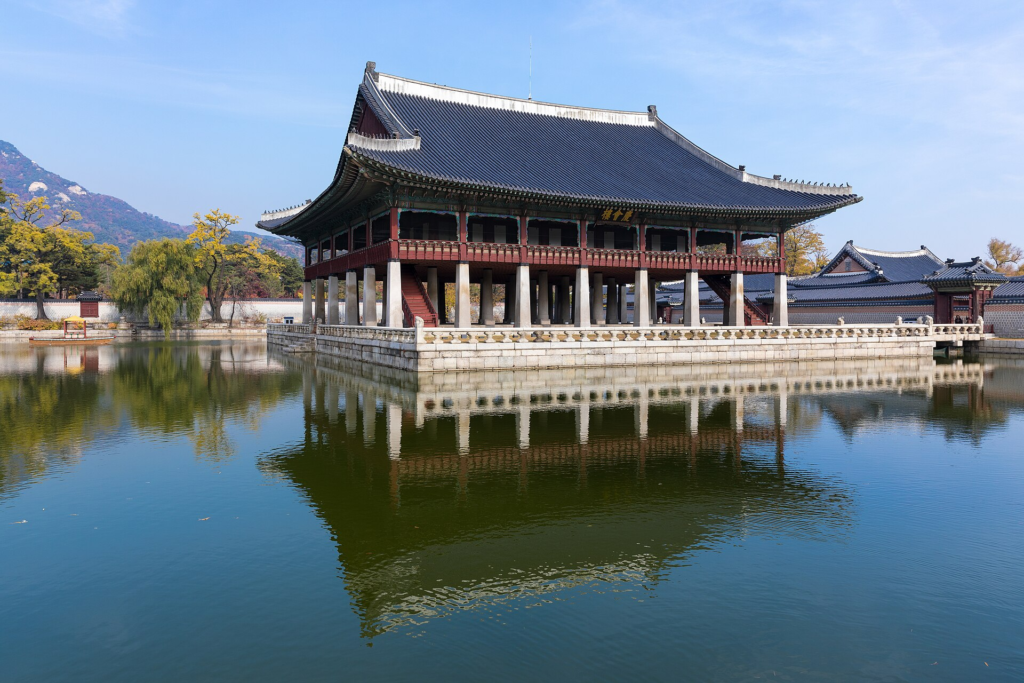
    Royal Banquet Hall Gyeonghoeru (경회루) at Gyeongbokgung Palace (경복궁), Seoul
    Royal Banquet Hall Gyeonghoeru (경회루) at Gyeongbokgung Palace (경복궁), Seoul. Photo: Frank Schulenburg, CC BY-SA 4.0, via Wikimedia Commons.

    Your Options For People Photos

    Option Best For Cost Time My Take
    Wide street shots, no close ups Everyday travel photos Free Instant My default. Faces become background
    Ask a stranger, show them the result Portraits with character Free 1 minute Worth it; a smile and the Korean phrase below do the work
    Friends or yourself in hanbok at a palace Classic Seoul photos Free palace entry in hanbok An hour The easiest people photo in Korea
    Book a photo walk or photographer Content creators, couples Varies 1 to 2 hours Best if you want faces in your feed, legally clean

    Portrait Rights: What Korean Law Actually Says

    Korea doesn’t have one single “photo law”. The right over your own image, 초상권 (chosanggwon), comes from the Constitution and the courts.

    In a 2021 Supreme Court ruling (case 2020Da227455, in Korean), the court said portrait rights are protected under the first sentence of Article 10 of the Constitution, the right to human dignity, and that Articles 10 and 17 together protect privacy. In plain English: everyone has the right not to be photographed without permission, not to have that image published, and not to have it used commercially.

    It isn’t absolute. The court said a photo can be lawful when it concerns a matter of public interest, is published for the public interest, and is presented fairly. The person relying on that exception has to prove it.

    Portrait rights disputes are mostly civil; that case was about compensation, not jail. The real exposure for you is a demand to delete, a takedown, or a claim for damages if you publish.

    Posting Online Is Where The Real Risk Is

    Korea’s Criminal Act can punish defamation even when what you say is true. Article 307(1) covers publicly stating facts that damage someone’s reputation, with up to two years in prison or a fine of up to 5 million won, and the Constitutional Court upheld it in February 2021.

    There’s movement, but no change yet. President Lee Jae-myung asked for a review of the offence in November 2025, a bill to narrow it was tabled in July 2026, and on 1 Oct 2026 the National Human Rights Commission put off deciding whether to back full repeal, Money Today reported (in Korean). For your trip this autumn, the law stands.

    This isn’t theoretical. In September 2025, when a photo of a man in hospital scrubs sitting in a subway pregnancy seat went viral, lawyers quoted by the legal news site The Sisa Law (in Korean) said photographing and posting him carried more legal risk than his choice of seat. My subway etiquette guide explains the seats themselves.

    Heads Up: Never post a “look at this rude local” photo or video with the face visible. Truthful defamation is still a crime in Korea as of October 2026, and a portrait rights claim can follow too. Blur the face or describe it in words.

    The Personal Information Protection Act

    Under the Personal Information Protection Act, pictures that identify someone count as personal information. The Act is aimed mainly at people and organisations handling personal information as part of their work, not tourists taking holiday snaps.

    It matters if you’re filming for work, such as a client shoot or brand content. Since 15 September 2023, Article 25-2 limits filming people in public places with mobile devices for work, and says you must make the filming obvious with lights, sounds or signs. Seoul city applies the same rule to drones. If that’s you, get local advice.

    Hidden Camera Crimes Are Taken Very Seriously

    Korea treats secret filming as a serious sexual crime. Under Article 14 of the Act on Special Cases Concerning the Punishment of Sexual Crimes, filming someone’s body in a way that could cause sexual humiliation, against their will, carries up to seven years in prison or a fine of up to 50 million won. Just possessing, buying, storing or watching such footage carries up to three years or 30 million won.

    This is why phones are off limits in bathhouse areas, changing rooms and toilets, and why people react strongly to a camera pointed low on an escalator or a subway. My jjimjilbang guide covers the bathhouse rules.

    Smart glasses are the new worry. Police received three cases of suspected illegal filming with AI glasses in 2026, and the science ministry has started a study to write guidelines, KBS reported on 18 Sep 2026. If you travel in camera glasses, take them off in bathhouses, changing rooms and anywhere people undress, and expect looks on the subway.

    The Shutter Sound: A Standard, Not A Law

    Korean model phones make a click you can’t turn off. That isn’t a law. It comes from a 2004 voluntary standard by the Telecommunications Technology Association, which sets the click at 60 to 68 decibels to fight hidden camera crimes. A 24 Jul 2026 Yonhap fact check (in Korean) confirmed it has no legal binding force and no penalty, noted that an iOS 27 beta mutes the click only when it detects a selfie, and quoted the science ministry saying any change would need social consensus.

    What it means for you: a phone bought abroad usually lets you mute the camera. Silence isn’t illegal, but a silent camera pointed at strangers is exactly what makes locals nervous. I leave the sound on.

    Military Sites And Some Airports

    Under the Protection of Military Bases and Installations Act, photographing, sketching or recording military bases and installations in protected zones without permission is prohibited. Police in North Chungcheong warned in 2022 that runway and hangar photos at Cheongju International Airport, which shares its site with an air force base, could lead to up to three years in prison or a 30 million won fine.

    If a sign shows a crossed out camera, obey it. On DMZ tours, follow your guide’s instructions about where photos are allowed.

    Drones In Seoul

    Don’t just launch a drone in Seoul. The city says it’s a flight restricted area (in Korean): you need approval through the Drone One Stop portal three to five days in advance, and unauthorised flights can bring a fine of up to 5 million won under the Aviation Safety Act.

    VisitKorea’s drone guide, updated 4 Sep 2026, adds three separate approvals (flight, aerial photography, and the landowner or site manager), no flights from sunset to sunrise, and registration for drones over 2 kg even for hobby use.

    Heads Up: Palaces are the classic drone mistake. Unauthorised drone filming happens two or three times a month at Seoul’s royal palaces, the Korea JoongAng Daily reported in September 2026, and staff are cracking down. Gyeongbokgung sits in central Seoul’s restricted airspace; keep the drone in its case.

    Offers Worth Knowing

    VisitKorea lists three designated drone parks where you can fly without advance approval: Seoul’s Gwangnaru Hangang riverside drone park, plus parks in Daejeon and Gwangju. Search 광나루 드론공원 in Naver Map for directions, and check the park’s own rules on the day.

    What Locals Know

    Korea blurs by default. Korean TV and YouTube blur passers by as routine, and filming ordinary people and posting them online without consent is hard to imagine here, Media Today explained (in Korean). Korean privacy is centred on the person, while US law is centred on the place, which is why a street video that’s fine in Los Angeles can be a problem in Seoul.

    Takedowns are fast. Anyone who says a post invades their privacy can ask a Korean platform to hide it for at least 30 days, the same article notes. Your clip can vanish even if no one sues.

    A wave of the hand means no. People rarely argue; they cover their face or wave. Lower the camera and move on.

    What’s Changing In 2026

    Privacy is getting stricter, not looser, and the rules are chasing new tech. The 2023 rule on filming for work in public, the July 2026 shutter sound debate, smart glasses cases and the palace drone problem all point one way. And there are more of you with cameras: Korea hit a record of about 18.94 million foreign visitors in 2025, according to Yanolja Research. My read: expect less patience with creators filming strangers in busy spots, especially in crowded weeks like Halloween in Seoul and peak autumn foliage.

    Pick Your Version

    If It’s Your First Time. Shoot wide and shoot places. For people, ask. In my experience, people dressed up in hanbok are the easiest yes; my temple and palace dress code guide covers where photos are limited inside halls. Start with my first timer hub.

    If You’re Bringing Kids. Photograph your own kids freely. Keep other families’ children out of frame or ask the parent. More in my Seoul with kids guide.

    If You’re Travelling Solo. Asking someone to take your photo is normal and people usually help. If you’re making content, blur faces before posting. My solo Seoul guide has more.

    Sunbae’s Picks

    My pick for street photos: early morning in the old hanok lanes, before the crowds, when you can shoot buildings with no faces to worry about. In Bukchon, tourists are only allowed in the red zone from 10am to 5pm, so plan around that.

    If I wanted a portrait, I’d ask with a smile and show the photo afterwards. In my experience, older people who say yes often want to see it.

    I’d skip filming strangers on the subway for any reason. It reads as creepy here, even when it isn’t. My piece on why Koreans can seem rude explains the personal space side, and my apps guide covers the translator you’ll need to ask.

    Worth It / Skip It

    Worth It: Asking. A few Korean words turn an awkward moment into a better photo.

    Skip It: Posting a stranger as the villain of your travel story. The legal risk is real, and it’s unkind.

    Word Of The Stop

    사진 찍어도 돼요? (sajin jjigeodo dwaeyo?): Is it OK if I take a photo? If they wave a hand, that’s a no. Smile, say “죄송합니다” (joesonghamnida, sorry) and move on.


    Map And Directions

    1. 1
      Ikseondong 익선동
      1Jongno 3-ga StationEXIT4

      Hanok café lanes; shoot wide, ask before a close up of a stranger

    2. 2
      Bukchon Hanok Village (red zone) 북촌한옥마을
      3Anguk StationEXIT2

      People live here: tourists allowed in the Bukchon-ro 11-gil red zone 10am to 5pm only; keep voices down and don't photograph into homes

    3. 3
      Gyeongbokgung Palace 경복궁
      3Gyeongbokgung StationEXIT5

      Hanbok photos welcome; no drones (central Seoul restricted airspace); ask before photographing other visitors up close

    4. 4
      Gwangnaru Hangang drone park 광나루 한강공원 드론공원Area pin
      Check Naver Map for the nearest stationCheck Naver Map for the route

      One of three designated drone parks in Korea where you can fly without advance approval; daytime only, check on site rules

    Last Mile

    • Gyeongbokgung Station → Anguk Station about 2 min (1 stop)
    • Anguk Station → Jongno 3-ga Station about 2 min (1 stop)
    Get the map appsNNaver Map App Store Google PlayKKakaoMap App Store Google PlayBoth work in English. With the app installed, the Naver Map and KakaoMap buttons open directions straight to the pin.

    Tap a button to open directions on your phone. In Korea, Naver Map and KakaoMap give full walking directions; Google Maps covers subway and bus but, as of September 2026, still has no turn by turn walking or driving here. Pins marked “Area pin” show a neighbourhood, not a door.

    Frequently Asked Questions

    Is It Illegal To Take Photos Of People In Korea?

    Not in public places in general. Portrait rights mean people can object to being photographed or published without consent, usually through civil claims. Secretly filming someone’s body is a serious crime.

    Why Do Korean Phones Make A Shutter Sound?

    Because of a voluntary 2004 industry standard meant to deter hidden camera crimes. It isn’t a law, and phones bought abroad usually let you mute it.

    Can I Fly A Drone In Seoul?

    Only with approval in most of the city. Apply through the Drone One Stop portal three to five days ahead, never fly between sunset and sunrise, and get separate approval to film. Designated drone parks such as Gwangnaru need no advance approval.

    Can I Post Photos Of Strangers On Social Media?

    It’s risky if they’re recognisable. Blur faces, and never add accusations: as of October 2026, Korea’s defamation law can still apply even to true statements. This is general information, not legal advice.

    Next Stop

    Resources

    How I Checked This

    On 5 Oct 2026 I reread the Supreme Court portrait rights ruling and the relevant statutes on the Korean Law Information Center and the Korea Legislation Research Institute, checked the truthful defamation debate against Money Today’s 1 Oct 2026 report, the shutter standard against Yonhap’s July 2026 fact check, smart glasses cases against KBS, drone rules against Seoul city and VisitKorea, palace drone incidents against the Korea JoongAng Daily, and Korean privacy norms against Media Today. English translations are for reference only; the Korean text governs. I couldn’t confirm how the drone portal works for foreign visitors, hence the field test.

    Sources


    Written by your sunbae. Over 20 years in Korea. We learned the lessons the hard way, so you don’t have to, and we’re here to guide you and help you enjoy Korea. Every fact here is checked against official sources and, wherever possible, on the ground.

    Beep Check: verified 5 Oct 2026. Rules, prices and dates change; confirm with the official source before you travel.

  • Why Koreans Seem Rude (And Aren’t)

    Why Koreans Seem Rude (And Aren’t)

    TL;DR

    Koreans aren’t rude. What feels rude to visitors is mostly density, speed and a politeness system that points in a different direction: toward people you know, and toward age, rather than toward strangers in a crowd. The shoulder bump without a sorry, the long look on the subway and the missing small talk all have reasons, and most of them are kind ones.

    Last checked: 5 Oct 2026 What is a Beep Check?

    You’ll feel it on day one. You’re on Line 2 (green) at 6pm, someone presses past you without a word, and a grandmother looks at you for a full stop and a half. Nobody’s angry with you. After more than 20 years here, this is the chapter of my unwritten rules of Korea I most want first timers to read, because it changes how the whole trip feels.

    Sunbae Says: Don’t judge Korea by the rush hour crowd. Judge it by what happens when you stop someone, say “저기요” (jeogiyo, excuse me) and ask for help.

    The Short Answer: Politeness Points A Different Way

    In much of the English speaking world, politeness is spread thinly over everyone: a “sorry” to a stranger, a held door, a chat with the cashier. In Korea, courtesy runs deepest inside relationships. Colleagues, neighbours, family, the owner of the restaurant you eat at every week: that’s where the care goes, and it goes a long way.

    It’s built into the language. As a Korea JoongAng Daily guide to address terms explains, calling someone a direct “you” is considered rude, so Koreans choose a title that fits the relationship instead. A stranger in a crowd sits outside that system. So the missing “sorry” isn’t a snub. It’s neutral.

    Stairs to Myeongdong Cathedral, Seoul
    Stairs to Myeongdong Cathedral, Seoul, 2022. Photo: kallerna, CC BY-SA 4.0, via Wikimedia Commons.

    Six Things That Feel Rude, And What’s Really Going On

    The Bump Without A Sorry

    This is the big one. A Korea Herald report put the question to psychologists. Their answer: a collective culture where a small accidental touch isn’t treated as a wrong worth raising. An Ajou University lecturer told the paper that if an action isn’t a serious wrongdoing, people simply don’t make an issue of it. The same report notes Seoul was the 33rd most densely populated city in the world in 2024, and points out that density alone doesn’t explain it, since Tokyo is denser and Japanese commuters apologise instantly.

    The part I like: younger Koreans in their 20s and 30s told the Herald they also feel offended when bumped without an apology. So if it bothers you, you’re not oversensitive. You’re meeting a habit that’s shifting. My rule: say sorry anyway. “죄송합니다” (joesonghamnida) never hurts.

    The Stare

    If you look visibly foreign, some people will look, and older people may look for longer than you’re used to. In my experience it’s almost always curiosity. A small nod or smile usually ends it.

    No Small Talk With Strangers

    Cashiers won’t ask about your day, and your bus neighbour won’t ask where you’re from. Silence with strangers is ordinary, restful even. It doesn’t mean nobody will help you. It means nobody will interrupt you.

    Doors, Lifts And “Bless You”

    Holding a door for the person behind you isn’t a firm norm here, so doors sometimes swing back at you. Sneeze and nobody says “bless you”; there’s no everyday equivalent. In lifts, the close door button gets pressed fast. None of it is aimed at you. I hold doors anyway, and people often give a small nod of thanks.

    빨리빨리 (Ppalli Ppalli): Hurry, Hurry

    Korea runs fast. Food arrives almost as you order, phone repairs that take weeks in Europe get done here in an hour, and buses pull away the moment you’re on. Foreigners interviewed by the Korean news site Wikitree described the same mix of delight and pressure, including feeling rushed to pay and get out of a taxi. From the inside it’s efficiency, and it’s why so much here simply works. Hold the bus rail as soon as you board, and read my subway etiquette guide and taxi guide before your first rides.

    Age Comes First

    Visit Seoul’s etiquette page sums it up: respect runs toward people with higher status, rank or age. Age shapes who pours drinks, who takes the seat and who you apologise to first. If an older person tells you something directly, like to move your bag or sit down on the bus, it’s usually meant as help, not a reprimand. The warmest guide to this is my ajumma survival guide.

    Do Koreans Queue? It Depends Where You Stand

    Travellers online often say Koreans don’t queue. In my experience that’s half true, and knowing which half saves you a lot of irritation.

    Where lines are strict: popular bakeries and cafés, where queues can stretch down the pavement; taxi ranks; bus stops at terminals; and restaurants with waitlists. Many busy restaurants use waitlist apps, and Korea.net reports that CatchTable’s global version lets foreign visitors sign up with just an email address and book or join waitlists at around 8,000 businesses. Put your name down and wander; don’t hover at the door. My ordering guide and travel apps guide go further.

    Where it’s looser: lift doors, subway doors at rush hour, and the scramble for a single free seat. On platforms, people wait beside the doors and let riders off first, then it’s shoulders. Stand to the side, step in with purpose, and you’ll be fine.

    And the escalator? On 23 September 2026 the Ministry of the Interior and Safety dropped side rules altogether and replaced them with three safety rules: hold the handrail, don’t walk or run, stay behind the safety line, as Seoul Economic Daily reported. So the person standing on the left isn’t being rude. They’re following the official advice.

    What Locals Know

    우리 (uri), “our”, is the whole story. Koreans say “our house”, “our school”, even “our mum” where English says “my”. The Korea Herald’s experts use exactly this to explain why bodies touching in a crowd isn’t a big deal. Once you’re inside someone’s “uri”, through a regular café, a class or a friend, the care you get is enormous. The crowd is just the waiting room.

    “Unfriendly service” is a recognised problem, not a myth. Tourist complaints hit 1,753 in January to July 2026, already above the whole of 2025, and “unfriendly service and overcharging” was the second biggest category with 376 cases, the Korea Herald reported. That’s real, and it’s why the government is cracking down on restaurant overcharging. My read: a shop that rips you off is a bad business, not a sign Koreans dislike you. Report it, and keep the two things separate in your head.

    The Flip Side: Ask, And Watch What Happens

    Here’s what the “rude” headlines miss. Stop someone with a map on your phone and a lost face, and in my experience people very often go out of their way to help, sometimes walking you to the right exit.

    The lost property numbers tell a similar story. The Korea Herald’s April 2026 figures show 167,738 items handed in on the Seoul subway in 2025, about 460 a day, up roughly 10% on 2024. They included 36,387 wallets, 19,966 phones and 580.9 million won in cash, of which about 76% by value went back to its owners.

    When You Need Help: Your Options

    Option Best For Cost Time My Take
    Ask a passer by in person Directions, which exit, which bus Free 1 minute My pick for directions. Show your screen, say “jeogiyo”.
    1330 Korea Travel Hotline Interpreting, complaints, anything urgent but not an emergency Free call or chat Minutes My pick for disputes with a shop or taxi.
    Tourist information centre Maps, bookings, a calm human Free 10 to 20 minutes Great if you’re nearby anyway.
    Papago on your own Menus, signs, quick phrases Free Seconds Fine for reading, weaker for arguments.

    The 1330 Korea Travel Helpline handles information, interpreting and complaints by phone (1330 in Korea, +82-2-1330 from abroad) and by chat through its own messenger, KakaoTalk, Facebook and Line. My call: ask a person first, call 1330 when money or a dispute is involved.

    Where To Sort It Out

    Lost something on the subway? Note the time, the car and the platform, then call 182. Seoul’s own guide (in Korean) lists four Seoul Metro lost and found centres: City Hall Station (Line 1, dark blue, and Line 2, green) for Lines 1 and 2, Chungmuro Station (Line 3, orange, and Line 4, sky blue) for Lines 3 and 4, Wangsimni Station (Line 5, purple) for Lines 5 and 8 (pink), and Taereung Entrance Station (Line 6, brown, and Line 7, olive) for Lines 6 and 7. They open weekdays 9am to 6pm and hold items for about a week before valuables go to the police. Check Naver Map for the exit to each centre. You can also search the national LOST112 portal (lost112.go.kr).

    Heads Up: The lost and found centres are closed at weekends and on public holidays. If you lose something on a Saturday, report it by phone right away and plan your pickup for Monday, or ask about Seoul Metro’s paid home delivery service, which Korean outlet eToday reported launched in July 2026 and excludes cash and food.

    Want a human in English? The Myeong-dong Tourist Information Center sits 211 metres from Exit 5 of Euljiro 1-ga Station (Line 2, green), open 9am to 6pm daily except Lunar New Year and Chuseok, with multilingual staff and a complaints desk.

    When A Friendly Stranger Wants Something

    Most people who start a conversation with you are being friendly or practising their English. But some religious groups recruit on the street, and a Korea JoongAng Daily investigation found recruiters actively seek out foreigners, who may be isolated and eager for friendship, in places like Sinchon and Gangnam.

    Heads Up: The pattern to recognise is “Can I have five minutes of your time?”, a survey or app feedback request, an invitation to a “cultural experience” with hanbok or traditional music, then questions about your family “for prayers” or a request for money. Smile, say “괜찮아요” (gwaenchanayo, “I’m okay, no thanks”) and keep walking. Never go somewhere private with someone you just met.

    Pick Your Version

    If It’s Your First Time. Give yourself 48 hours before you decide how friendly Korea is. I’d spend the first evening in a small restaurant where the owner serves you, not on a rush hour train. My Start Here hub and my twelve small surprises cover the rest of the culture shock.

    If You’re Bringing Kids. Expect attention: older people may smile at, talk to or fuss over small children. It’s affection. If your child isn’t comfortable, a gentle step back and a smile is enough.

    If You’re Travelling Solo. You’ll get fewer random chats than at home. When you want company, a guided walk or cooking class does the social work; my solo Seoul guide has ideas.

    Sunbae’s Picks

    My one habit for you: say “joesonghamnida” when you bump someone, whatever they do. You’ll feel better, and people notice.

    If I could change one first timer reflex, it would be taking silence personally. Quiet with strangers is the default, not a verdict.

    I’d skip rush hour on Line 2 (green) and Line 9 (gold) for your first ride. Try mid morning; it’s the same city with more elbow room. A short tourist transit pass makes off peak hopping cheap.

    My pick for seeing Korean warmth up close: ask for directions, politely and in person. It’s the quickest way to meet the Korea behind the crowd.

    What’s Changing In 2026

    Record visitors, more friction points. Korea drew 15.05 million foreign visitors in the first eight months of 2026, up 21.6%, with August the busiest month on record at 2.25 million, according to Korea JoongAng Daily. More first timers means more crossed wires on crowded trains and in bakery queues. Residents notice the visitors who’ve done their homework.

    The habits themselves are shifting. Younger Koreans expect an apology for a bump, waitlist apps turn door queues into digital lists, and the escalator side rule is officially gone. This year’s Korea is already a little different from the one travellers complained about a decade ago.

    Worth It / Skip It

    Worth It: Learning three phrases: jeogiyo (excuse me), joesonghamnida (I’m sorry) and gwaenchanayo (I’m okay, no thanks). They cover most tricky moments.

    Skip It: A “Koreans are so rude” rant after one rush hour. Read my Korea myths checked first.

    Word Of The Stop

    괜찮아요 (gwaenchanayo): “it’s okay” or “I’m fine”. Say it when someone bumps you, when you’re offered something you don’t want, and when a stranger’s invitation isn’t for you.


    Map And Directions

    1. 1
      Myeong-dong Tourist Information Center 명동관광정보센터
      2Euljiro 1-ga StationEXIT5

      211 m from Exit 5; multilingual staff and a complaints desk; 9am to 6pm daily, closed Lunar New Year and Chuseok

    2. 2
      Seoul Metro Lost and Found Center (Lines 1 and 2) 서울교통공사 시청역 유실물센터Area pin
      1City Hall StationCheck Naver Map for the exit

      Weekdays 9am to 6pm, closed weekends and holidays; call 182 first with time, car and platform

    3. 3
      Seoul Metro Lost and Found Center (Lines 3 and 4) 서울교통공사 충무로역 유실물센터Area pin
      3Chungmuro StationCheck Naver Map for the exit

      Weekdays 9am to 6pm; items kept about a week before valuables go to police

    4. 4
      Seoul Metro Lost and Found Center (Lines 5 and 8) 서울교통공사 왕십리역 유실물센터Area pin
      5Wangsimni StationCheck Naver Map for the exit

      Weekdays 9am to 6pm; handles Lines 5 and 8

    5. 5
      Seoul Metro Lost and Found Center (Lines 6 and 7) 서울교통공사 태릉입구역 유실물센터Area pin
      6Taereung Entrance StationCheck Naver Map for the exit

      Weekdays 9am to 6pm; handles Lines 6 and 7

    Last Mile

    • Euljiro 1-ga Station (Line 2) EXIT5 → Myeong-dong Tourist Information Center about 3 min
    • City Hall Station → Euljiro 1-ga Station about 2 min (1 stop)
    Get the map appsNNaver Map App Store Google PlayKKakaoMap App Store Google PlayBoth work in English. With the app installed, the Naver Map and KakaoMap buttons open directions straight to the pin.

    Tap a button to open directions on your phone. In Korea, Naver Map and KakaoMap give full walking directions; Google Maps covers subway and bus but, as of September 2026, still has no turn by turn walking or driving here. Pins marked “Area pin” show a neighbourhood, not a door.

    Frequently Asked Questions

    Are Koreans Rude To Tourists?

    No. Crowded, fast city habits like bumping without apologising or not holding doors apply to everyone, not to tourists in particular. When you ask for help directly, people are often very generous with their time.

    Why Don’t Koreans Say Sorry When They Bump Into You?

    Psychologists quoted by the Korea Herald point to a collective culture that doesn’t treat small accidental contact as a wrong. Younger Koreans increasingly expect an apology too.

    Do Koreans Queue?

    Yes, strictly at bakeries, taxi ranks, bus stops and restaurants with waitlists. It’s looser at lift doors and on packed subway trains.

    What Should I Do If A Stranger Invites Me To A Ceremony?

    Politely decline with “gwaenchanayo” and walk on. Some religious groups recruit this way in busy areas. Don’t share personal details, go somewhere private or pay for anything.

    Next Stop

    Resources

    • 1330 Korea Travel Hotline: 1330 in Korea or +82-2-1330 from abroad, for interpreting, information and complaints.
    • 182: Seoul subway lost property line; LOST112 (lost112.go.kr) for the national lost property search.
    • Visit Seoul: official city tourism site, including tourist information centres.
    • Naver Map or KakaoMap: directions and exit numbers.
    • Papago: camera and voice translation for quick conversations.
    • CatchTable Global: restaurant bookings and remote waitlists with an email sign up.
    • 112 for police, 119 for fire and ambulance.

    How I Checked This

    On 5 Oct 2026 I rechecked the bumping research in the Korea Herald, lost property figures in the Korea Herald and Herald Economy, the lost and found centres on the Seoul Metropolitan Government’s guide, the home delivery service in eToday, tourist complaint figures in the Korea Herald, the escalator decision in Seoul Economic Daily, street recruitment in Korea JoongAng Daily, CatchTable on Korea.net, the 1330 helpline on VisitKorea and the Myeong-dong centre on Visit Seoul. Staring, small talk, doors and queues are my own observations, not survey data. I could not confirm the home delivery fee or the exit to each lost and found centre.

    Sources


    Written by your sunbae. Over 20 years in Korea. We learned the lessons the hard way, so you don’t have to, and we’re here to guide you and help you enjoy Korea. Every fact here is checked against official sources and, wherever possible, on the ground.

    Beep Check: verified 5 Oct 2026. Rules, prices and dates change; confirm with the official source before you travel.

  • The Ajumma Survival Guide

    The Ajumma Survival Guide

    TL;DR

    Ajumma (아줌마) is the everyday Korean word for a middle aged or married woman, and ajeossi (아저씨) is the male equivalent. You’ll meet them running market stalls, cooking your lunch and keeping order on the bus. The one rule: don’t call anyone “ajumma” to her face. In a restaurant, say “jeogiyo”, “imo” or “sajangnim” instead.

    Last checked: 5 Oct 2026 What is a Beep Check?

    Picture your first meeting. You sit down at a small soup restaurant near your hotel, the woman who runs it looks at your thin jacket, tuts, and puts the heater on your side of the table. That’s the whole ajumma experience in miniature: direct, a bit bossy, and looking after you. After more than 20 years here, they’re my favourite chapter of the unwritten rules of Korea.

    Sunbae Says: If an older woman tells you to do something, like zip your coat, move your bag or sit down, do it with a smile and a “ne” (yes). You’ve just made a friend.

    Who Ajumma And Ajeossi Are

    The National Institute of Korean Language treats “ajumma” as the informal form of “ajumeoni”, the more respectful word, roughly “ma’am”, as a Korea Herald explainer sets out. “Ajeossi” does the same job for men.

    The word itself is where visitors trip up. That Korea Herald piece describes the stereotype that clings to it: short permed hair, bright clothes, a sun visor, elbows out for the last subway seat. The stigma runs deep enough that Korea Yakult renamed its “Yakult ajumma” delivery workers “Fresh Managers” in 2019. A Korea JoongAng Daily guide calls the term negative because it reduces women to age and sex, and cites a 2023 Gapjil 119 survey in which 55.9% of women said they’d been called “ajumma” or “agassi” in that way, against 12.4% of men.

    So here’s how I’d hold it. The women you’ll meet are individuals, and many would bristle at the caricature. “Ajumma” is fine in a guidebook sentence like this one, and fine when Koreans joke about themselves. It’s not a word to use on a stranger. “Ajeossi” is milder, but I still wouldn’t use it to someone’s face as a visitor.

    Gyeongdong Market, located in Jaegi-dong area of Dongdaemun-gu, Seoul is the largest oriental herbal market of South Korea
    Gyeongdong Market, located in Jaegi-dong area of Dongdaemun-gu, Seoul is the largest oriental herbal market of South Korea, 2008. Photo: Gaël Chardon, CC BY-SA 2.0, via Wikimedia Commons.

    What To Call People Instead

    Korean usually avoids a direct “you”, so people use a title instead. These are the safe ones, with my pick at the top:

    Say This Meaning When My Take
    저기요 (jeogiyo) “Excuse me” (literally “over there”) Anyone, anywhere My pick. Neutral, polite, impossible to get wrong.
    사장님 (sajangnim) Boss, owner Restaurant and shop staff, owner or not Flattering and safe.
    이모 (imo) or 이모님 (imonim) Auntie Older women serving you in casual restaurants Warm, but only in that setting.
    선생님 (seonsaengnim) Teacher, respected person When you’re unsure of someone’s role Slightly formal, never rude.

    The JoongAng Daily piece reports an October 2022 survey of 1,652 part time workers by Alba Cheonguk: “jeogiyo” or “yeogiyo” was the most preferred way to be called (36.3%), “sajangnim” second (22.3%) and “seonsaengnim” third (11.7%). My ordering guide covers the call button and the rest of the restaurant routine.

    What Locals Know

    Service workers have been saying this for years. A 2018 survey reported by E-Daily (in Korean) found 62.5% of customers called restaurant staff “jeogiyo”, while 33.5% still used “ajeossi” or “ajumma”. Among service and public sector workers, 46.6% found “ajeossi” or “ajumeoni” unpleasant, rising to 58.4% of women. The recommendation was neutral job titles like “sajangnim”. So when you say “jeogiyo”, you’re siding with the staff.

    “Imo” isn’t a free pass everywhere. In a gukbap shop, “imo” sounds friendly. But when the Ministry of Employment and Labor asked domestic workers in 2023, 42.5% preferred the job title 가사관리사 (gasa gwanrisa, household manager) over being called “ajumma” or “imonim”, Dailian reported (in Korean). My read: “imo” works across a restaurant table, not as a label for every older woman you meet.

    The free extra is called 덤 (deom). Korea.net’s guide to markets notes merchants reward repeat shoppers with “the pick of the lot or a little extra thrown in”. Never ask for it. Come back twice, be friendly, and it may simply appear in your bag.

    Why They Can Seem Blunt

    If you’ve read my piece on why Koreans seem rude, you know most of it is density and speed. With older people there’s more.

    Women’s studies researchers quoted by the Korea Herald link the harsher side of the stereotype to women’s historic exclusion from the workforce and to how little society valued housework and childcare. What looks like bossiness, in my read after more than 20 years, is often a community role. The older woman who tells you to hold the pole on the bus is doing what she’d do for her own niece.

    That’s also why age matters so much in public. An older person may speak to you plainly, and it’s normal to defer. My subway etiquette guide covers the priority seats, where this plays out most.

    Where To Meet The Imo: Pick Your Market

    The best place to meet the ajumma at her finest is a market or a tiny neighbourhood restaurant. Here’s how I’d choose:

    Option Best For Cost Time My Take
    Gwangjang Market food alley First timers, bindaetteok and a buzzy counter seat Plates from about 8,000 won; read the board 1 to 2 hours Famous for a reason, but check prices before you order.
    Namdaemun Market Daytime snacking plus cheap winter gear Check posted prices 1 to 2 hours Good with kids; use the tourist centre at the gate.
    Mangwon Market A local Saturday feel, fewer tour groups Check posted prices 1 hour My pick if you want imo who aren’t performing for cameras.
    A neighbourhood gukbap or kalguksu shop Solo lunch, one woman running the whole place One bowl, menu on the wall 30 minutes The purest version. Point, eat, thank her.

    Gwangjang Market. Visit Seoul gives Jongno 5-ga Station (Line 1, dark blue), Exit 8, 62 metres away. The food alley runs 9am to 11pm daily, all year; the main market is 9am to 6pm and closed on Sundays. Sit at a stall, point, smile, and let the woman behind the counter steer you.

    Heads Up: Gwangjang has had repeated overcharging rows, including a sundae order bumped from 8,000 to 10,000 won in April 2026, Hankyung reported (in Korean). Since 1 September 2026 a restaurant that fails to post prices or charges more than the posted price faces a 5 day closure on the first violation, 10 days on the second and 20 on the third, per Kukmin Ilbo (in Korean). Jongno District also brought in a real name system for the market’s street stalls from June 2026. Check the price board, confirm before you sit, and call 1330 if a bill doesn’t match.

    Namdaemun Market. Take Hoehyeon Station (Line 4, sky blue), Exit 5. The Namdaemun Market Tourist Information Center is 80 metres from the exit, open 10am to 7pm, with English, Chinese and Japanese help.

    Mangwon Market. Mangwon Station (Line 6, brown), Exit 2. Go on a weekend morning. My winter street food guide has what to order at all three.

    Kids, Head Pats And Unasked For Advice

    If you’re travelling with small children, expect attention. In my experience some older people show affection to little ones by patting a head, touching a cheek, offering a sweet or telling you the child needs a hat. It’s warmth, not intrusion, in their eyes.

    If your child isn’t comfortable, you don’t need to explain. Draw them gently to your side, smile and say “감사합니다” (gamsahamnida, thank you). That ends it kindly. My Seoul with kids guide has more on family days.

    How To Handle Being Told Off

    It will probably happen once. You’ll stand in the wrong spot, put your bag on a seat, or eat on the move, and someone older will tell you so, in Korean, with feeling.

    My three step method: smile, apologise, comply. Say “죄송합니다” (joesonghamnida, I’m sorry), do what you were asked, and move on. Don’t argue, and don’t take it personally. If you have no idea what you did, an apologetic look and a small bow cover it. Often the same person will be helping you with directions five minutes later.

    Heads Up: Don’t pull out your phone and film the telling off. Pointing a camera at an older Korean mid scold turns a ten second correction into a real argument, and posting a stranger’s face without asking goes down badly here. Put the phone away, apologise, move on.

    The Hiking Gear, Lovingly

    Take a subway toward the mountains early on a weekend and you’ll see it: groups in full technical kit, bright jackets, poles, boots. Korea takes its hiking seriously, and in my experience the most dedicated hikers are often the ones over 60. Korea National Park Service runs Bukhansan, the big park on Seoul’s doorstep; it has many trailheads, so check Naver Map for the one nearest you. Follow their lead on layers and pace (my what to wear guide has the November kit), and return the “hello” if you get one.

    Pick Your Version

    If It’s Your First Time. Learn “jeogiyo”, “ne” and “joesonghamnida” before you land. That’s most ajumma encounters covered. My Start Here hub has the rest of the basics.

    If You’re Bringing Kids. Let your children say “annyeonghaseyo” with a little bow to the restaurant imo. In my experience it’s the fastest route to big smiles.

    If You’re Travelling Solo. Neighbourhood restaurants run by one older woman are some of the friendliest solo meals in Seoul. My eating alone guide shows where it’s easy.

    Sunbae’s Picks

    My pick for your first imo encounter: a small gukbap or kalguksu place at lunch, not a big chain. Sit, point, eat, and say “jal meogeosseumnida” (I ate well) on the way out.

    If I only had one evening, I’d go to Gwangjang’s food alley, check the price board, and let a stall owner pick for me.

    I’d skip calling out “ajumma!” even if you’ve heard it in dramas. “Jeogiyo” does the job without the sting.

    My one rule for being told off: comply first, work out why later.

    The Trend Behind This

    The words are changing. Service workers prefer neutral “jeogiyo”, employers have renamed jobs to drop “ajumma”, and the labour ministry is promoting new job titles. Using the neutral words isn’t just polite, it’s current.

    More visitors are meeting them. Korea drew a record 15.05 million foreign visitors in the first eight months of 2026, up 21.6%, according to Korea JoongAng Daily. A lot of those first meetings happen across a market counter, which is exactly why the overcharging crackdown matters. More quirks you’ll bump into are in my twelve small surprises.

    Worth It / Skip It

    Worth It: Letting the imo at a small restaurant tell you how to eat it. She’s right.

    Skip It: Filming older people’s reactions for social media. Ask first, or don’t.

    Word Of The Stop

    이모 (imo): literally “maternal aunt”, and the friendly way to call an older woman serving you in a casual restaurant. Bonus word: 덤 (deom), the free extra in your bag.


    Map And Directions

    1. 1
      Gwangjang Market 광장시장
      1Jongno 5-ga StationEXIT8

      62 m from Exit 8. Food alley 9am to 11pm daily; main market 9am to 6pm, closed Sundays. Read the price board before you sit

    2. 2
      Namdaemun Market Tourist Information Center 남대문시장 관광안내소Area pin
      4Hoehyeon StationEXIT5

      80 m from Exit 5; 10am to 7pm; English, Chinese and Japanese help; +82-2-752-1913

    3. 3
      Mangwon Market 망원시장
      6Mangwon StationEXIT2

      Local neighbourhood market; best on a weekend morning

    4. 4
      Bukhansan National Park 북한산국립공원Area pin

      Many trailheads; check Naver Map for the nearest. Weekend mornings bring hikers in full kit

    Last Mile

    • Jongno 5-ga Station (Line 1) EXIT8 → Gwangjang Market about 1 min
    • Hoehyeon Station (Line 4) EXIT5 → Namdaemun Market Tourist Information Center about 1 min
    Get the map appsNNaver Map App Store Google PlayKKakaoMap App Store Google PlayBoth work in English. With the app installed, the Naver Map and KakaoMap buttons open directions straight to the pin.

    Tap a button to open directions on your phone. In Korea, Naver Map and KakaoMap give full walking directions; Google Maps covers subway and bus but, as of September 2026, still has no turn by turn walking or driving here. Pins marked “Area pin” show a neighbourhood, not a door.

    Frequently Asked Questions

    What Does Ajumma Mean?

    It’s an informal Korean word for a married or middle aged woman. It carries a strong stereotype and is widely considered rude to use directly, so use “jeogiyo”, “imo” or “sajangnim” instead.

    Is It Rude To Call Someone Ajumma?

    Usually, yes, when you say it to her face. Surveys show many service workers find it unpleasant. “Ajeossi” for men is milder, but visitors are better off with “jeogiyo”.

    What Should I Call A Waitress In Korea?

    “Jeogiyo” (excuse me) works for everyone. For an older woman in a casual restaurant, “imo” is friendly; “sajangnim” works for any staff member.

    What If An Older Korean Tells Me Off?

    Smile, say “joesonghamnida” (I’m sorry), and do what you were asked. It’s rarely personal.

    Next Stop

    Resources

    • Visit Seoul: Gwangjang Market: station, exit and hours for the food alley.
    • 1330 Korea Travel Hotline: 1330 in Korea or +82-2-1330 from abroad, for interpreting and price complaints.
    • Namdaemun Market Tourist Information Center: Hoehyeon Station Exit 5, +82-2-752-1913.
    • Papago: point the camera at a handwritten menu or price board.
    • Naver Map or KakaoMap: exits for Mangwon Market and Bukhansan trailheads.

    How I Checked This

    On 5 Oct 2026 I rechecked the meaning and stigma of “ajumma” in the Korea Herald and Korea JoongAng Daily, address term surveys in E-Daily and Dailian, the market “extra” custom on Korea.net, Gwangjang and Namdaemun details on Visit Seoul, the overcharging rules in Hankyung and Kukmin Ilbo, the Gwangjang stall real name system in E-Daily, and visitor numbers in Korea JoongAng Daily. Head pats, hiking and being told off are my own general experience, not data. I could not verify a Bukhansan trailhead route, so check Naver Map.

    Sources


    Written by your sunbae. Over 20 years in Korea. We learned the lessons the hard way, so you don’t have to, and we’re here to guide you and help you enjoy Korea. Every fact here is checked against official sources and, wherever possible, on the ground.

    Beep Check: verified 5 Oct 2026. Rules, prices and dates change; confirm with the official source before you travel.

  • Twelve Small Things That Surprise First Timers In Korea

    Twelve Small Things That Surprise First Timers In Korea

    TL;DR

    The things that surprise tourists in Korea are rarely the big ones. It’s the heated floor under your hotel bed, the dog in a stroller, the shop still shuttered at 10am, the bin you can’t find and the app that wants a Korean phone number. None of it is hard once you know. Here are twelve, each with a one line fix, alongside my guide to the unwritten rules of Korea.

    Last checked: 5 Oct 2026 What is a Beep Check?

    Picture your first morning: you’re up at 7am with jet lag, ready to shop, and Myeongdong is half asleep. That’s surprise number three. Let’s go through them in order.

    Sunbae Says: Most of these surprises have the same fix: watch what locals do for a minute, then copy them.

    The Twelve Surprises

    Ramen convenience store in hongdae, Seoul
    Ramen convenience store in hongdae, Seoul, 2024. Photo: lazy fri13th, CC BY 2.0, via Wikimedia Commons.

    1. Indoor Shoes At Gyms

    Many Korean gyms and sports halls expect you to change into clean indoor shoes, and some won’t let street shoes past the entrance. It keeps floors clean in a country where floors matter.

    The fix: if you plan to work out, pack a pair of trainers you only wear inside.

    2. Online Shopping Wants A Korean Phone Number

    Many Korean shopping and booking sites run identity verification, 본인인증 (bonin injeung), that expects a Korean mobile number. BusinessKorea reported in 2024 that this made delivery apps nearly impossible for tourists. It’s changing (see number ten), and plenty of older online advice about it is now out of date, which is why I keep a list of Korea myths checked.

    The fix: shop in person, or use apps with a foreigner or global version. My five apps before you land covers what to set up at home.

    3. Shops Open Late And Close Late

    Korea is a late morning country for shopping. Lotte Department Store’s Myeongdong main store opens 10:30am to 8:30pm, with Exit 7 of Euljiro 1-ga Station (Line 2, green) leading straight into its basement. Many small shops are similar, while restaurants and bars run late into the night.

    The fix: do palaces, markets and walks in the morning, and save shopping for the afternoon and evening.

    4. Less English Than You Expect

    Korea ranked 48th in the EF English Proficiency Index 2025 with a score of 522, in the moderate band. Seoul scored 550. Reading is the strongest skill (540) and speaking the weakest (489), which matches what you’ll see: people often understand your written question better than your spoken one.

    The fix: install Papago, type your question and show the screen, and learn 감사합니다 (gamsahamnida, thank you).

    5. Dogs In Strollers

    You will see small dogs riding in prams along the Han River and in malls. On Gmarket, pet strollers outsold baby strollers for the first time in the first three quarters of 2023, 57% to 43%, The Korea Times reported, against a backdrop of the world’s lowest fertility rate and more than 6 million pet owning households.

    The fix: ask before you pet a dog, just as you would at home.

    6. Convenience Store Culture

    Convenience stores are a pantry, a café and a picnic spot in one. There were 53,266 of them at the end of 2024, the first ever drop since the industry arrived in 1988, according to Ministry of Trade, Industry and Energy figures reported by Seoul Economic Daily. Japan, with twice the population, has about 57,000. Locals eat instant noodles at the window counter, and the microwave and hot water are there to use.

    The fix: use them for breakfast when cafés aren’t open yet, and carry cash for T-money top ups at the counter. My money guide explains why.

    7. Where Are All The Bins?

    You’ll finish a coffee and carry the cup for ten minutes. Seoul had 7,607 street bins in 1995, when pay by volume rubbish bags arrived, then cut them to 3,707 by 2007 because people dumped household waste in them, Seoul Shinmun reported (in Korean). The city has been adding them back, to about 7,000 by the end of 2025, mostly at subway entrances, bus stops and busy shopping streets, and deliberately not in residential lanes.

    The fix: carry a small bag for your rubbish, and use bins at convenience stores and stations. The full sorting rules are in my toilets, trash and recycling guide.

    8. Free Water, Free Refills

    Water is almost always free and often self service, from a dispenser or a jug on the table. Side dishes (banchan) are usually refilled at no charge, too.

    The fix: look for the water station before you wait for a server, and ask for more banchan politely. More in how to order in Korea.

    9. Heated Floors

    Korean homes are heated through the floor, a system called ondol, which the Cultural Heritage Administration moved to make a national intangible heritage item in 2018. Korea.net explains the logic: because the floor was warm, people sat on it, and where people sit on the floor, they eat and sleep there too. In a guesthouse from November, that floor can be very warm.

    The fix: turn the thermostat down before bed and keep water nearby; the air gets dry.

    10. Delivery Reaches Everywhere

    Food arrives at parks, riverbanks and hotel lobbies. The big change for visitors: in 2026 Baemin added ordering without a Korean phone number and paying with overseas cards, Chinese mobile wallets and Apple Pay with a foreign card, Money Today reported (in Korean), and ran an August campaign with Seoul at the Han River delivery zones.

    The fix: order to a clear landmark, like your hotel front desk, and keep your phone on for the rider’s call.

    11. Quiet Trains

    Subway cars and trains can be very quiet, even when full. Phone calls happen, but short and low, and many locals step into the space between carriages for longer calls on intercity trains.

    The fix: use earphones, keep calls brief, and talk to your travel partner at half volume.

    12. Shoes Off At Homes And Some Restaurants

    Visit Seoul’s etiquette guide says to take your shoes off at the door of any residence, temple or guesthouse. Many traditional restaurants have floor seating on a raised platform, and shoes come off there too.

    The fix: wear shoes you can slip off fast and socks without holes. My what to wear guide has the autumn and winter version.

    Bonus: Paying Is The Surprise Nobody Warns You About

    In 2025, 440 of 1,744 tourist inconvenience reports, about one in four, were about payment, from foreign cards being rejected to cash only buses, Digital Daily reported (in Korean). Taxis made up a third of those. Here’s how I’d handle transit:

    Option Best For Cost Time My Take
    Tourist transit pass, bought by foreign card Visitors riding a lot for 1 to 7 days 5,000 to 20,000 won 2 minutes at a new machine My pick for most first timers. No cash needed.
    T-money card topped up with cash Longer stays, trips outside Seoul Card plus top ups 1 minute, if you have cash Still works everywhere, but top ups need won.
    Single journey tickets by foreign card One or two rides Per ride Slower each time Fine for a single day, tedious after that.

    Since 17 March 2026, the new ticket machines on Seoul Metro Lines 1 to 8 accept foreign cards for single tickets and the 1, 2, 3, 5 and 7 day passes, but not for T-money top ups, Money Today reported (in Korean). Seoul Station, Hongdae and Myeongdong Station (Line 4, sky blue) were the busiest for foreign card sales. My tourist transit card guide does the maths.

    Heads Up: Seoul city buses don’t take your foreign tap to pay card yet. That’s coming in 2027 for Visa, Mastercard, JCB and UnionPay, with testing through the end of 2026, The Korea Herald reported. Until then, board with a transit card or pass, not your bank card.

    What Locals Know

    The bin shortage is a policy, not neglect. Bins vanished after 1995 because residents stuffed household rubbish into them to dodge buying official bags. That’s why new bins go near stations and shops, not in the lanes where people live.

    Korea knows the payment problem is embarrassing. Korean media now run regular stories on tourist payment complaints, and a Kyung Hee University professor quoted by Digital Daily pointed to Japan’s mix of cash, coins, cards and QR codes as the model. The 2027 bus change is part of the response.

    Visitors still rate the people highly. When Busan interviewed foreign tourists in 2026, they praised the kindness of residents while complaining about bins and card payment, Korean outlet News1 reported. The systems surprise you. The people usually don’t, a point I make in why Koreans seem rude (and aren’t).

    Heads Up: Don’t leave your cup on a wall or a subway bench because you can’t find a bin. Locals notice, and littering can bring a fine. Carry it to the next convenience store or station.

    What’s Changing In 2026

    The phone number wall is cracking. Baemin’s foreigner route is the biggest change for visitors so far, and foreign cards now work at subway ticket machines. My read: expect more apps to add a foreigner route, but don’t count on it; install and test at home before you fly.

    More of you are coming. Korea drew a record 15.05 million foreign visitors in the first eight months of 2026, up 21.6%, according to Korea JoongAng Daily. Tourist areas keep adding English menus and kiosks, while neighbourhood places change slowly.

    Pick Your Version

    If It’s Your First Time. I’d pick three of these to remember: shoes off, late shop openings and carrying your rubbish. The rest you’ll notice and laugh at. Start with the first timer hub.

    If You’re Bringing Kids. Heated floors are a gift with children, who will happily sprawl on them. Warn them about the dogs in strollers before they run over, and pack a rubbish bag for snack wrappers. More ideas in Seoul with kids in winter.

    If You’re Travelling Solo. The convenience store is your best friend: breakfast, late snacks, a seat by the window. I’d plan one convenience store picnic by the Han River.

    Sunbae’s Picks

    My favourite surprise: the heated floor on a cold December night. Nothing says welcome like it.

    The one I’d prepare for: the Korean phone number problem. Sort your apps at home.

    I’d skip buying a pet stroller souvenir, tempting as the displays are.

    My people tip: the older women running the shops and markets may be the most direct people you meet. Read the ajumma survival guide before you go.

    Worth It / Skip It

    Worth It: a guesthouse or hanok stay with an ondol room, for the floor alone.

    Skip It: shopping before 10:30am. Do palaces or a market breakfast instead.

    Word Of The Stop

    실내화 (silnaehwa): indoor shoes. You’ll see the word at gyms, schools and some offices.


    Map And Directions

    1. 1
      Lotte Department Store Myeongdong main store 롯데백화점 본점
      2Euljiro 1-ga StationEXIT7

      Exit 7 connects straight to the B1 floor; open 10:30am to 8:30pm, so sightsee in the morning and shop later

    2. 2
      Myeongdong Station ticket machines 명동역
      4Myeongdong StationInside the station by the gates

      New machines take foreign cards for single tickets and 1 to 7 day tourist passes (5,000 to 20,000 won), not T-money top ups

    3. 3
      Myeong-dong Tourist Information Center 명동관광정보센터
      2Euljiro 1-ga StationEXIT5

      211 m from Exit 5; multilingual help with apps, payment and bookings; 9am to 6pm daily

    Last Mile

    • Euljiro 1-ga Station (Line 2) EXIT7 → Lotte Department Store Myeongdong main store about 1 min
    • Lotte Department Store Myeongdong main store → Myeongdong Station (Line 4) about 10 to 15 min
    Get the map appsNNaver Map App Store Google PlayKKakaoMap App Store Google PlayBoth work in English. With the app installed, the Naver Map and KakaoMap buttons open directions straight to the pin.

    Tap a button to open directions on your phone. In Korea, Naver Map and KakaoMap give full walking directions; Google Maps covers subway and bus but, as of September 2026, still has no turn by turn walking or driving here. Pins marked “Area pin” show a neighbourhood, not a door.

    Frequently Asked Questions

    Is English Widely Spoken In Korea?

    In tourist areas and big hotels, yes. Elsewhere it’s limited: Korea ranked 48th in EF’s 2025 English index, in the moderate band. Typing your question into a translation app fills the gap.

    Why Are There No Trash Cans In Seoul?

    There are some, about 7,000 by the end of 2025, but far fewer than visitors expect. Many were removed after 1995 to stop household waste being dumped in them. Look near subway entrances, bus stops and convenience stores.

    Can Tourists Use Delivery Apps In Korea?

    Increasingly, yes. In 2026 Baemin added ordering without a Korean phone number and payment with foreign cards, but test before you rely on it.

    Why Are Shops Closed In The Morning In Seoul?

    Many open in the late morning, like Lotte’s Myeongdong store at 10:30am, and stay open into the evening. Plan sightseeing for mornings and shopping for later.

    Next Stop

    Resources

    • 1330 Korea Travel Hotline: 1330 in Korea or +82-2-1330 from abroad, for interpreting and payment disputes.
    • Visit Seoul: official city tourism site with etiquette notes and attraction hours.
    • Naver Map or KakaoMap: directions, exits and nearby convenience stores.
    • Papago: type or photograph your question and show the screen.
    • Baemin: food delivery, now with a foreigner route; test at home first.
    • New ticket machines on Seoul Metro Lines 1 to 8: buy tourist passes and single tickets by foreign card.

    How I Checked This

    On 5 Oct 2026 I rechecked the English index on EF’s Korea page, store hours on Lotte Department Store’s official site, stroller figures in The Korea Times, the convenience store count in Seoul Economic Daily, bin numbers in Seoul Shinmun, ondol on Korea.net, the Baemin and ticket machine changes in Money Today, the 2027 bus plan in The Korea Herald, payment complaints in Digital Daily and the Busan interviews in News1. Gym shoes, quiet trains and free water are my own observations and vary by place; the Baemin foreigner route still needs a first hand test.

    Sources


    Written by your sunbae. Over 20 years in Korea. We learned the lessons the hard way, so you don’t have to, and we’re here to guide you and help you enjoy Korea. Every fact here is checked against official sources and, wherever possible, on the ground.

    Beep Check: verified 5 Oct 2026. Rules, prices and dates change; confirm with the official source before you travel.

  • Visiting Korea During Chuseok Or Seollal: What’s Open, City Vs Countryside

    Visiting Korea During Chuseok Or Seollal: What’s Open, City Vs Countryside

    TL;DR

    Yes, you can visit Korea during Chuseok or Seollal, and Seoul is often easier than usual. Tens of millions of people travel to family homes, trains and expressways fill up, and the capital goes quiet. Palaces and royal tombs have opened free over recent holidays, most sights keep going, and convenience stores never shut. The catch: the holiday day itself, the countryside and train tickets.

    Last checked: 5 Oct 2026 What is a Beep Check?

    Picture it. You step out of your Seoul hotel on Seollal morning, the road outside is nearly empty, and the palace down the street is free. The bad version is a sold out KTX and a closed restaurant in a small town. This guide gets you the first one, alongside my Chuseok guide and my Seollal guide, which explain what families are celebrating.

    Sunbae Says: Stay in the city over the three peak days, then head for the countryside once the return rush is over. You get free palaces and quiet streets first, and open restaurants and cheaper seats after.

    The Next Dates To Plan Around

    Holiday Dates Off The Day Itself Notes
    Seollal 2027 Sat 6 to Tue 9 Feb Sun 7 Feb Tue 9 Feb is a substitute holiday because Seollal falls on a Sunday, so it’s a four day break
    Chuseok 2027 Tue 14 to Thu 16 Sep Wed 15 Sep Midweek; many Koreans add two days of leave for nine days off

    Both come from the Korea AeroSpace Administration’s official 2027 calendar (in Korean), released on 29 June 2026. The holidays follow the lunar calendar, so the dates move every year. For reference, Seollal 2026 ran 16 to 18 Feb and Chuseok 2026 ran 24 to 26 Sep.

    Wongwt 首爾火車站
    Wongwt 首爾火車站, 2015. Photo: Wei-Te Wong from Taipei City, Taiwan, Republic of China, CC BY-SA 2.0, via Wikimedia Commons.

    The Great Migration, In Numbers

    Korea’s two big family holidays are also its two biggest travel events. For Chuseok 2026, the transport ministry forecast 30.93 million people on the move over its five day special transport period (23 to 27 Sep), according to Seoul Economic Daily’s report on the forecast, with a worst case drive from Seoul to Busan of 10 hours 30 minutes. For Seollal 2026 the forecast was 27.8 million over six days, per the Korea Herald.

    The government also waived expressway tolls: 15 to 18 Feb for Seollal 2026, according to the government’s Korea.kr policy briefing, and 24 to 27 Sep for Chuseok 2026, Aju Business Daily reported. In a rental car that’s a real saving, and it’s also why the roads are so full. Waivers for 2027 haven’t been announced; treat them as expected, not promised.

    Flights tell the same story. Incheon Airport handled a Chuseok record of 1,099,025 passengers from 23 to 27 Sep 2026, a daily average of 219,805, and Seollal 2026 was busier still at 231,010 a day, the Korea Economic Daily reported (in Korean). If you’re flying in on the first day of a break, expect long queues at check in on the way out, not on arrival.

    How Train Tickets Sell Out

    Holiday trains don’t go on sale like normal ones. Korail runs a special advance sale a few weeks before, and the popular KTX seats go on day one.

    For Chuseok 2026, Korail’s own notice (in Korean) set priority booking for older passengers, people with disabilities and pregnant passengers on 3 and 4 Sep, 9am to 3pm, and general booking from 7 to 11 Sep, 7am to 1pm. It ran through the Korail+ app, the Korail website’s holiday page and a phone line, only for Korail integrated members, and unpaid seats were cancelled after the payment deadline. The notice says nothing about overseas visitors.

    Heads Up: From 1 Oct 2026 ordinary Korail tickets can be booked two months ahead instead of one, partly so foreign visitors can book trains when they book flights, Newsis reported (in Korean). The announcements I checked didn’t say this changes the separate holiday sale, so don’t assume a Seollal or Chuseok peak day seat opens two months out. Travel before the rush or two days after it.

    My travel apps guide covers the Korail app itself.

    Express buses and domestic flights sell out too. Korea Airports Corporation expected about 430,000 passengers through Jeju Airport over the five days of Chuseok 2026, with the final day the busiest, the Seoul Shinmun reported. For Jeju, fly mid holiday, not at either end, and book early.

    Seoul Empties Out, And That Helps You

    Here’s the part first timers don’t expect. A huge share of Seoul goes somewhere else, and the city you’re left with is calmer: clearer roads, seats on the subway, room to breathe everywhere except the free palaces.

    Public transport runs over the holiday. For Chuseok 2026, the Seoul Metropolitan Government (in Korean) extended last trains on Lines 1 to 9, the Ui Sinseol Line and the Sillim Line on 26 and 27 Sep so they reached their terminals at 1am, ran late buses past the big rail stations, and kept night buses running as normal. Seoul announces these extensions holiday by holiday, so check for Seollal 2027 closer to the date. For which card to tap, see my transit card guide.

    Where To Be On The Peak Days

    Option Best For Cost Time My Take
    Central Seoul, palace quarter First timers, families Free palaces in recent years The whole break My pick: quiet streets and the best free culture of the year
    Busan or another big city Repeat visitors Holiday rail fares, if you get a seat 2.5 hours by KTX Works only if you already hold tickets
    Jeju Beach and nature lovers Peak fares 1 hour flight Fly mid holiday or skip it
    Countryside towns Nobody, on the peak days Tolls waived, patience not Hours in traffic Go after the return rush

    What’s Open And What’s Closed

    The pattern is simple: the day before and the day after are mostly normal in Seoul. The holiday day itself is where closures bite.

    Palaces And Royal Tombs

    The Korea Heritage Service has opened the four main palaces, Jongmyo Shrine and the Joseon royal tombs free over recent holidays: 14 to 18 Feb for Seollal 2026 and 24 to 27 Sep for Chuseok 2026, as the Korea Times reported. Changdeokgung’s Secret Garden stayed paid, and Jongmyo, normally seen by reservation, was open to wander. After Seollal 2026 all the sites closed on 19 Feb for maintenance, so check before planning a palace for the day after the break.

    Free entry for Seollal 2027 hasn’t been announced; it’s expected on past practice. My temple and palace dress code guide covers what to wear, and holiday palaces are full of families in hanbok.

    Museums

    The National Museum of Korea closes on 1 Jan, Seollal day and Chuseok day, so Sunday 7 Feb 2027 is out. The National Folk Museum of Korea also closed on Chuseok day in 2026 and opened either side.

    Heads Up: The National Museum of Korea has been free since 2008, but in March 2026 the government decided in principle to start charging admission in 2027, YTN reported (in Korean), with the price still under review. As of 5 Oct 2026 no fee or start date was confirmed, so check the museum’s website before Seollal.

    Markets, Shops And Food

    Traditional markets such as Gwangjang and Namdaemun stay open over the holiday period, but many stalls close for a day or more around the holiday itself. Visit Seoul’s own answer to a visitor was that closings vary by business, so treat a market visit on the day itself as a bonus, not a plan.

    According to VisitKorea’s Chuseok 2026 guide, many department stores and restaurants close on the day itself, while convenience stores near tourist attractions stay open. In central Seoul you’ll find plenty of chain cafés trading; family run places are the ones most likely to shut. Carry a card and a little cash; my money guide has the details.

    Special Holiday Programmes

    The best free culture of the year happens over these holidays. These are last year’s programmes, as examples of what to expect.

    National Folk Museum of Korea. For Seollal 2026 it held a one day celebration on 16 Feb with yutnori fortune telling, New Year bows and lucky pouch making. For Chuseok 2026, the Korea Herald’s culture guide listed ssireum, jegichagi and ganggangsullae, free.

    Namsangol Hanok Village. Seoul listed a free Seollal 2026 festival here from 16 to 18 Feb, 10am to 5pm, with traditional performances and craft stalls, and for Chuseok 2026 it hosted Namsan Moonlight Madang from 25 to 27 Sep.

    Korean Folk Village, Yongin. It stayed open over Chuseok 2026 with nongak performances and songpyeon making. Entry here is paid, unlike the other two.

    Getting There

    Gyeongbokgung: 2 minutes from Gyeongbokgung Station Exit 5 (Line 3, orange), per the royal palaces’ directions page (in Korean). The National Folk Museum sits in the palace grounds, about 15 minutes’ walk from the same exit or from Anguk Station Exit 1.

    Namsangol Hanok Village: about 3 minutes from Chungmuro Station Exit 4 (Line 3, orange, or Line 4, sky blue). Closed Mondays.

    National Museum of Korea: Ichon Station Exit 2 (Line 4, sky blue, or the Gyeongui-Jungang Line, teal) leads straight into a covered walkway to the museum.

    Korean Folk Village: take direct bus 4101 from Seoul Station or 1560 from Gangnam Station, or ride the Suin-Bundang Line (yellow) to Sangal Station and take bus 37 or 10-5 from Exit 3, according to the village’s own transport page. Allow well over an hour on holiday roads.

    City Vs Countryside

    In the city, you see the public side of the holiday: families in hanbok at the palaces, free folk games, and gift sets stacked high in supermarkets beforehand. You won’t see much of the private side. Charye, the morning ancestral rite, and visits to family graves happen at home and in the hills, and Christian families may pray instead of bowing.

    In the countryside, the private side is everywhere and services are thin. Small towns fill with returning relatives, the restaurant or guesthouse owner is often busy with their own family, and a village on the holiday day can mean closed shutters on the main street. For most first timers, my rule stands: the city over the peak, the countryside after.

    What Locals Know

    The holiday has a rhythm. The outbound jam hits the day before the holiday, the day itself is eerily calm by mid morning, and the return wave builds from the afternoon of the last day. Seoul’s late subway trains are scheduled for exactly that return.

    Free Wednesdays now cover most palaces. Separate from holiday free entry, the royal palaces’ admission page (in Korean) lists every Wednesday as free at the palaces, Jongmyo and the royal tombs, except Gyeongbokgung and Changdeokgung’s rear garden. Edaily reported in May that the expansion would reach Changdeokgung, Changgyeonggung and Jongmyo in October 2026.

    Navigation apps show holiday hours. Shop owners often post 명절 휴무 (holiday closure) dates on Naver Map and KakaoMap listings. Check the listing, then look for a paper sign on the door; the sign is usually right.

    Pick Your Version

    If It’s Your First Time. Base yourself in central Seoul for the whole break and do one palace a day while it’s free. For Seollal, pack for real cold with my winter clothing guide, and my Start Here hub covers the rest.

    If You’re Bringing Kids. The folk museum and Namsangol programmes were made for you: games, crafts and space to run. Go early on the day before or after the holiday, and book a hotel near a subway line so you’re not relying on taxis.

    If You’re Travelling Solo. This is your window for places that are usually packed. Take the empty subway to Jongmyo, wander without a tour, and leave for the countryside two days after the return rush.

    Sunbae’s Picks

    My pick for a holiday morning: Gyeongbokgung, then the National Folk Museum inside its grounds, on a day both are open.

    If I only had one holiday evening, I’d walk the palace quarter after dark. It’s the quietest central Seoul gets all year.

    I’d skip any countryside trip that leaves on the eve of the holiday. You’ll spend it in traffic.

    My planning habit: check the What’s On calendar a week out. Arriving in late December first? My Korea in December guide bridges the gap to Seollal.

    Offers Worth Knowing

    Free palace, Jongmyo and royal tomb entry over recent holidays is the big one, plus free Wednesdays at most palaces and free entry in hanbok all year. If you’re driving, the toll waiver saves money on the peak days.

    What’s Changing

    Shorter breaks, busier days. Chuseok 2026 travel was forecast slightly down on the year before, yet daily expressway traffic was expected to rise 11.8%, because the break was much shorter. Seollal 2027’s four day break will feel similarly tight.

    One rail system, longer booking window. KTX and SRT merged on 1 Sep 2026, so holiday sales now run through one Korail membership, and ordinary tickets open two months out.

    Worth It / Skip It

    Worth It: Seoul over the holiday, with free palaces, extended subway hours and quiet streets.

    Skip It: A countryside road trip on the eve of the holiday, or a market visit on the day itself.

    Word Of The Stop

    명절 (myeongjeol): a traditional holiday, used for Seollal and Chuseok. “명절 연휴” (myeongjeol yeonhyu) is the holiday break, the phrase you’ll see on shop signs explaining when they’re closed.


    Map And Directions

    1. 1
      Gyeongbokgung 경복궁
      3Gyeongbokgung StationEXIT5

      2 min walk. Free over Seollal 2026 and Chuseok 2026; 2027 not yet announced. Closed Tuesdays.

    2. 2
      National Folk Museum of Korea 국립민속박물관
      3Gyeongbokgung StationEXIT5 (or Anguk Station EXIT1)

      About 15 min walk. Free holiday games; closed on Chuseok day in 2026.

    3. 3
      Namsangol Hanok Village 남산골한옥마을
      3Chungmuro StationEXIT4

      About 3 min walk. Free Seollal and Chuseok festivals in 2026. Closed Mondays.

    4. 4
      National Museum of Korea 국립중앙박물관
      GJIchon StationEXIT2

      Covered walkway from the exit. Closed on Seollal day and Chuseok day; admission fee planned for 2027, not yet set.

    5. 5
      Korean Folk Village 한국민속촌
      Sangal StationEXIT3, then bus 37 or 10-5

      Paid entry; holiday programmes. Direct bus 4101 from Seoul Station or 1560 from Gangnam.

    Your Tickets

    Red bus광역
    Seoul Station→Korean Folk Village
    Timeover 1 hour, longer on holiday roads
    Farecheck the fare on the bus
    Direct bus 4101; avoid the eve of the holiday.
    SEOUL SUNBAE148-1승차권

    Seoul area bus colours: Blue bus · 간선 Green bus · 지선 Red bus · 광역 Yellow bus · 순환

    Last Mile

    • Seoul Station → Ichon Station about 10 min
    • Ichon Station → Chungmuro Station about 15 min
    Get the map appsNNaver Map App Store Google PlayKKakaoMap App Store Google PlayBoth work in English. With the app installed, the Naver Map and KakaoMap buttons open directions straight to the pin.

    Tap a button to open directions on your phone. In Korea, Naver Map and KakaoMap give full walking directions; Google Maps covers subway and bus but, as of September 2026, still has no turn by turn walking or driving here. Pins marked “Area pin” show a neighbourhood, not a door.

    Frequently Asked Questions

    Is It A Good Time To Visit Korea During Chuseok Or Seollal?

    Yes for Seoul, with planning. The city is quieter and palaces have opened free, but long distance transport is packed and many small businesses close on the day itself.

    What’s Closed In Seoul During Chuseok And Seollal?

    Mostly on the day itself: many department stores, some restaurants, many market stalls and the national museums. Convenience stores, subways and buses keep running.

    Can Foreign Tourists Book KTX Tickets For The Holiday?

    The holiday sale runs online through Korail+ weeks ahead, for Korail members. I found no official allocation for overseas visitors, so travel outside the peak days.

    Are Palaces Free During Seollal 2027?

    Not announced yet. They were free for Seollal 2026 and Chuseok 2026, so it’s expected.

    When Are Seollal And Chuseok In 2027?

    Seollal is Sunday 7 Feb, with the break from 6 to 9 Feb. Chuseok is Wednesday 15 Sep, with the break from 14 to 16 Sep.

    Next Stop

    • Chuseok Explained: Charye, Songpyeon And What Families Really Do: what the autumn holiday means at home.
    • Seollal 2027: Korean Lunar New Year Traditions And What Visitors Should Know: the bow, the soup and the greetings.
    • The Unwritten Rules Of Korea: A Sunbae’s Guide: the everyday etiquette that still applies over the holiday.

    Resources

    • Korail and the Korail+ app: holiday sale notices and train booking.
    • Royal palaces (Korea Heritage Service): holiday free entry notices, closing days and Wednesday free entry.
    • VisitKorea: publishes a holiday travel guide before each Chuseok and Seollal.
    • Seoul Media Hub (in Korean): Seoul’s holiday transport and event announcements.
    • 1330 Korea Travel Hotline: call 1330 (+82-2-1330 from abroad) to check what’s open on the day.
    • Naver Map or KakaoMap: holiday closures posted by shop owners.

    How I Checked This

    On 5 Oct 2026 I checked the 2027 dates against the Korea AeroSpace Administration calendar, travel forecasts and tolls against Seoul Economic Daily, Korea.kr and Aju Business Daily, airport figures against the Korea Economic Daily, Korail’s sale against its own notice, the two month booking window against Newsis and Financial News, free palace entry against the Korea Times and the royal palaces site, the museum fee plan against YTN and HuffPost Korea, and directions against the royal palaces, Seoul Media Hub, the Korean Folk Village and the Seoul Metropolitan Government. Still unannounced for Seollal 2027: free palace entry, toll waivers, Korail’s sale dates, Seoul’s late transport and the museum fee.

    Sources


    Written by your sunbae. Over 20 years in Korea. We learned the lessons the hard way, so you don’t have to, and we’re here to guide you and help you enjoy Korea. Every fact here is checked against official sources and, wherever possible, on the ground.

    Beep Check: verified 5 Oct 2026. Rules, prices and dates change; confirm with the official source before you travel.

  • Seoul For Music Lovers: K-Pop Agencies, Music Show Tapings, Live Venues And Record Shops

    Seoul For Music Lovers: K-Pop Agencies, Music Show Tapings, Live Venues And Record Shops

    TL;DR

    Seoul for music lovers means four things: the K-pop agency buildings (HYBE in Yongsan, SM in Seongsu, JYP in Gangdong, YG in Hapjeong), weekly TV music show tapings run by KBS, MBC, SBS and Mnet, big arenas like KSPO Dome and Gocheok Sky Dome, and a real indie, jazz and vinyl scene around Hongdae and Itaewon.

    Last checked: 16 Oct 2026 What is a Beep Check?

    Sunbae Says: Agency lobbies are closed, so don’t build a day around them. Build it around one live show, one record shop and one Hongdae night, and walk past the buildings on the way.

    You step out of Sinyongsan Station, turn a corner, and there it is: the HYBE sign, three fans photographing it, a steady trickle of people doing exactly what you’re doing. Twenty minutes later you’re on Line 6 heading for vinyl. This guide is for that day. For this winter’s award shows and concerts, read my K-pop in Seoul this winter guide first; this page is the year round map.

    The Agency Buildings: What You Can And Can’t Do

    The short version: none of the big four lets the public into its offices. You can see the outside, buy merch where a shop exists, and that’s it.

    HYBE, Yongsan (하이브). 42 Hangang-daero. NOL World’s guide gives Sinyongsan Station (Line 4, sky blue) Exit 2, about 8 minutes on foot. The building is not open to the public, and a 2023 Daum report described ID checks and passes at the lobby. HYBE told that reporter more than 100 fans a day visit on weekdays, mostly to photograph the sign. The museum is gone: HYBE INSIGHT’s own site says it closed at the Yongsan building on 15 January 2023 and promises a new space with no date. Watch for lobby pop ups, though. BTS’s “Arirang” pop up ran on the first floor from 20 March to 12 April 2026, booked through Weverse, Newsis reported (in Korean).

    SM Entertainment, Seongsu (SM엔터테인먼트). SM’s flagship store, KWANGYA@SEOUL, sits in basement 1 of D Tower at Acro Seoul Forest, 83-21 Wangsimni-ro. It opened on 17 November 2022, and Lady Kyunghyang counted 160,000 visitors in its first year, over 65 percent of them foreign. A Korean space listing gave 10:30am to 8pm. The nearest stop is Seoul Forest Station (Suin-Bundang Line, yellow); check Naver Map for the exit. Pair it with my Seongsu pop up guide.

    JYP, Gangdong (JYP엔터테인먼트). 205 Gangdong-daero, Seongnae-dong. Fresh news: on 8 October 2026 JYP scrapped its planned Godeok headquarters and bought two more buildings next to its current one, so JYP stays in Seongnae-dong. By map, Olympic Park Station (Line 5, purple; Line 9, gold) is about 850 m away; check Naver Map for the best exit. A 2018 report mentioned an organic café on the first floor; I couldn’t confirm it is open to the public, so don’t count on it.

    YG, Hapjeong (YG엔터테인먼트). The newer YG building opened beside the old one in Hapjeong-dong in September 2020, Wikitree reported. It is about 450 m from Hapjeong Station (Line 2, green; Line 6, brown). The SameE café next door that old blogs send fans to is listed as closed (폐점) on Korean place listings.

    Heads Up: Don’t wait at agency entrances, block the doors or film staff and residents. These are workplaces in residential streets, so shoot the sign from the pavement and move on. My photos and privacy guide explains why filming strangers lands badly here.

    Music Show Tapings: How Audiences Actually Get In

    Six weekly shows record in front of live audiences. What I could confirm for 2026:

    Show Broadcaster Day Where
    The Show SBS Tuesday SBS Prism Tower, Sangam
    Show Champion MBC M Wednesday Check the notice
    M Countdown Mnet Thursday CJ ENM Center, Sangam
    Music Bank KBS 2TV Friday KBS New Wing, Yeouido
    Show! Music Core MBC Saturday MBC, Sangam
    Inkigayo SBS Sunday Check the notice

    Segye Ilbo places Music Bank rehearsals at the KBS New Wing in Yeouido, a 2020 Twig report puts M Countdown at the CJ ENM Center in Sangam, and The Show returned on 2 June 2026 at SBS Prism Tower, My Daily shows. Show Champion was still airing live in October 2026.

    How you get in. Almost every seat goes through the artist’s fan club. Each agency posts a notice on Weverse or its fan café: “사전녹화 참여 안내” (pre-recording) or “생방송 참여 안내” (live broadcast). Pre-recordings need verified membership and often proof you own the new album, and they start early in the morning. Live broadcast seats are a small fan club group plus a broadcaster lottery run through a web or app form.

    Is there a foreigner route? I found no official foreigner-only application from KBS, MBC or SBS for 2026. The real routes for visitors are a fan club membership that accepts overseas members, the broadcasters’ lotteries, or a paid travel agency package. Bring your passport; names are checked.

    What to expect. Hours of waiting, lines by fandom, phones away inside, no photos or filming, and a two to five minute stage per act. It is magic if you love one group. It is a long day if you don’t.

    KBS’s free visitor space. KBS On (KBS온, formerly the KBS visiting hall), on the second floor of the KBS main building at 13 Yeouigongwon-ro, is Korea’s first broadcasting exhibition hall. Korea Trip Tips lists 9:30am to 5:30pm, last entry 5pm, closed weekends and holidays. By map, National Assembly Station (Line 9, gold) is the closest. I couldn’t confirm a current public visitor space at MBC or SBS in Sangam.

    Where To Feel K-Pop For Free

    HiKR Ground. The tourism organisation’s K-culture centre by Cheonggyecheon, with a media wall and a K-pop zone where you film yourself on music video sets. VisitKorea lists it free, floors 2 to 4 Tuesday to Sunday 10am to 8pm, closed Mondays. Jonggak Station (Line 1, dark blue) Exit 5 is a two minute walk.

    K-Star Road, Apgujeong. About 1 km of 18 GangnamDol bear statues painted for K-pop groups, from Apgujeong Rodeo Station Exit 2 (Suin-Bundang Line, yellow). See my Apgujeong Rodeo Street guide.

    Birthday cafés. Fans rent a café for an idol’s birthday, decorate it and hand out cup holders, photo cards and other freebies with your drink. Hongdae and Sinchon are thick with them; search 생카 plus the idol’s name on X or Instagram that week.

    Busking in Hongdae. Hongdae Walking Street (걷고 싶은 거리) is one of the zones in Seoul’s street performance permit system, where acts submit a plan and equipment list for approval, The Fact reported. Evenings and weekends are busiest. My Hongdae shopping guide covers busker etiquette and the free market.

    Hongdae Party District at Night, Seoul
    Hongdae Party District at Night, Seoul, 2014. Photo: Ken Eckert, CC BY-SA 4.0, via Wikimedia Commons.

    The Big Concert Venues

    KSPO Dome. Olympic Park’s 15,000 capacity arena, 424 Olympic-ro, per VisitKorea. Olympic Park Station (Line 5, purple; Line 9, gold).

    Gocheok Sky Dome. Seoul’s only domed stadium and the award show venue. Visit Seoul puts Guil Station (Line 1, dark blue) Exit 2 about 330 m away.

    Inspire Arena, Incheon. A 15,000 seat indoor arena on Yeongjong Island, about 15 minutes’ drive from Incheon Airport. Korea JoongAng Daily notes there is no direct public transit, only free shuttles to the nearest station. Budget up to two hours back to Seoul.

    Jamsil Olympic Stadium. Closed for remodelling since 29 August 2023, due to finish in December 2026, Sidae Ilbo reported (in Korean). The Korea Herald traced Seoul’s venue shortage, and stadium tours shifting to Incheon and Goyang, back to it. Don’t expect stadium shows there until it reopens.

    Seoul Arts Center and Lotte Concert Hall. For classical and jazz. SAC is under 10 minutes on foot from Nambu Bus Terminal Station (Line 3, orange) Exit 5. Lotte Concert Hall, opened in August 2016, is on the 8th floor of Lotte World Mall; Seoul’s Mediahub suggests Jamsil Station (Line 2, green; Line 8, pink) Exit 1. My Lotte World Mall guide has the rest.

    Buying tickets as a foreigner. Use the global sites: NOL World (Interpark Global was renamed NOL World on 2 December 2025), Melon Ticket Global and Yes24 Global. Each show names its official seller; buy only there.

    Heads Up: Korea’s anti scalping rules got much tougher on 28 August 2026. Resale above face value as a business is now illegal whether or not a bot was used, sellers face surcharges of 2 to 50 times the sale amount, and platforms must verify identities, News Seoul reported (in Korean). Many K-pop gates also check ID against the booking name. A resold ticket can leave you outside.

    Live Clubs, Jazz And Festivals

    Rolling Hall (롤링홀). Hongdae’s best known indie stage, founded in Sinchon in June 1995 and in Hapjeong-dong since 2005, at 35 Eoulmadang-ro. It turned 30 in 2025 with a relay concert series, Newsis reported (in Korean), and the same piece names Club FF as a favourite with younger crowds.

    Club Evans (클럽 에반스). The jazz club at 63 Wausan-ro, second floor, was one of six venues for Live Club Day on 27 March 2026, per New Daily, alongside Musinsa Garage, KT&G Sangsangmadang and others. Korean listings show a cover of about 15,000 to 20,000 won plus a drink; check the night’s lineup.

    Closures to know. Club On-Air in Seogyo-dong paused after June 2026 for renovation, with no reopening date, Financial News reported. I couldn’t verify Club Bbang’s 2026 programme, so check its social media.

    Festivals by season (2026 dates as examples). Seoul Jazz Festival, late May at Olympic Park (22 to 24 May 2026, the 18th, per Korea JoongAng Daily). Incheon Pentaport Rock Festival, around the turn of July and August at Songdo Moonlight Festival Park (the 2026 edition opened on 31 July, per Sidae Ilbo). Jarasum Jazz Festival in Gapyeong, 9 to 11 October 2026. Grand Mint Festival, 17 and 18 October 2026 at Olympic Park, per Sports Kyunghyang. Our what’s on calendar tracks the next round.

    For deeper nightlife coverage, see our partners and friends at The DJ Diaries.

    Record And Music Shops

    Hyundai Card Music Library, Itaewon. About 10,000 records upstairs, the Understage gig space below, at 246 Itaewon-ro by Hangangjin Station (Line 6, brown) Exit 3. Hyundai Card holders bring up to two guests; a July 2026 visitor report says non holders can enter through the Hyundai Card DIVE app on weekdays only, aged 19 and over. The shop next door, Vinyl & Plastic, sells records to anyone and was running in late 2024. My Hannam-dong guide covers the street.

    Gimbab Records (김밥레코즈). A small Donggyo-dong shop near Hongdae grown out of a label, about 5,000 records, mostly new, in indie, jazz, soul and Brazilian, per The Vinyl Factory (2017). Check its Instagram for hours before you go.

    Old school crate digging. Hwanghak-dong has had used LP dealers like Jangan Records (since 1979) for decades; combine it with Dongmyo flea market. The Hoehyeon underground arcade by Shinsegae lists records among its trades; see my underground shopping guide. For instruments, Nakwon Arcade is the place.

    Seoul Vinyl, the Haebangchon LP bar with a shop upstairs in older guides, has years old reviews and no recent coverage I could find. Call before crossing town.

    What’s Changing In 2026

    Vinyl is the new K-pop merch. Circle Chart counted 937,173 vinyl records sold in Korea from January to June 2026, about 1.7 times all of 2025, the Korea Herald reported. My read: record shops now stock K-pop LPs next to jazz, so a dig can be a souvenir run too.

    Record fairs move around. The 14th Seoul Record Fair ran on 25 and 26 October 2025 at PUBG Seongsu, free, with 62 booths, per Newsis. I found no 2026 date yet.

    Options With Opinions

    Option Best For Cost Time My Take
    Music show via fan club One group you love Membership and album Most of a day Worth it for superfans only
    Arena concert The full experience Ticket price One evening My pick if dates line up
    Hongdae live club Indie, rock, jazz Cover charge 2 to 3 hours Best value night in Seoul
    Agency building tour Photos of signs Free Half day Skip as a plan; pass by

    My pick: one arena show or live club night, one afternoon of record shops, and agency signs only when they’re on your route.

    How To Plan A Music Day

    1. 11am, HYBE. Sinyongsan Exit 2, photo the sign, 20 minutes.
    2. 12:30pm, Itaewon. One stop on Line 4 to Samgakji, change to Line 6 to Hangangjin. Music Library on a weekday, or Vinyl & Plastic.
    3. 3pm, Hapjeong. Line 6 west to Hapjeong, walk past YG, then about 10 minutes to Hongdae.
    4. 4pm, Hongdae. Records near Donggyo-dong, buskers on Walking Street.
    5. 8pm, live music. Rolling Hall or Club Evans, whoever is playing.

    Every ride is about 1,550 won on a transit card; see my transit card guide and the subway map. Times are map estimates.

    Getting There

    From Myeongdong: Line 4 (sky blue) direct to Sinyongsan, five stops.

    From Hongdae: AREX (blue) one stop to Digital Media City for the Sangam broadcasters.

    From Gangnam: Line 2 (green) direct to Hapjeong, or to Jamsil for Lotte Concert Hall.

    What Locals Know

    Read the Korean notice. Fan club notices use 사전녹화 (pre-recording), 본방송 (live broadcast), 공방 (public broadcast) and 미니 팬미팅. Translate the whole thing; ID and album rules are in the small print. My travel apps guide helps.

    Fan ads are the real map. Around HYBE and in Hongdae, birthday billboards and bus shelter ads tell you which fandom is celebrating that week.

    KBS On is a weekday thing. It shuts at weekends and on holidays, so pair it with a Friday and you might catch the Music Bank crowd outside too.

    Pick Your Version

    If It’s Your First Time

    One arena show, HiKR Ground, and a Hongdae night. Leave pre-recordings to superfans.

    If You’re Travelling Solo

    Live clubs are easy alone; stand near the front and you’re part of it. My solo in Seoul guide fills the other nights.

    Sunbae’s Picks

    My pick for one night: whoever is on at Rolling Hall, then a late drink in Hongdae.

    If I had one afternoon: Itaewon records, then Line 6 to Hongdae for buskers.

    Worth It Or Skip It: worth it is any arena show you can actually buy legally. Skip waiting outside agency doors; you won’t see anyone and you’ll annoy people.

    Offers Worth Knowing

    HiKR Ground, K-Star Road, Hongdae busking and the 2025 Seoul Record Fair were free. Hyundai Card’s 2024 Seongsu vinyl pop up gave card holders 20 percent off records.

    Word Of The Stop

    사전녹화 (sajeon nokhwa): “pre-recording”. The early morning taping fan clubs apply for, and the word to search on Weverse.


    Map And Directions

    1. 1
      HYBE headquarters (exterior only) 하이브 사옥
      4Sinyongsan StationEXIT2

      42 Hangang-daero; not open to the public, photo the sign from the pavement; HYBE INSIGHT closed 15 Jan 2023; occasional lobby pop ups booked via Weverse

    2. 2
      KWANGYA@SEOUL (SM Entertainment flagship store) 광야@서울Area pin
      Seoul Forest Stationcheck Naver Map for the exit

      B1, D Tower, Acro Seoul Forest, 83-21 Wangsimni-ro; listed 10:30am to 8pm; check @kwangya.official before going

    3. 3
      YG Entertainment building (exterior only) YG엔터테인먼트 사옥
      Hapjeong Stationcheck Naver Map for the exit

      About 450 m from the station by map; not open to the public; The SameE cafe nearby is listed closed

    4. 4
      KBS Yeouido (Music Bank, KBS On visitor hall) KBS 여의도 (KBS온)Area pin
      9National Assembly Stationcheck Naver Map for the exit

      Music Bank tapes Fridays at the New Wing; KBS On, 2F main building, 9:30am to 5:30pm, closed weekends and holidays

    5. 5
      MBC Sangam (Show! Music Core) MBC 상암Area pin
      ADigital Media City Stationcheck Naver Map for the exit

      Show! Music Core on Saturdays; SBS Prism Tower (The Show) and CJ ENM Center (M Countdown) are in the same DMC district; entry via fan club or broadcaster notices only

    6. 6
      HiKR Ground 하이커 그라운드
      1Jonggak StationEXIT5

      Free K-culture centre with K-pop zone; floors 2 to 4 Tue to Sun 10am to 8pm, closed Mondays

    7. 7
      Rolling Hall 롤링홀
      Hapjeong Stationcheck Naver Map for the exit

      Indie live venue since 1995, in Hapjeong-dong since 2005; check the night's lineup

    8. 8
      Hyundai Card Music Library and Vinyl & Plastic 현대카드 뮤직 라이브러리
      6Hangangjin StationEXIT3

      246 Itaewon-ro; library for card holders plus guests, or DIVE app on weekdays (19+); record shop next door

    Your Tickets

    AREX공항철도
    Hongik University Station→Digital Media City Station
    Timeone stop
    Fare1,550 won base fare
    For the Sangam broadcasters (MBC, SBS Prism Tower, CJ ENM Center)
    SEOUL SUNBAE5148-1승차권

    Last Mile

    • Sinyongsan Station → Samgakji Station one stop
    • Samgakji Station → Hangangjin Station about 10 min
    • Hangangjin Station → Hapjeong Station about 20 min
    • Hapjeong Station → Rolling Hall and Hongdae about 10 min
    Get the map appsNNaver Map App Store Google PlayKKakaoMap App Store Google PlayBoth work in English. With the app installed, the Naver Map and KakaoMap buttons open directions straight to the pin.

    Tap a button to open directions on your phone. In Korea, Naver Map and KakaoMap give full walking directions; Google Maps covers subway and bus but, as of September 2026, still has no turn by turn walking or driving here. Pins marked “Area pin” show a neighbourhood, not a door.

    Frequently Asked Questions

    Can You Go Inside The HYBE Building?

    No. It isn’t open to the public. Occasional lobby pop ups are booked through Weverse.

    Is HYBE Insight Open In 2026?

    No. It closed on 15 January 2023, with no new venue announced.

    How Can Tourists See Music Bank Live?

    Through the artist’s fan club notice, the broadcaster’s audience lottery, or a travel agency package. There is no official foreigner-only route.

    Where Do Foreigners Buy K-Pop Concert Tickets?

    NOL World, Melon Ticket Global or Yes24 Global, whichever the show names as its official seller.

    What Are The Best Record Stores In Seoul?

    Hyundai Card’s Vinyl & Plastic in Itaewon, Gimbab Records near Hongdae, and the Hwanghak-dong dealers for used LPs.

    Next Stop

    Resources

    • Weverse and fan cafés: official music show participation notices.
    • NOL World, Melon Ticket Global, Yes24 Global: international ticketing.
    • HiKR Ground on VisitKorea: hours and programmes.
    • Naver Map or KakaoMap: search 하이브, 롤링홀 or 클럽에반스 for exits.
    • 1330 Korea Travel Hotline: 24 hour help in English.

    How I Checked This

    On 16 October 2026 I checked agency buildings against HYBE’s site and Korean news, music show venues and fan club notices against Korean news and Weverse listings, venues against VisitKorea, Visit Seoul, SAC and Seoul’s Mediahub, ticket law against News Seoul, and clubs, festivals and shops against Korean and English press. Still unconfirmed: KWANGYA@SEOUL’s current hours, Show Champion and Inkigayo venues, Club Bbang, Gimbab Records’ hours and Seoul Vinyl’s status.

    Sources


    Written by your sunbae. Over 20 years in Korea. We learned the lessons the hard way, so you don’t have to, and we’re here to guide you and help you enjoy Korea. Every fact here is checked against official sources and, wherever possible, on the ground.

    Beep Check: verified 16 Oct 2026. Rules, prices and dates change; confirm with the official source before you travel.

  • Seoul Lantern Festival 2026 On Cheonggyecheon

    Seoul Lantern Festival 2026 On Cheonggyecheon

    TL;DR

    The Seoul Lantern Festival 2026 is now listed for 11 December 2026 to 31 January 2027 along Cheonggyecheon Stream in central Seoul, and it is free. That replaces the 4 to 31 December announced in May; the city’s festival page still marks the lantern dates as tentative. Last year it ran 12 December to 18 January after an extension, lit 6pm to 11pm, over 1.1 km from Cheonggye Plaza to Samilgyo Bridge.

    Last checked: 22 Oct 2026 What is a Beep Check?

    Sunbae Says: Be at Cheonggye Plaza at 5:55pm on a weeknight. You get the switch on moment and the first stretch before the office crowd arrives.

    When Is The Seoul Lantern Festival 2026?

    The official Seoul festival portal (in Korean) lists the 2026 festival for December in the Cheonggyecheon area, with traditional hanji lanterns and media art in four zones between Cheonggye Plaza and Samilgyo Bridge. In May, the Seoul Tourism Organization, which runs it, said this year’s festival and the Gwanghwamun Market would run 4 to 31 December (Yonhap, in Korean). In October the Seoul Winter Festival official site (in Korean) moved both: the lanterns are now listed for 11 December 2026 to 31 January 2027 and the Gwanghwamun Market for 11 December to 10 January. That is one day earlier than last year’s 12 December opening. This will be the 18th edition; the first was in 2009.

    VisitKorea’s festival listing (in Korean) gives the 2026 hours as 6pm to 11pm daily. Last year it was due to close on 4 January, but The Korea Times reported that 2.77 million people came in the first 20 days, so it was stretched to 18 January, with Monday maintenance closures during the extra weeks. Closing time also moved from 10pm to 11pm from 16 December.

    My planning rule: if you are in Seoul between 11 December and 31 January, you should catch it. If you land in late January, check stolantern.com before you plan an evening around it. Every confirmed change goes on our what’s on calendar.

    Seoul Lantern Festival 2015
    Seoul Lantern Festival 2015, 2015. Photo: Misokkkim, CC BY-SA 4.0, via Wikimedia Commons.

    The Route And How To Walk It

    The lanterns fill the sunken stream path from Cheonggye Plaza, where the stream begins, east past Gwangtonggyo, Gwanggyo and Jangtonggyo bridges to Samilgyo Bridge, about 1.1 km. Always start at the plaza end: the biggest pieces sit there and the flow of people runs east.

    A brisk walker can do it in 15 minutes. You will not be brisk. Give it 45 minutes to an hour with photos, then climb out at any bridge. The stream sits below street level, so you go down stairs or ramps. Visit Seoul’s 2025 listing mentions accessible pathways and wheelchair rental.

    Getting There

    From central Seoul, by subway. Take Line 5 (purple) to Gwanghwamun Station, Exit 5. The festival’s own FAQ page (in Korean) puts it at 3 to 5 minutes on foot to Cheonggye Plaza. Or take Line 1 (dark blue) or Line 2 (green) to City Hall Station, Exit 4, which Visit Seoul also lists. A subway ride costs 1,550 won on a transit card, or nothing extra on a short term pass; our transit card guide explains which to buy.

    Leaving from the far end. Samilgyo Bridge is close to Euljiro 3(sam)-ga Station (Line 2 green, Line 3 orange); check Naver Map for the nearest exit. Jonggak Station (Line 1, dark blue) is a short walk north of the middle of the route. The subway map shows how they connect.

    Getting home late. The FAQ points out that with an 11pm finish last year, you still had time for the last trains and buses. Seoul’s last subway trains are usually around midnight, so do not linger past 11:30pm without a plan.

    What You Will Actually See

    This is not a row of paper lanterns on strings. It mixes traditional hanji (Korean mulberry paper) lanterns with LED sculpture, kinetic pieces and media art. The 2025 theme was “My Light, Our Dream, the Magic of Seoul”, across four zones and a second site on Ui Stream in northern Seoul.

    Last year’s crowd pleasers included a Pokémon Korea collaboration with glowing Magikarp, held on the Jangtonggyo bridge, a sculpture called “Wings of Dreams”, and “Hwanwol”, a moon jar built from recycled car headlights. Themes change every year, so treat those as a taste, not a promise.

    Slow down for the hanji work. The paper glows differently from LED, and that is the part you cannot see anywhere else. For photos, shoot from the bridges looking down the stream, not from the path. You get the lanterns and their reflections, and you are not blocking anyone. Phone night modes handle it well; a tripod on the narrow path will earn you glares.

    Beating The Crowds

    This is the real issue. The Seoul Tourism Organization counted 3.83 million visitors over 37 days last season, more than 100,000 a night and 55 percent up on the year before. Weekend nights and the days around Christmas and New Year are the heaviest.

    Picture a Saturday at 7:30pm: you come down the steps at Cheonggye Plaza and the path is moving at shuffle speed, shoulder to shoulder, all the way to the first bridge. Now picture a Tuesday at 6pm: you have room to stop at each piece. Go Monday to Thursday. Arrive at 6pm for the switch on, or after 9:30pm when families have gone home.

    Heads Up: The stream path is narrow and the stepping stones are tempting. Do not stop dead on them for selfies; people behind you cannot go around, and staff will move you on. Keep your bag in front of you, and if police or staff switch the path to one way flow, follow it.

    Heads Up: No dogs on Cheonggyecheon. The festival FAQ says pets are not allowed on the stream path unless carried or in a pet stroller.

    What Locals Know

    It runs in light rain. The festival FAQ says it is cancelled only if the stream itself is closed off for heavy rain, or a heavy snow advisory is issued. Light rain or snow? Staff clear the path and it goes ahead, and the crowds thin out. A drizzly Tuesday is secretly a great night.

    It is one ticket in a bigger city festival. The lanterns sit inside Seoul’s Winter Festa (in Korean), now listed for 11 December to 31 January, and the city’s own wrap up (in Korean) puts last season’s total at roughly 11 million visits. The market, the ice rink and the light shows are all within a ten minute walk.

    Koreans call it 빛초롱. Search 서울빛초롱축제 on Naver or Instagram and you get same night photos and crowd chatter, which is the fastest way to judge whether to go now or later. Our travel apps guide shows how.

    It won awards, and it shows. In May the festival and the Gwanghwamun Market took two golds and a bronze at the Global Eventex Awards. Expect the organiser to go bigger, not smaller, in 2026.

    Pick Your Version

    If It’s Your First Time

    Pair it with the rest of the city centre on one evening. I’d do the lanterns at 6pm on a weeknight, then walk up to Gwanghwamun for the Seoul Light show and the market. Three of the Winter Festa’s big pieces, no subway needed.

    If You’re Bringing Kids

    Go on a weeknight at 6pm, and bring the stroller only if it folds easily; you reach the path by stairs or ramps and it gets tight. Plan on 30 to 40 minutes rather than the full route, and exit at the second or third bridge when little legs give out. Our Seoul with kids in winter guide plans the rest of your family days.

    If You’re Travelling Solo

    One of the easiest evenings in Seoul to do alone: free, central, well lit and full of people. I’d go after 9:30pm, walk the whole route at your own pace, and finish with something hot from a street stall. More ideas in our solo in Seoul guide.

    Sunbae’s Picks

    My pick for the best hour is 6pm to 7pm on Tuesday 15 or Wednesday 16 December, the first full week. The pieces are fresh, the crowd is thin, and you see the switch on.

    If I only had one photo, I’d take it from the first bridge east of the plaza, looking back upstream, where the biggest pieces sit in the water.

    I’d skip New Year’s Eve at the lanterns unless crowds are the point. On 31 December 2025, the city’s media hub (in Korean) said the lanterns stayed lit to 1am, next door to the Bosingak bell crowd. Check whether that late night repeats this year. Our New Year’s Eve guide has calmer options.

    Offers Worth Knowing

    Walking the route is free; in 2025 only a few hands on programmes charged a fee. The Seoul Plaza ice rink (in Korean), a few minutes away, has charged 1,000 won an hour with skates and helmet since 2004.

    What’s Changing In 2026

    Later than first planned, and longer. The May plan was 4 to 31 December, but the official listing now runs 11 December 2026 to 31 January 2027. If you fly home in early December, you will miss it; if you land in January, it should still be on.

    Even bigger crowds. Visits rose 55 percent last year. My read: the weeknight 6pm rule matters more than ever, and late December weekends will be a slow shuffle.

    Pair It With The Rest Of Winter Festa

    Cheonggye Plaza is a few minutes’ walk from the Gwanghwamun Market and the Seoul Plaza ice rink. A good evening: skate at 5pm, lanterns at 6pm, hot food at the Gwanghwamun Market at 7pm. See our Seoul Christmas Market and Christmas In Seoul guides, grab a bungeoppang from a cart (our winter street food guide explains), and dress for below zero with our what to wear list.

    Worth It Or Skip It

    Worth It: the Cheonggyecheon route on a weeknight. Free, central, a good hour of evening for zero won.

    Skip It: weekend nights in the week before Christmas if you have any other option. Same lanterns, twice the crowd.

    Seoul Lantern Festival Vs Lotus Lantern Festival

    People mix these up. The Seoul Lantern Festival is the winter light show on Cheonggyecheon. The Lotus Lantern Festival (Yeondeunghoe) is the Buddhist lantern parade in spring, before Buddha’s Birthday, usually in May. Different season, different feel. Our Korea in December guide covers the rest of the winter calendar.

    Word Of The Stop

    빛초롱 (bitchorong): “light lantern”, from 빛 (bit, light) and 초롱 (chorong, a traditional hand lantern). The festival’s Korean name is 서울빛초롱축제 (Seoul Bitchorong Chukje). Say “bitchorong” to a taxi driver and point at Cheonggyecheon.


    Map And Directions

    1. 1
      Cheonggye Plaza (route start) 청계광장
      5Gwanghwamun StationEXIT5

      Start of the 1.1 km lantern route; listed 11 Dec 2026 to 31 Jan 2027, 6pm to 11pm; 3 to 5 min walk from Exit 5

    2. 2
      City Hall Station (for Cheonggye Plaza) 시청역
      City Hall StationEXIT4

      Alternative station for the plaza end

    3. 3
      Jangtonggyo Bridge 장통교
      1Jonggak StationCheck Naver Map for the exit

      Mid route; the 2025 Pokémon collaboration was held here

    4. 4
      Samilgyo Bridge (route end) 삼일교
      Euljiro 3(sam)-ga StationCheck Naver Map for the exit

      East end of the lantern route; climb out here

    5. 5
      Gwanghwamun Market (Gwanghwamun Square) 광화문광장
      5Gwanghwamun StationEXIT9

      Christmas market listed 11 Dec 2026 to 10 Jan 2027, a short walk from the lanterns

    6. 6
      Seoul Plaza Ice Rink 서울광장 스케이트장
      City Hall StationEXIT5

      1,000 won an hour with skates and helmet, a few minutes from Cheonggye Plaza

    Last Mile

    • Gwanghwamun Station EXIT5 → Cheonggye Plaza 3 to 5 min
    • Cheonggye Plaza → Samilgyo Bridge 15 min brisk; 45 min to an hour with photos
    • Seoul Plaza Ice Rink → Cheonggye Plaza about 5 min
    • Euljiro 3(sam)-ga Station → City Hall Station about 5 min
    Get the map appsNNaver Map App Store Google PlayKKakaoMap App Store Google PlayBoth work in English. With the app installed, the Naver Map and KakaoMap buttons open directions straight to the pin.

    Tap a button to open directions on your phone. In Korea, Naver Map and KakaoMap give full walking directions; Google Maps covers subway and bus but, as of September 2026, still has no turn by turn walking or driving here. Pins marked “Area pin” show a neighbourhood, not a door.

    Frequently Asked Questions

    What Are The Seoul Lantern Festival 2026 Dates?

    The Seoul Winter Festival’s official site lists 11 December 2026 to 31 January 2027, replacing the 4 to 31 December announced in May; the city’s portal still marks the lantern dates as tentative. Last year’s edition ran 12 December to 18 January after an extension.

    Is The Seoul Lantern Festival Free?

    Yes. Walking the route costs nothing; in 2025 a few hands on programmes charged a fee.

    What Time Do The Lanterns Turn On?

    In 2025 they were lit from 6pm, closing at 11pm from mid December. For 2026, VisitKorea lists 6pm to 11pm daily; check stolantern.com for any changes.

    Which Subway Station Is Closest?

    Gwanghwamun Station Exit 5 (Line 5, purple), about 3 to 5 minutes from Cheonggye Plaza, or City Hall Station Exit 4 (Lines 1 and 2).

    Is It Cancelled When It Rains?

    Only if the stream is closed for heavy rain or a heavy snow advisory is issued, according to the festival FAQ.

    Next Stop

    Resources

    • stolantern.com: the official festival and Gwanghwamun Market site, with FAQ and notices (in Korean, with English pages).
    • Fun Seoul festival portal: the city’s listings for the lanterns and the Winter Festa.
    • Dasan Call Center 120: the organiser lists it as the general enquiry line.
    • Naver Map or KakaoMap: search 청계광장 for the start and live crowd photos.
    • 1330 Korea Travel Hotline: 24 hour tourist help in English and other languages.

    How I Checked This

    On 12 November 2026 I checked the 2026 hours on VisitKorea’s festival listing. On 22 October 2026 I rechecked the dates on the Seoul Winter Festival official site and the festival portal. On 5 October 2026 I checked the 2026 listing on the Seoul festival portal, the 4 to 31 December dates in Yonhap and News1 reports of the organiser’s May announcement, last season’s dates, hours, stations and visitor numbers on Visit Seoul, The Korea Times, Seoul’s news pages and the festival FAQ. The 2026 theme and any second site are not announced yet.

    Sources


    Written by your sunbae. Over 20 years in Korea. We learned the lessons the hard way, so you don’t have to, and we’re here to guide you and help you enjoy Korea. Every fact here is checked against official sources and, wherever possible, on the ground.

    Beep Check: verified 22 Oct 2026. Rules, prices and dates change; confirm with the official source before you travel.