TL;DR
Seoul cafe culture means cafes on every block, used as living rooms, offices, study halls and date spots. In 2026 an Americano costs about 1,500 to 2,000 won at a budget chain, 4,700 won for a tall at Starbucks and roughly 5,500 to 6,000 won at a design cafe. Order at the counter, buy a drink per person, don’t camp all day, and drink in store from a mug, not a plastic cup.
Last checked: 14 Oct 2026 What is a Beep Check?
Sunbae Says: Your cafe drink is your rent. Buy one each, and if you stay past two or three hours, buy another. That’s the whole etiquette in one line.
Picture it: 8:40am, a queue of office workers in long padded coats, every one of them ordering an iced Americano in December. At noon the same cafe is a meeting room. At 3pm it’s full of students with laptops. At 9pm it’s a date. Korea runs on these rooms, and once you know the rules, they’re the easiest place in Seoul to rest your legs.
How It Started
The dabang era. Before chains, Korea had dabang (다방), tea rooms where people met, waited and argued. A few survive: Hakrim Dabang in Daehangno since 1956, Dok Dabang by Yonsei since 1971 and Eulji Dabang since 1985, all featured by Seoul’s mediahub (in Korean) as long running cafes. Hakrim Dabang listed hours of 10am to 11pm every day.
The chain era. Coffee became daily fuel. By 2013 the average Korean adult drank 298 cups a year, per customs data cited by Korea JoongAng Daily in 2014, which also noted Koreans drank coffee more often each week than they ate rice or kimchi. Specialty roasters like Coffee Libre, founded in 2009 in Yeonnam-dong, pushed quality up.
The everywhere era. Then came the budget chains selling 1,500 won Americanos, unmanned cafes and design cafes in factories and hanok. Coffee and beverage shops passed 96,000 in early 2024, before slipping to 95,337 in the first quarter of 2025, the first drop in years, according to National Tax Service data reported by Inside Retail Asia. That’s saturation: lots of choice for you, thin margins for owners.
What changed recently. Cafes started setting rules. In August 2025 Starbucks Korea told stores nationwide to stop customers using desktop computers, printers, personal partitions and multi plug power strips, and said staff may ask people who leave belongings for long periods or hog big tables to move, Korea JoongAng Daily reported. Small independent cafes had already capped stays at two hours or switched off sockets.
What Coffee Costs In 2026
| Where | Hot Americano | Notes |
|---|---|---|
| Budget chains (Mega, Compose, Paik’s) | 1,500 to 1,700 won | Iced about 2,000 won; takeaway focused, few seats |
| Starbucks | 4,700 won (tall) | Since a January 2025 rise |
| Design and specialty cafes | About 5,500 to 6,000 won | Signature drinks and desserts often 6,000 to 10,000 won plus |
| Heritage tea rooms (dabang) | Check the board | Order the house tea, not an Americano |
The budget chain prices come from Sidae’s April 2025 report (in Korean), when Mega Coffee raised its hot Americano from 1,500 to 1,700 won while Compose and Paik’s held at 1,500 won. Starbucks Korea’s tall Americano went to 4,700 won on 24 January 2025, per The Korea Times. The design cafe range is from menus listed online for cafes such as Onion, Intelligentsia and Blue Bottle (5,500 to 5,900 won). Prices move with bean costs and the exchange rate, so treat these as a guide.
The Rules Koreans Expect
Order at the counter or kiosk, then wait for the buzzer. Most cafes give you a vibrating pager (진동벨) or call your number. Many have touchscreen kiosks with an English button; my ordering guide walks through them.
One drink per person. Many small cafes post “1인 1음료” (one drink per person). Sharing one latte between three people at a table for four is the fastest way to get a look from the owner.
Don’t camp. Laptop studying has its own word, cagong (카공, cafe plus gongbu, study), and the people who do it are cagongjok. It’s normal, but don’t spread chargers, papers and power strips over a big table for a whole afternoon. Some cafes limit stays to two hours.
No outside food or drink. Don’t bring in bubble tea from next door or a sandwich from the convenience store.
Return your tray. There’s usually a shelf by the counter. Leaving cups on the table is fine in a few places, but bussing is the norm.
Your belongings are safe, mostly, but don’t test it. Koreans famously leave laptops on tables while they go to the toilet. Starbucks’ 2025 rules cite theft risk from unattended items, so take your passport and phone.
Heads Up: Disposable plastic cups are banned for drinking in store, a rule SBS Biz confirmed (in Korean) was still in force in August 2026. If you order “to stay” you’ll get a mug or glass; if you order takeaway and then sit down, staff may ask you to move or switch cups.
Every Kind Of Cafe, Explained
Franchise chains. Starbucks, Twosome Place, Ediya and the budget trio. Reliable toilets, Wi-Fi and seats. Starbucks Korea’s app has an ordering function popular with locals; my travel apps guide covers what works for visitors.
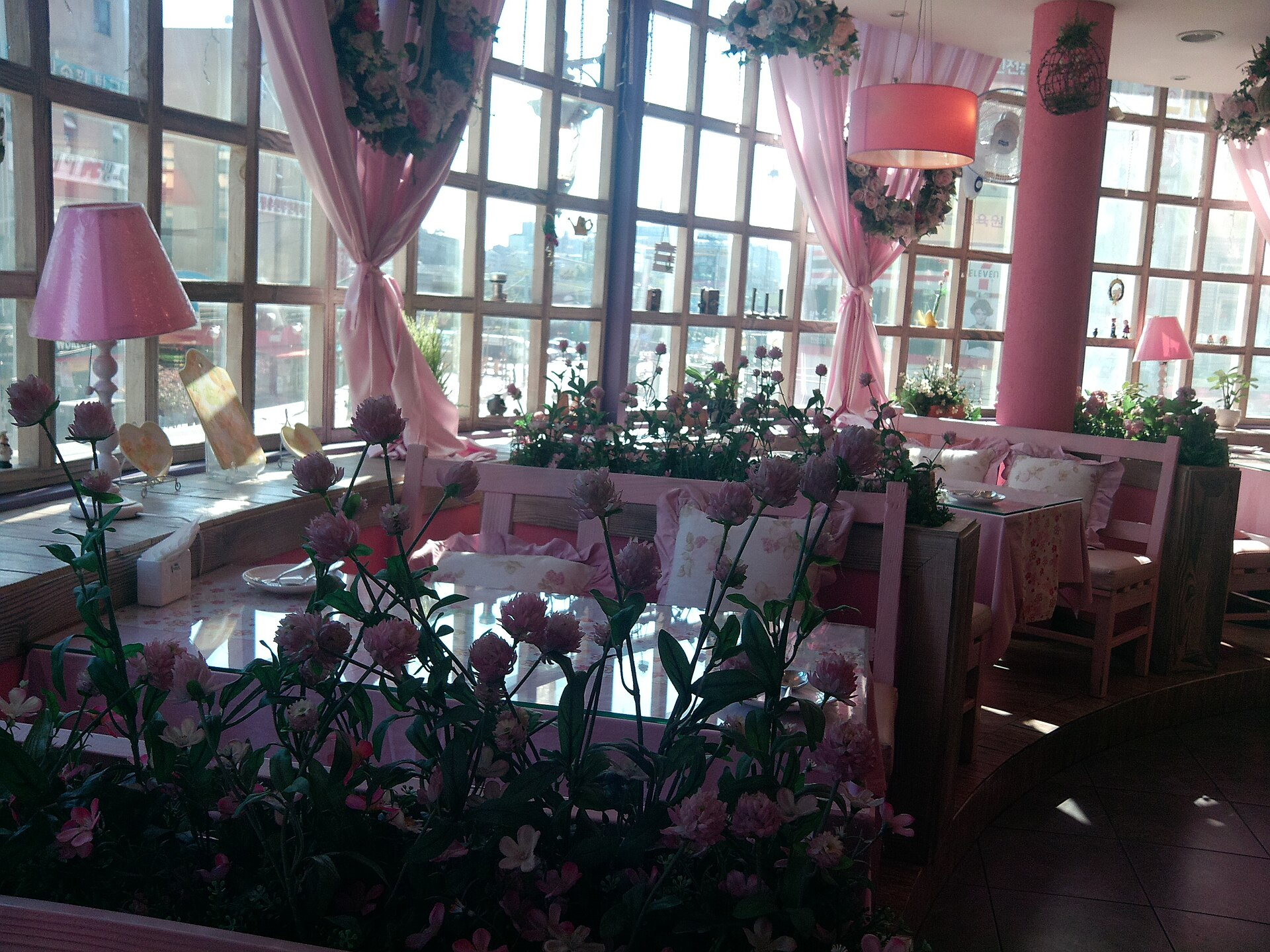
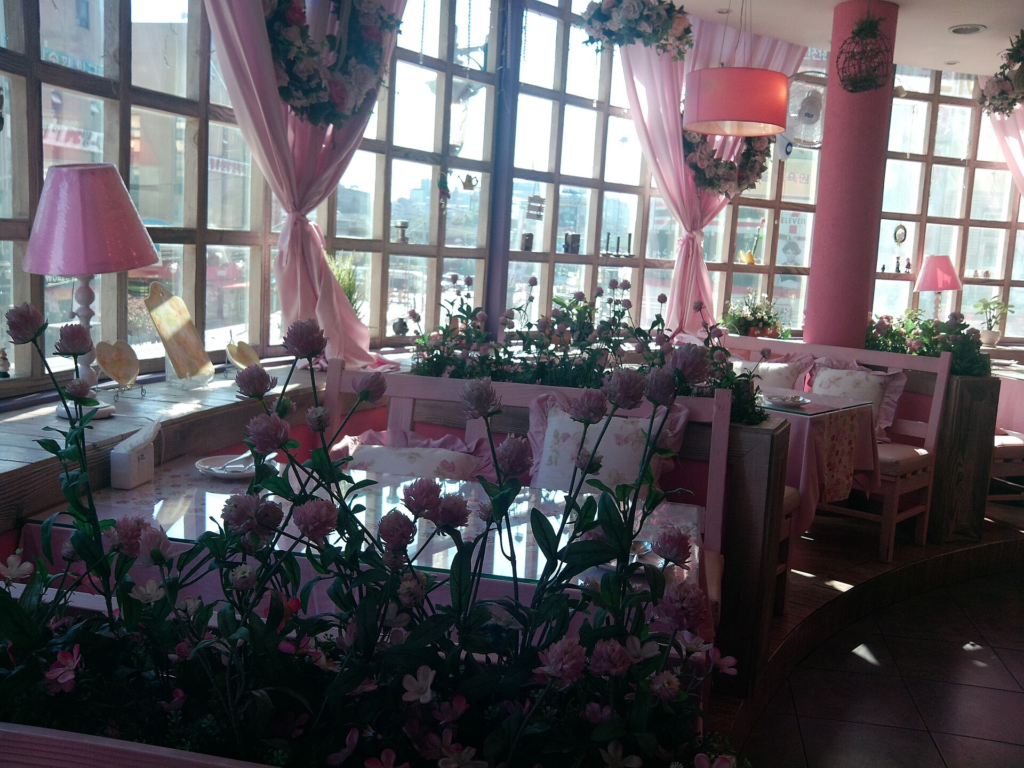
Design cafes. Big rooms in old buildings, made to be photographed. Seoul’s best clusters are the factory cafes of Seongsu, the courtyards of Ikseon-dong, the park side cafes of Yeonnam-dong, the upstairs bars and coffee rooms of Hipjiro, the bookshops of Seochon and the gallery street of Samcheong-dong.
Dessert cafes. Cake, bingsu, croffles, macarons, whatever is trending this season. Expect to pay more for the dessert than the coffee.
Theme cafes. Character cafes, board game cafes, flower cafes and animal cafes. Animal cafes have changed: since 14 December 2023 Korea bans exhibiting wild animals in unlicensed places such as cafes, including raccoons and meerkats, with touching and riding banned even during a grace period that ends on 13 December 2027, Financial News reported (in Korean). Dog and cat cafes are not covered by that ban. My view: skip any cafe still offering hands on contact with wild species.
Study cafes (스터디카페). Not really cafes: quiet desk rooms, partitioned or open plan, rented by time. KB Kookmin Card counted 6,944 franchised study cafes in October 2024, up from 112 at the end of 2015, mostly billed by time, with eating and drinking allowed, Segye Ilbo reported (in Korean). Useful if you need to work for a day.
Unmanned cafes (무인카페). Kiosk or robot cafes with no barista: you order and pay on a screen, a machine or robotic arm makes the drink, and staff drop by about once a day to clean and restock, per a 2021 iNews24 report (in Korean). Cheap, and because they need no staff they can run 24 hours.
Heritage tea rooms. The dabang. Ssanghwacha (herbal tea), Vienna coffee, velvet chairs. A history lesson in a cup; I cover Eulji Dabang in my Hipjiro guide.
Zero waste cafes. Earth Us in Yeonnam-dong has run since 2017 without disposables: bring your own container for takeaway, and it takes 2,000 won off coffee for doing it, per Weekly Kyunghyang.
Options With Opinions
| Option | Best For | Cost | Time | My Take |
|---|---|---|---|---|
| Budget chain to go | Caffeine on the move | 1,500 to 2,000 won | 5 min | Perfect for subway days |
| Design cafe sit in | Resting, photos, people watching | 5,500 won plus | 1 to 2 hours | My pick once a day |
| Study cafe | Working remotely | By the hour | Half a day | Better than annoying a cafe owner |
| Heritage dabang | History and something different | Check the board | 45 min | Do it once |
What Locals Know
Iced Americano all year. Koreans drink “a-a” (아아, short for iced Americano) even in a cold snap. There’s a joke for it: eoljuka (얼죽아), “even if I freeze to death, iced Americano”.
Cafes are rented living rooms. Small apartments and long study hours mean cafes double as offices and study rooms. That’s why cagong is a national debate and why cafes guard their sockets.
Tumblers save money. Many chains knock a few hundred won off for your own cup, and the government’s 2026 plans include a 300 won tumbler discount, per Bizworld (in Korean). The same roundup said straws will be handed out only on request.
The second floor is the real cafe. Ground floors are for ordering and takeaway queues; regulars head upstairs, where the seats and quiet are. Always look for stairs.
Pick Your Version
If It’s Your First Time
Do one design cafe a day as your rest stop, and use budget chains for coffee on the move. My Start Here hub covers cards and apps.
If You’re Bringing Kids
Pick big franchise or warehouse cafes with space and toilets. Dessert cafes are a treat, but check stairs if you have a buggy.
If You’re Travelling Solo
Cafes are the easiest place in Seoul to be alone. Counter seats, books, laptops, and nobody looks twice. My solo travel guide has more.
Sunbae’s Picks
My pick for first coffee in Seoul: a budget chain iced Americano on the way to the subway, like a local.
My pick for an afternoon: a factory cafe in Seongsu on a weekday.
My pick for history: Hakrim Dabang near Hyehwa Station, a 1956 tea room in the heart of the Daehangno theatre district.
I’d skip wild animal cafes, full stop.
Offers Worth Knowing
Bring a tumbler for a discount at many cafes; Earth Us gives 2,000 won off. Budget chains keep a hot Americano at 1,500 to 1,700 won. Cards are accepted almost everywhere, and my money guide covers foreign cards and pay apps.
What’s Changing In 2026
Paying for the cup, maybe later. The environment ministry floated a “cup separate charge” so takeaway cups would appear on receipts, with about 100 to 200 won mentioned, Kyunghyang Shinmun reported (in Korean). On 28 April 2026 it left the charge out of its final plan, choosing voluntary cuts and wider tumbler discounts at independent cafes, Aju Economy reported (in Korean). My read: it could come back, so carry a tumbler.
Paper cups again. The government plans to reinstate an in store paper cup ban, starting with large stores, with a schedule to be set this year, per the August 2026 SBS Biz report.
A saturated market. Coffee shop numbers fell for the first time in years in early 2025. My read: some small independents will close, so if a cafe in an older guide matters to you, check Naver Map before you cross town for it.
Worth It Or Skip It
Worth It: building your Seoul days around cafe stops. They’re the best rest, toilet and phone charging network in the city.
Skip It: the viral dessert cafe with a 90 minute queue. There’s another one two streets away.
Walk It Before You Go
Watch a weekend walk through the Hongdae and Yeonnam-dong cafe streets before you ride out, so the exits and corners look familiar when you get there. The video is by Seoul Walk 4K on YouTube, not by me, and shops may have changed since it was filmed.
Getting There
Cafes are everywhere, but the six best neighbourhoods for a cafe day are all on the subway: Seongsu and Ttukseom (Line 2, green), Hongik University for Yeonnam (Line 2, green; AREX, blue), Euljiro 3-ga for Hipjiro (Lines 2 and 3), Jongno 3-ga for Ikseon-dong (Lines 1, 3 and 5), Anguk for Samcheong-dong (Line 3, orange) and Gyeongbokgung for Seochon (Line 3, orange). Hakrim Dabang is on Daehak-ro by Hyehwa Station on Line 4 (sky blue); check Naver Map for the exit.
Word Of The Stop
아이스 아메리카노 (aiseu amerikano), “iced Americano”. Say “a-a hana juseyo” (one iced Americano, please) and you’ll sound like a Seoul office worker. Add 매장이요 (maejang-iyo), “for here” or 테이크아웃이요 (teikeuaut-iyo), “takeaway”.
Map And Directions
- 1Hakrim Dabang 학림다방4Hyehwa StationCheck Naver Map for the exit
Tea room since 1956 at 119 Daehak-ro; listed 10am to 11pm daily (2019)
- 2Eulji Dabang 을지다방Area pin2Euljiro 3-ga StationEXIT5
Tea room since 1985; ssanghwacha and Vienna coffee
- 3Daelim Changgo 대림창고2Seongsu StationCheck Naver Map for the exit
The classic warehouse design cafe in Seongsu
- 4Coffee Libre Yeonnam 커피 리브레 연남점AHongik University StationCheck Naver Map for the exit
Specialty coffee pioneer founded 2009
- 5Cheongsudang 청수당Area pin1Jongno 3-ga StationEXIT6
Hanok courtyard dessert cafe in Ikseon-dong
- 6Boan1942 보안1942Area pin3Gyeongbokgung StationEXIT2 (check Naver Map)
Cafe and bookshop beside a 1936 inn turned art space
Last Mile
- Euljiro 3-ga Station → Jongno 3-ga Station about 2 min
- Jongno 3-ga Station → Gyeongbokgung Station about 5 min
- Euljiro 3-ga Station → Seongsu Station about 20 min
- Euljiro 3-ga Station → Hongik University Station about 20 min
Tap a button to open directions on your phone. In Korea, Naver Map and KakaoMap give full walking directions; Google Maps covers subway and bus but, as of September 2026, still has no turn by turn walking or driving here. Pins marked “Area pin” show a neighbourhood, not a door.
Frequently Asked Questions
How Much Is A Coffee In Seoul In 2026?
About 1,500 to 2,000 won at budget chains, 4,700 won for a tall Americano at Starbucks, and around 5,500 to 6,000 won at design and specialty cafes.
Can I Work On My Laptop In Korean Cafes?
Usually, yes. Buy a drink per person, don’t take over a big table, and don’t bring desktops, printers or power strips. Some cafes limit stays to two hours.
What Is A Study Cafe In Korea?
A quiet desk room mostly billed by time, where eating and drinking are allowed. Franchised study cafes grew from 112 in 2015 to 6,944 in October 2024.
Are Animal Cafes Legal In Korea?
Dog and cat cafes are. Exhibiting wild animals such as raccoons and meerkats in cafes has been banned since 14 December 2023, with existing cafes given until 13 December 2027 and touching banned in the meantime.
Why Do Koreans Drink Iced Americano In Winter?
Habit and speed: it’s quick to drink, cheap at budget chains, and part of office culture. The slang 얼죽아 means “iced Americano even if I freeze”.
Next Stop
- Seongsu Cafe Street: factory and warehouse cafes.
- Ikseon-dong Hanok Cafes: courtyard coffee in a 1930s estate.
- Unwritten Rules Of Korea: the etiquette behind the etiquette.
Resources
- Seoul mediahub: Seoul’s long running dabang (Korean): Hakrim, Dok and Eulji Dabang.
- Naver Map or KakaoMap: search a cafe name for hours, floors and reviews.
- 1330 Korea Travel Hotline: call 1330 (+82-2-1330 from abroad) for English help.
- Ordering guide: kiosks, buzzers and what to say.
How I Checked This
On 14 October 2026 I checked prices against Sidae (April 2025) and The Korea Times (January 2025), cafe numbers against National Tax Service data via Inside Retail Asia (May 2025), Starbucks rules against Korea JoongAng Daily (August 2025), study cafes against Segye Ilbo (November 2024), unmanned cafes against iNews24 (2021), the wildlife cafe ban against Financial News (December 2023), and cup rules against SBS Biz (August 2026), Kyunghyang (December 2025) and Bizworld (January 2026). I could not confirm 2026 chain prices beyond those dates. On 16 October 2026 I added Aju Economy (April 2026) on the cup charge being dropped.
Sources
- Seoul mediahub: Seoul’s long running dabang, Aug 2019 (Korean)
- Korea JoongAng Daily: a growing taste for quality coffee, Dec 2014
- Inside Retail Asia: Korean cafe boom reverses, May 2025
- Korea JoongAng Daily: Starbucks Korea cracks down on all day cafe workers, Aug 2025
- Sidae: budget coffee chain prices, Apr 2025 (Korean)
- The Korea Times: Starbucks Korea raises prices of 22 beverages, Jan 2025
- Financial News: wild animal cafe ban takes effect, Dec 2023 (Korean)
- Segye Ilbo: study cafes overtake reading rooms, Nov 2024 (Korean)
- iNews24: unmanned coffee shops spread, Jul 2021 (Korean)
- Weekly Kyunghyang: Earth Us zero waste cafe, Dec 2024 (Korean)
- SBS Biz: in store cup rules, Aug 2026 (Korean)
- Kyunghyang Shinmun: disposable cups to be charged separately, Dec 2025 (Korean)
- Bizworld: what changes for cafes in 2026, Jan 2026 (Korean)
Written by your sunbae. Over 20 years in Korea. We learned the lessons the hard way, so you don’t have to, and we’re here to guide you and help you enjoy Korea. Every fact here is checked against official sources and, wherever possible, on the ground.
Beep Check: verified 14 Oct 2026. Rules, prices and dates change; confirm with the official source before you travel.