Tag: Solo

  • Your First Ski Trip In Korea: Resorts Near Seoul

    Your First Ski Trip In Korea: Resorts Near Seoul

    TL;DR

    For a first ski trip from Seoul, book the shuttle to MONA YongPyong in Gangwon and take a beginner lesson. The season usually opens in the second half of November: Yongpyong opened on 21 November last season and High1 on 28 November. A full day with shuttle, lift, rental, ski suit and group lesson costs about 288,000 won at last season’s prices.

    Last checked: 5 Oct 2026 What is a Beep Check?

    Sunbae Says: Do not pack ski clothes. Rent the jacket and trousers at the resort (30,000 won for the day at Yongpyong) and save your suitcase for shopping.

    Picture it: you are on a bus out of Hongdae before the sun is up, asleep by the motorway, and by 9am you are clicking into rented skis under a mountain that hosted Olympic races. By dinner you are back in the city with tired legs and a story. That is the trip this guide sets up.

    When Does Ski Season Start In Korea?

    Korean resorts open when nights get cold enough to make snow, so opening days move every year. Most years the big Gangwon resorts start in the second half of November, with one or two beginner slopes first and more runs opening over the following weeks.

    Last season, VisitKorea’s ski resort roundup gave MONA YongPyong’s start as 21 November 2025, and Korean press reported Phoenix Pyeongchang opening the same day. High1 followed on 28 November, a week earlier than usual, with one beginner slope and a sledding hill. Elysian Gangchon, the closest resort by train, opened on 6 December.

    For 2026/27, MONA YongPyong and High1 plan to open on 27 November, Phoenix has moved its target up to 20 November and Alpensia is aiming for 28 November, Financial News (in Korean) reported on 5 November. All of these depend on nights cold enough for snowmaking. Yongpyong’s shuttle booking partner, which lists Seoul shuttles from 27 November 2026 to 1 March 2027. I post opening days on our what’s on calendar as they land.

    Heads Up: If your trip is before late November, there may be no snow at all. Check the resort’s site the week you fly, and read Korea in November for what else the month does well.

    If you land in the first two weeks of the season, expect fewer runs and machine made snow. December, covered in Korea in December, is when most resorts are fully open.

    Choosing A Resort

    The short version: the Gyeonggi and Chuncheon resorts are about an hour from Seoul and good for a half day. The Gangwon mountain resorts are further but bigger, with more beginner terrain and English lessons.

    Resort Where From Seoul Best For My Take
    MONA YongPyong Pyeongchang, Gangwon About 2.5 hours by shuttle A proper first day My pick: English group lessons, published prices, shuttle from Hongdae and Myeongdong
    High1 Jeongseon, Gangwon Further still Nervous beginners who want a long run Its 4.2 km valley course lets you ride from the top; best as an overnight
    Elysian Gangchon Chuncheon, Gangwon About an hour by train Car free half day The only one here you reach on a commuter line plus a walk
    Jisan Forest Resort Icheon, Gyeonggi About 60 km A quick taster Small, close, cheap to try
    Konjiam Resort Gwangju, Gyeonggi About 40 minutes by car from the city Families with a car The largest near Seoul, with app ticketing
    Vivaldi Park (Sono) Hongcheon, Gangwon About 80 km (approx.) Night owls Busy with young Koreans; night skiing runs very late

    High1 is the one for anxious first timers: its own facilities page describes the 4.2 km valley course as mostly straight with a low gradient, “favored by beginners”, running from the mountain top to the valley condos. That means you can ride a gondola up and enjoy the view on the way down instead of circling the bunny slope all day.

    What A Day Costs: Yongpyong Example

    These are 2025/26 season prices from Yongpyong’s English site. The 2026/27 prices were not published by 5 October, so treat them as a guide.

    Item Adult (14+) Child (13 and under)
    Shuttle bus, Seoul return 44,000 won 32,000 won
    Day lift ticket (9am to 5pm) 96,000 won 78,000 won
    Half day lift (9am to 1pm or 1pm to 5pm) 68,000 won 56,000 won
    Full rental set, day 48,000 won 42,000 won
    Ski suit, jacket and trousers, day 30,000 won not listed separately
    Beginner group ski lesson (2 hours) 70,000 won per person same, ages 8 and up

    Add it up and an adult pays about 288,000 won. The lift price page adds a 1,000 won deposit on the lift card, refunded at any kiosk. The rental page says the desk on the first floor of Dragon Plaza keeps your ID until you return the gear.

    Heads Up: The rental desk holds your ID all day. Hand over a driving licence or other photo card, and keep your passport in a locker, not at the counter.

    Getting There Without A Car

    Your alarm goes at 4:45am, and the bus leaves at 5:25am with or without you. That is the price of a full day on the snow.

    Option Check

    Option Best For Cost Time My Take
    Yongpyong shuttle from Hongdae or Myeongdong A full or half day at Yongpyong 22,000 won each way About 2.5 hours My pick: door to slope, no changes
    Gyeongchun Line (teal green) to Baegyang-ri, walk to Elysian Gangchon A cheap afternoon taster A subway fare About an hour from eastern Seoul Best value; check the season timetable
    KTX to Pyeongchang (Jinbu) Travellers with a resort booking Check Korail+ About 1.5 hours on the train The resort shuttle from Jinbu is for booked guests
    Express bus to Hoenggye Budget travellers who do not mind a taxi at the end Check the T-money bus app Check the app Workable, but the shuttle is easier

    The Yongpyong Shuttle Step By Step

    The shuttle timetable gives these boarding points:

    1. Hongik University Station (Line 2, green; AREX, blue): Exit 8, walk 130 m straight to the Starbucks at the airport railroad branch. Buses at 5:25am and 8:50am.
    2. Sinchon Station (Line 2, green): Exit 7, about 100 m ahead, in front of Olive Young. Buses at 5:30am and 8:55am.
    3. Myeongdong Station (Line 4, sky blue): Exit 1, in front of the Korea Electric Power building. Buses at 5:25am and 8:45am.
    4. Dongdaemun: in front of the Doota fashion mall’s main entrance, on the road side, 10 minutes after Myeongdong.
    5. Sports Complex Station (Line 2, green; Line 9, gold): Exit 6, last city pick up at about 6:20am or 10am.

    Return buses leave the resort at 1pm and 5pm, dropping at Jamsil Station Exit 5, Sports Complex, Myeongdong and Sinchon. The English page lists 22,000 won each way for adults and 16,000 won for children; the Korean page showed 20,000 won for adults when I checked, so budget 22,000 and enjoy any change. Tickets are booked online, not sold at the stop.

    Use a Climate Card tourist pass or T-money card for the subway ride to the stop, and pin the exit in Naver Map the night before (our travel apps guide shows how).

    The Train Option: Elysian Gangchon

    Elysian Gangchon sits beside Baegyang-ri Station on the Gyeongchun Line (teal green), the commuter line that runs out from Sangbong and Cheongnyangni to Chuncheon. Korean visitors walk from the station, and Asia Today reported (in Korean) that the resort also runs a free shuttle from Baegyang-ri. Last season ITX-Cheongchun trains made extra ski season stops there. Check the 2026/27 timetable on Naver Map before you go.

    Flying In For Skiing

    The airport shuttle runs from 7 December 2026 to 12 February 2027, according to the booking partner, with departures from Terminal 2 at 7:30am and 9:30am and Terminal 1 half an hour later, at 42,000 won one way for adults. File your e-Arrival Card before you fly so you are not the one holding up the 8am bus.

    What Locals Know

    The X6+ pass tells you who runs together. This season Korea’s multi resort season pass grew from five resorts to six, adding Alpensia to Yongpyong, High1, Jisan, Welli Hilli and Elysian Gangchon. Korean press reported an adult price of 599,000 won in its first sale round in September. It is overkill for a visitor, but it explains why Korean skiers hop between these six and why their weekend car parks fill together.

    Helmets are becoming the rule. Korean ski news in early 2026 reported resorts such as Elysian Gangchon making helmets compulsory and stocking extra rental helmets. Even where it is optional, wear one; beginner slopes are where the collisions happen.

    Weekdays are a different country. Korean office workers ski weekends and Christmas week, and night skiing after work at the Gyeonggi resorts. Go Tuesday to Thursday in early December and the lift lines and lesson groups shrink.

    The magic word is 초보. Lesson menus and slope maps sort everything by level, and beginner terrain is labelled 초급 (chogeup). Look for it on the map before you follow a friend up a lift.

    Pick Your Version

    If It’s Your First Time

    Book the 8:45am shuttle, not the 5:25am one. It gets you there for the 2pm group lesson on an afternoon half day ticket, and you are back on the 5pm bus. If I were you, I’d treat day one as a taster and only commit to a full day once you know you like it.

    If You’re Bringing Kids

    Children 13 and under pay reduced rates for lifts, rentals and the shuttle. The lesson page takes children into English or Chinese group lessons from age 8, and 6 and 7 year olds into one to one private lessons only (300,000 won per team last season). I’d book the private lesson for small kids and plan plenty of hot chocolate breaks. Read Seoul with kids in winter for the rest of your trip.

    If You’re Travelling Solo

    The shuttle and the group lesson do the social part for you: a group lesson needs at least four people, so you will not be on your own. I’d book a weekday and head back to the city for dinner. Our solo in Seoul guide has ideas for the evening.

    Sunbae’s Picks

    My pick for a first timer who wants a proper day is Yongpyong. English lessons, a shuttle from the tourist areas and clear prices beat everything else on this list for someone who has never skied.

    If I only had one afternoon, I’d take the 68,000 won half day ticket from 1pm with the 2pm group lesson. Most first timers are done after four hours anyway, and it fits the 5pm bus home.

    If I wanted it cheap and close, I’d ride the Gyeongchun Line (teal green) to Elysian Gangchon on a weekday afternoon and be home for a late dinner.

    I’d skip night skiing on your first day. Yongpyong’s evening session runs 7pm to 11pm, but you will be too tired, and the last Seoul shuttle leaves at 5pm.

    Offers Worth Knowing

    Children 13 and under get lower prices on lifts, rentals and the shuttle. The half day ticket saves 28,000 won on the full day price for an adult. Renting the suit saves packing a whole ski outfit. And watch opening weekends: Hankyung reported that High1 discounted lift tickets and rentals for its opening weekend last season. Check each resort’s site for 2026 offers.

    What’s Changing In 2026

    Foreign skiers are coming in bigger numbers. High1 counted about 43,000 foreign visitors in the 2025/26 winter, up 54 percent on the season before, according to the Kangwon Ilbo (in Korean), and it opened a one stop lounge just for foreign guests. Long haul arrivals are up too: Yanolja Research shows the Americas up 45.8 percent and Oceania up 44.5 percent on 2019. My read: expect more English signage and more tour packages, and book December weekend lessons early.

    If you add the train, KTX and SRT merged on 1 September 2026 (in Korean), and bookings now run through the Korail+ app.

    What To Wear And Bring

    Rent the suit, but bring your own gloves, a warm hat or neck warmer, thermal layers and sunglasses or goggles. Mountain wind in Gangwon feels much colder than Seoul. Our what to wear guide covers layers. After the slopes, a hot soak at a jjimjilbang back in Seoul is the local way to recover, and a winter street food stop on the walk home does the rest.

    Word Of The Stop

    초보 (chobo): beginner. You will see it on lesson menus, and 초급 (chogeup) marks beginner slopes. Say “chobo imnida” (I am a beginner) at the rental counter and the lesson desk so they know where to start you.


    Map And Directions

    1. 1
      MONA YongPyong 모나 용평

      Largest resort; English group lessons 70,000 won (2025/26); Seoul shuttle scheduled from 27 Nov 2026; opened 21 Nov last season

    2. 2
      High1 하이원리조트

      4.2 km gentle valley course for beginners; opened 28 Nov last season; foreign guest lounge

    3. 3
      Elysian Gangchon 엘리시안강촌Area pin
      Baegyang-ri Station

      Closest resort by train; walk or free shuttle from Baegyang-ri; opened 6 Dec last season

    4. 4
      Jisan Forest Resort 지산포레스트리조트

      About 60 km from Seoul; quick half day taster

    5. 5
      Konjiam Resort 곤지암리조트

      Largest resort near Seoul; app ticketing; check its site for the 2026/27 shuttle

    6. 6
      Vivaldi Park (Sono) 비발디파크

      Popular with young Koreans; very late night skiing

    7. 7
      Yongpyong shuttle stop, Hongik University Station 홍대입구역 8번 출구 스타벅스 홍대공항철도역점Area pin
      2Hongik University StationEXIT8

      Walk 130 m straight to Starbucks; buses 5:25am and 8:50am; book online

    8. 8
      Yongpyong shuttle stop, Myeongdong Station 명동역 1번 출구 한국전력 앞Area pin
      4Myeongdong StationEXIT1

      In front of the Korea Electric Power building; buses 5:25am and 8:45am

    Your Tickets

    Shuttle셔틀
    Hongik University Station Exit 8 / Sinchon Exit 7 / Myeongdong Exit 1 / Dongdaemun (Doota) / Sports Complex Exit 6→MONA YongPyong
    Timeabout 2.5 hours
    Fare22,000 won each way adult, 16,000 won child
    Departs about 5:25am or 8:45am; returns 1pm and 5pm; book online, no sales at the stop
    SEOUL SUNBAE320-1승차권
    Shuttle셔틀
    Incheon Airport T2 (7:30am, 9:30am) / T1 (8:00am, 10:00am)→MONA YongPyong
    Timecheck the timetable
    Fare42,000 won one way adult
    Runs 7 Dec 2026 to 12 Feb 2027
    SEOUL SUNBAE320-2승차권
    KTX고속열차
    Seoul→Pyeongchang (Jinbu) Station
    Timeabout 1.5 hours
    Farecheck Korail+
    Resort shuttle from Jinbu is for booked guests only
    SEOUL SUNBAE320-3승차권
    Express bus고속버스
    Dong Seoul or Nambu (South Seoul) Bus Terminal→Hoenggye (near Yongpyong)
    Timecheck the T-money bus app
    Farecheck the T-money bus app
    Then a taxi to the resort
    SEOUL SUNBAE320-4승차권

    Last Mile

    • Sangbong or Cheongnyangni → Baegyang-ri Station (Elysian Gangchon) about an hour
    Get the map appsNNaver Map App Store Google PlayKKakaoMap App Store Google PlayBoth work in English. With the app installed, the Naver Map and KakaoMap buttons open directions straight to the pin.

    Tap a button to open directions on your phone. In Korea, Naver Map and KakaoMap give full walking directions; Google Maps covers subway and bus but, as of September 2026, still has no turn by turn walking or driving here. Pins marked “Area pin” show a neighbourhood, not a door.

    Frequently Asked Questions

    When Does Ski Season Start In Korea In 2026?

    For 2026/27, Yongpyong and High1 plan to open on 27 November and Phoenix is aiming for 20 November, weather permitting, Korean news reported on 5 November. Last season Yongpyong opened on 21 November and High1 on 28 November; Yongpyong’s Seoul shuttle is scheduled from 27 November 2026.

    Which Ski Resort Is Best For Beginners Near Seoul?

    For a full day, Yongpyong: English lessons, clear prices and a shuttle from Hongdae and Myeongdong. For a quick half day by train, Elysian Gangchon; by car, Jisan or Konjiam.

    How Much Does A Ski Day In Korea Cost?

    At Yongpyong last season, about 288,000 won for an adult with shuttle, day lift, rental, suit and a group lesson. A half day lift saves 28,000 won.

    Can I Do A Ski Day Trip From Seoul?

    Yes. Yongpyong’s shuttle leaves Hongdae and Myeongdong at about 5:25am or 8:45am and returns from the resort at 1pm and 5pm.

    Do Korean Ski Schools Teach In English?

    Yongpyong runs group ski lessons in English and Chinese for first timers aged 8 and up, plus English snowboard lessons. Book ahead for December weekends.

    Next Stop

    Resources

    • Yongpyong shuttle booking (RideUs): book the Seoul or airport shuttle; tickets are not sold at the stop.
    • MONA YongPyong English site: lift, rental and lesson prices; resort line +82-33-335-5757.
    • VisitKorea ski resorts roundup: 12 resorts with basics in English.
    • 1330 Korea Travel Hotline: dial 1330 (or +82-2-1330 from abroad) for English help with buses and bookings, 24 hours.
    • Naver Map or KakaoMap: search the resort name in Korean (용평리조트, 엘리시안강촌) for live routes and exits.
    • Korail+ app: KTX tickets to Pyeongchang (Jinbu) and ITX trains on the Gyeongchun Line (teal green).

    How I Checked This

    On 12 November 2026 I checked the 2026/27 opening plans in Korean news. On 5 October 2026 I re-checked Yongpyong’s lift, rental, lesson and shuttle prices, stops, exits and season dates on its English site and its shuttle partner’s English and Korean pages, High1’s valley course on its own site, last season’s opening days in VisitKorea and Korean news, and read Korean news and skier blogs for the X6+ pass, helmet rules and train access. Still unconfirmed: the actual 2026/27 opening days, which can slip in a warm spell, and prices, the Elysian Gangchon shuttle and ITX stops for this season, and the approximate distances for Konjiam and Vivaldi Park.

    Sources


    Written by your sunbae. Over 20 years in Korea. We learned the lessons the hard way, so you don’t have to, and we’re here to guide you and help you enjoy Korea. Every fact here is checked against official sources and, wherever possible, on the ground.

    Beep Check: verified 5 Oct 2026. Rules, prices and dates change; confirm with the official source before you travel.
  • Christmas Lights In Seoul 2026: Where To See Them (And The Best Light Festivals Near Seoul)

    Christmas Lights In Seoul 2026: Where To See Them (And The Best Light Festivals Near Seoul)

    TL;DR

    The best Christmas lights in Seoul are the department store facades in Myeongdong (Shinsegae and Lotte), the Seoul Light media facade at Gwanghwamun, the Cheonggyecheon lanterns, and the giant trees at COEX and Lotte World Tower. All are free. Outside Seoul, the Garden of Morning Calm in Gapyeong runs Korea’s best known winter light festival.

    Last checked: 22 Oct 2026 What is a Beep Check?

    Sunbae Says: Do the lights on a weeknight, starting at blue hour (about 5:20pm in December), and save Shinsegae for last. Its soundtrack only played from 10pm last season.

    You come up out of Hoehyeon Station into air that hurts your teeth, look up, and a whole building is a snow globe. This page is the map: which exit, how long, and when to go. For Christmas Eve plans, read my Christmas in Seoul guide; for markets, the Seoul Christmas market guide.

    Season At A Glance

    This table is last season (2025/26). Since then the 2026 dates have started to land: Shinsegae’s film started on 6 November and runs daily from 5pm to midnight until 31 January 2027 (Aju Business Daily (in Korean)), and The Hyundai Seoul’s village opened on 10 November (Financial News (in Korean)).

    Spot Last Season (2025/26) Hours Cost Station Or Access Best For
    Shinsegae facade, Myeongdong 7 Nov to 31 Jan 5pm to midnight; sound 10pm to midnight Free Hoehyeon, Line 4 (sky blue), Exit 7 The big one
    Lotte main store facade, Myeongdong 31 Oct to 31 Dec 5:30pm to 11pm Free Euljiro 1(il)-ga, Line 2 (green), Exit 6 Pairing with Shinsegae
    Seoul Light Gwanghwamun 12 Dec to 4 Jan 5:30pm to 9:30pm (10pm Fri, Sat) Free Gwanghwamun, Line 5 (purple), Exit 9 Projection shows
    Cheonggyecheon lanterns 12 Dec to 18 Jan 6pm to 10pm (11pm later) Free Gwanghwamun, Line 5, Exit 5 A slow walk
    Seoul Light DDP 18 to 31 Dec 6pm to 10pm, every 30 min Free Dongdaemun History & Culture Park, Exit 1 The giant curved screen
    Seoul Plaza tree 17 Nov to 1 Jan Not listed; lit after dark Free City Hall, Lines 1 and 2, Exit 6 A quick photo
    Starfield Library tree, COEX 13 Nov to 31 Jan 10:30am to about 10pm Free Samseong, Line 2 (green), Exit 5 Rain or freezing nights
    Lotte Town tree and market, Jamsil 20 Nov to 4 Jan 11:30am to 10pm Free before 4pm, 5,000 won after Jamsil, Lines 2 and 8, Exit 10 Kids, a 13 m tree
    Garden of Morning Calm, Gapyeong 5 Dec to 15 Mar Lights 5pm to 9pm (Sat to 11pm) 11,000 won adult Cheongpyeong Station, then bus The full light festival
    Gwangbok-ro tree festival, Busan 5 Dec to 22 Feb 5:30pm to 10pm Free Nampo Station, Busan Metro Line 1 A Busan weekend

    The Myeongdong Facades

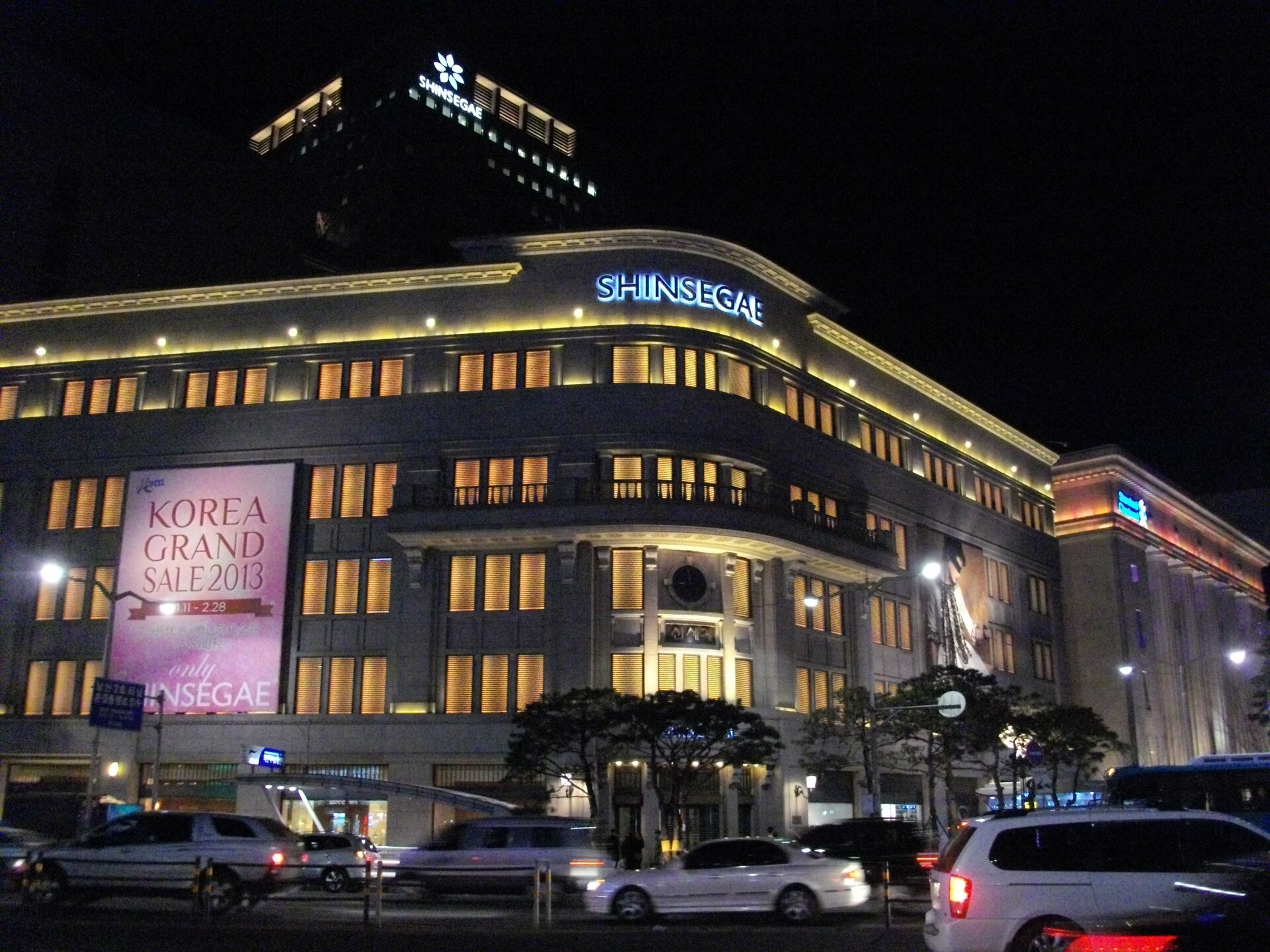
    Shinsegae main store. The whole front is a permanent screen called Shinsegae Square, and every winter it plays a Christmas film. CBC News reported (in Korean) about 350,000 LEDs, a loop of roughly three and a half minutes, lights from 5pm to midnight and sound only from 10pm. VisitKorea’s department store roundup lists the 2025 show as 7 November 2025 to 31 January 2026. In 2024 it started on 1 November. Give it 20 minutes. Hoehyeon Station (Line 4, sky blue), Exit 7.

    Shinsegae Department Store Main Store at night
    Shinsegae Department Store Main Store at night, 2013. Photo: Abasaa, Public domain, via Wikimedia Commons.

    Lotte Department Store main store and Young Plaza. Last season Lotte wrapped its main store and Avenuel in about 30,000 LEDs, 31 October to 31 December, 5:30pm to 11pm, per VisitKorea. This year Lotte is adding “Lotte Town Light”, a 77 m by 21 m screen on Young Plaza that Newspim reports (in Korean) will be the largest facade in Myeongdong, teaser in November, full operation in December. My Myeongdong shopping guide maps the streets between them.

    Gwanghwamun, Cheonggyecheon And DDP

    Seoul Light Gwanghwamun. The city turns the Gwanghwamun gate and the north end of the square into a projection canvas. The 2025 edition (in Korean) ran 12 December 2025 to 4 January 2026, 5:30pm to 9:30pm Sunday to Thursday and to 10pm on Fridays and Saturdays, with a 24 minute show repeated eight or nine times a night. The 2024 edition ran 13 December to 5 January. For 2026, the city’s festival portal (in Korean) lists 11 December 2026 to 3 January 2027, 5:30pm to 10pm; treat that as provisional. Allow 30 minutes. Gwanghwamun Station (Line 5, purple), Exit 9.

    Cheonggyecheon. The lanterns start a few minutes away, listed for 11 December 2026 to 31 January 2027; see my Seoul Lantern Festival guide.

    Seoul Light DDP. The curved wall of Dongdaemun Design Plaza becomes a 222 m screen. In 2025 it ran 18 to 31 December, 6pm to 10pm, every 30 minutes (in Korean), about 21 minutes of films. Take Exit 1 at Dongdaemun History & Culture Park Station (Line 2 green, Line 4 sky blue, Line 5 purple).

    Seoul Plaza. The city tree went up on 17 November 2025 and stayed to 1 January (in Korean), City Hall Station Exit 6. From mid December the Seoul Plaza ice rink sits beneath it.

    South Of The River

    Starfield Library, COEX. Your bad weather card: a gold tree about 10 m tall, up 13 November to 31 January last season, free, about 350 m from Samseong Station (Line 2, green) Exit 5. Twenty minutes is plenty; my Starfield COEX guide covers the rest.

    Lotte World Tower and Lotte Town. The 13 m tree with fake snow anchors the Lotte Town Christmas Market. Last season: 20 November to 4 January, 11:30am to 10pm, free before 4pm and 5,000 won after. Jamsil Station Exit 10, about six minutes on foot. My Lotte World Mall guide has the indoor backup.

    The Hyundai Seoul. An indoor Christmas village, not a facade. Last year’s “Christmas Atelier” ran 1 November to 31 December; the first Naver booking round opened 23 October and sold out in about 30 minutes. This year the village opened on 10 November, with advance booking from 5 November, Financial News (in Korean) reported. See my The Hyundai Seoul guide.

    Apgujeong. Galleria’s Luxury Hall East wore Goyard’s pattern last season, and Hyundai’s main store had a tree. Worth ten minutes if you are on Apgujeong Rodeo Street, not a special trip.

    Light Festivals Beyond Seoul

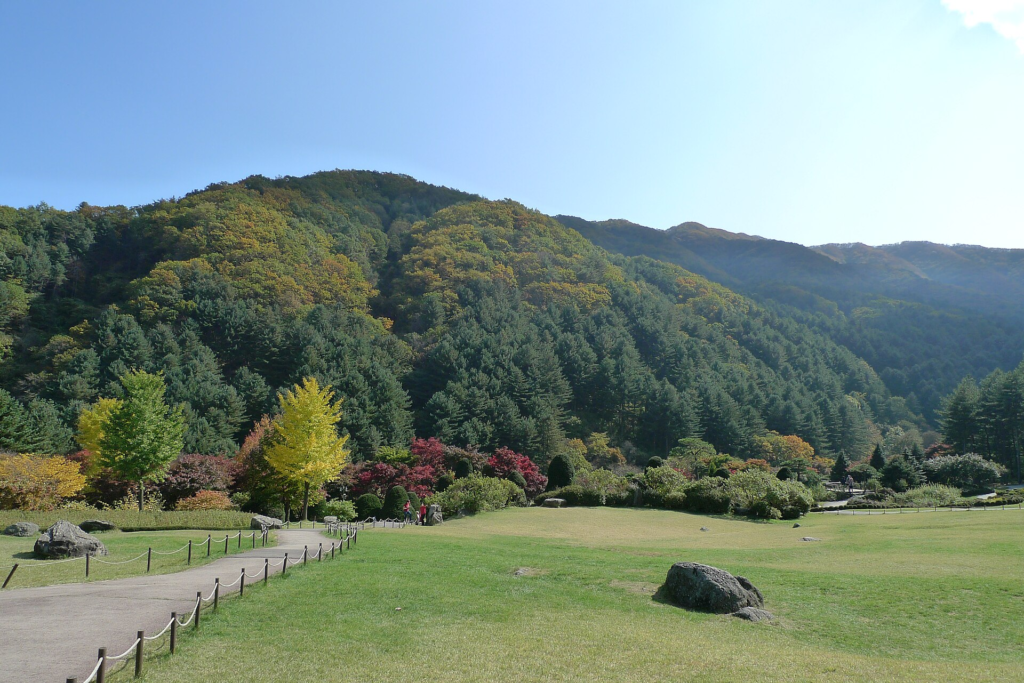
    Garden of Morning Calm, Gapyeong (아침고요수목원 오색별빛정원전). Themed gardens across the whole arboretum, lit after dark for the 19th winter running. VisitKorea lists the 2025/26 edition as 5 December 2025 to 15 March 2026, lights 5pm to 9pm (Saturdays to 11pm), 11,000 won adults, 8,500 won teens, 7,500 won children. In 2022/23 it ran 9 December to 19 March. Getting there: the Gyeongchun Line to Cheongpyeong Station, Exit 1, walk to Cheongpyeong Bus Terminal and take a bus signed for the garden, per Gyeonggi Province. ITX-Cheongchun trains use the same line; check Korail for Cheongpyeong stops. Budget two hours inside.

    The Garden of Morning Calm
    The Garden of Morning Calm. Photo: 날개 at Korean Wikipedia, CC BY-SA 3.0, via Wikimedia Commons.

    Herb Island, Pocheon (허브아일랜드 불빛동화축제). Lights every night of the year after sunset; a September 2026 report lists 10am to 9pm (Saturdays to 10pm), adults 10,000 won weekdays, 12,000 won weekends, closed Wednesdays. Mostly a car or tour trip; Korean travel pieces mention buses 57 and 57-1 from Soyosan Station (Line 1, dark blue).

    Everland and Lotte World. Both are ticketed. Everland’s 2025 “X-mas Fantasy” ran 28 November to 31 December with a 30 minute Christmas parade and a nightly fireworks show. Lotte World’s winter season ran 22 November 2025 to 2 March 2026, with the Christmas parade at 2pm and 8pm and projection mapping on the castle. My Lotte World vs Everland guide helps you pick.

    Busan: Gwangbok-ro (광복로 겨울빛 트리축제). The festival once sold as the Busan Christmas Tree Culture Festival now runs as the Gwangbok-ro Winter Light Tree Festival. The Busan city listing gives 5 December 2025 to 22 February 2026, lit 5:30pm to 10pm, and it was free. Take the KTX to Busan Station, then Busan Metro Line 1 two stops to Nampo.

    Boseong tea fields. The last 보성차밭 빛축제 I could document was the 17th, 29 November 2019 to 5 January 2020, with nothing announced since. Skip it.

    A Lights Walk For One Evening

    Free, about 3 km, three to four hours. Walking times are map estimates.

    1. 5:30pm, Gwanghwamun Square. Catch a full Seoul Light show from the start (once it opens in mid December). 30 minutes.
    2. 6:05pm, Cheonggye Plaza. About 5 to 8 minutes’ walk south. Walk the first stretch of lanterns to the second bridge, then climb out. 40 minutes.
    3. 7pm, Seoul Plaza. About 10 minutes’ walk. Tree photo, skate if the rink is open. 20 to 60 minutes.
    4. 8pm, Lotte main store. About 5 minutes’ walk east. Eat in Myeongdong, then see Lotte Town Light.
    5. 10pm, Shinsegae. About 5 to 6 minutes’ walk. Watch two loops with sound.

    South of the river instead: COEX’s library tree late afternoon, then Line 2 (green) three stops to Jamsil, Exit 10, for the Lotte Town tree after dark. Save The Hyundai Seoul for a booked daytime slot. See the subway map.

    Gwanghwamun, Main gate of Gyeongbokgung Palace
    Gwanghwamun, Main gate of Gyeongbokgung Palace, 2016. Photo: Smin630, CC BY-SA 4.0, via Wikimedia Commons.

    Photography Tips

    Phone night mode handles every spot here; brace your elbows and hold still. Shoot facades at blue hour, 20 to 30 minutes after sunset. For Shinsegae, cross the road: the full screen only fits from the far side.

    Leave the tripod at the hotel. I found no posted ban, but on a packed pavement it is a trip hazard and staff will move you on. Filming strangers up close is a sore point here; my guide to photos and privacy explains why.

    Heads Up: On peak nights, crowd control and one way flows are normal. On Christmas Eve 2023, Segye Ilbo reported (in Korean) police estimated 98,000 people in Myeongdong by 7pm, with about 210 officers running detours and one way routing. Keep moving and follow the arrows.

    What Locals Know

    Search 점등 to find switch on dates. Typing 신세계 미디어파사드 점등 into Naver finds switch on dates long before English pages do. My travel apps guide shows how.

    The store facades are a contest. Shinsegae, Lotte and Hyundai compete for the most photographed Christmas, so dates creep earlier: Lotte switched on 31 October last year.

    The city lights come later. A late November trip gets the store facades and Jamsil, not Gwanghwamun.

    Pick Your Version

    If It’s Your First Time

    Do the walk on a mid December weeknight, then Jamsil another evening.

    If You’re Bringing Kids

    I’d do Jamsil before 4pm while entry is free, then COEX. Skip Myeongdong after 8pm on weekends; strollers stall.

    If You’re Travelling Solo

    A weeknight at the Garden of Morning Calm is an easy solo trip, and 10pm Shinsegae is better alone than it sounds.

    Sunbae’s Picks

    My pick for one night: Seoul Light Gwanghwamun at 5:30pm, Shinsegae at 10pm, everything between on foot.

    My day trip: the Garden of Morning Calm on a Saturday, when the lights run to 11pm.

    Worth It Or Skip It: worth it is Shinsegae after 10pm on a weeknight. Skip Myeongdong after 7pm on 24 December; the same screens are there on 22 December with half the people.

    Offers Worth Knowing

    Every Seoul light on this page was free last season, apart from evening entry to Jamsil’s market. Lotte World sold a 20,000 won “After4” ticket from 4pm in November 2025, worth checking for the evening parade.

    What’s Changing In 2026

    A second giant screen. With Lotte Town Light due in December, Myeongdong becomes the best and most crowded lights block in Seoul.

    City lights start on 11 December. The Winter Festa is now listed for 11 December 2026 to 31 January 2027, one day earlier than last year, and Seoul Light Gwanghwamun, Seoul Light DDP and the lanterns all start that night, per the Seoul Winter Festival official site (in Korean).

    Weather And What To Wear

    Under the KMA’s 1991 to 2020 normals, Seoul averages 0.2°C in December and minus 1.9°C in January (in Korean), with average highs of 4.2°C and 2.1°C and lows of minus 3.4°C and minus 5.5°C. Standing still for 20 minutes feels colder than walking, so bring a padded coat, touchscreen gloves and a hat; my what to wear guide has the full list, and Korea in December covers the month.

    When The 2026 Dates Drop

    By 12 November 2026 Shinsegae and Hyundai had announced their 2026 dates, and Lotte said its Jamsil market opens in mid November. Watch Seoul’s media hub (mediahub.seoul.go.kr) and the Fun Seoul portal for city shows, store Instagram accounts and newsrooms, and Visit Seoul. Last year the stores announced in late October and early November. Every confirmed date goes on our what’s on calendar, and the bell and countdowns are in my New Year’s Eve guide.

    Word Of The Stop

    점등 (jeomdeung): “switching on the lights”. 점등식 (jeomdeungsik) is the lighting ceremony, and 점등 시간 (jeomdeung sigan) means “what time do the lights come on?”


    Map And Directions

    1. 1
      Shinsegae Department Store main store (Shinsegae Square facade) 신세계백화점 본점
      4Hoehyeon StationEXIT7

      Christmas film 5pm to midnight last season (7 Nov 2025 to 31 Jan 2026), sound 10pm to midnight; free

    2. 2
      Lotte Department Store main store and Young Plaza (Lotte Town Light) 롯데백화점 본점
      2Euljiro 1(il)-ga StationEXIT6

      2025 facade 31 Oct to 31 Dec, 5:30pm to 11pm; new 77 m by 21 m screen on Young Plaza due December 2026

    3. 3
      Gwanghwamun Square (Seoul Light Gwanghwamun) 광화문광장
      5Gwanghwamun StationEXIT9

      2025: 12 Dec to 4 Jan, 5:30pm to 9:30pm (10pm Fri, Sat), 24 min show; city portal lists 11 Dec 2026 to 3 Jan 2027

    4. 4
      The Hyundai Seoul (Christmas village) 더현대 서울
      Yeouido StationEXIT3

      2025 village 1 Nov to 31 Dec; Naver booking opened 23 Oct and sold out in about 30 min; same day waiting list

    5. 5
      Starfield Library, COEX (Christmas tree) 별마당 도서관Area pin
      2Samseong StationEXIT5

      2025 gold tree about 10 m, 13 Nov to 31 Jan, free, indoors

    6. 6
      Lotte World Tower (Lotte Town tree and Christmas market) 롯데월드타워
      Jamsil StationEXIT10

      2025: 13 m tree and market 20 Nov to 4 Jan, 11:30am to 10pm, free before 4pm, 5,000 won after

    7. 7
      Garden of Morning Calm (Lighting Festival) 아침고요수목원
      Cheongpyeong Station, then bus from Cheongpyeong Bus TerminalEXIT1

      2025/26: 5 Dec to 15 Mar, lights 5pm to 9pm (Sat to 11pm), adults 11,000 won

    Your Tickets

    Express bus고속버스
    Cheongpyeong Bus Terminal→Garden of Morning Calm
    Timecheck Naver Map
    Farecheck locally
    Gyeongchun Line or ITX-Cheongchun to Cheongpyeong, Exit 1, walk to the terminal, bus signed 아침고요수목원
    SEOUL SUNBAE2147-1승차권

    Last Mile

    • Gwanghwamun Square → Cheonggye Plaza (lanterns) about 5 to 8 min
    • Cheonggye Plaza → Seoul Plaza tree about 10 min
    • Seoul Plaza → Lotte Department Store main store about 5 min
    • Lotte Department Store main store → Shinsegae main store about 5 to 6 min
    • Samseong Station → Jamsil Station three stops
    Get the map appsNNaver Map App Store Google PlayKKakaoMap App Store Google PlayBoth work in English. With the app installed, the Naver Map and KakaoMap buttons open directions straight to the pin.

    Tap a button to open directions on your phone. In Korea, Naver Map and KakaoMap give full walking directions; Google Maps covers subway and bus but, as of September 2026, still has no turn by turn walking or driving here. Pins marked “Area pin” show a neighbourhood, not a door.

    Frequently Asked Questions

    When Do The Christmas Lights Start In Seoul?

    Store facades switch on in late October or early November (Lotte 31 October 2025, Shinsegae 7 November 2025); city light shows follow in December.

    Are Seoul’s Christmas Lights Free?

    Yes, apart from evening entry to Jamsil’s market last season.

    How Do I Get To The Garden Of Morning Calm Lighting Festival?

    Take the Gyeongchun Line or an ITX-Cheongchun train to Cheongpyeong, then a bus from Cheongpyeong Bus Terminal, or book a shuttle tour from Seoul.

    What Time Is Best To See The Lights?

    Blue hour, about 5:20 to 6pm in December, for photos; after 9:30pm on weeknights for space.

    Next Stop

    Resources

    • Naver Map or KakaoMap: search 신세계백화점 본점, 광화문광장 or 아침고요수목원 for exits and live photos.
    • Fun Seoul festival portal: the city’s light show listings (in Korean).
    • morningcalm.co.kr and 1544-6703: Garden of Morning Calm hours and fees.
    • 1330 Korea Travel Hotline: 24 hour help in English.

    How I Checked This

    On 12 November 2026 I checked the 2026 store Christmas dates in Korean news. On 22 October 2026 I rechecked the Winter Festa and Seoul Plaza rink dates on the Seoul festival portal and the Seoul Winter Festival official site. On 16 October 2026 I checked store facades against VisitKorea and Korean news, city light shows and trees against Seoul’s media hub and festival portal, Gapyeong against VisitKorea and Gyeonggi Province, Busan against the city listing, theme parks and crowds against Korean news, and weather against KMA. Store dates for 2026, Herb Island buses and any Boseong revival are unconfirmed; walking times are map estimates.

    Sources


    Written by your sunbae. Over 20 years in Korea. We learned the lessons the hard way, so you don’t have to, and we’re here to guide you and help you enjoy Korea. Every fact here is checked against official sources and, wherever possible, on the ground.

    Beep Check: verified 22 Oct 2026. Rules, prices and dates change; confirm with the official source before you travel.

  • Christmas In Seoul 2026: Lights, Facades And What Koreans Actually Do

    Christmas In Seoul 2026: Lights, Facades And What Koreans Actually Do

    TL;DR

    Christmas in Seoul is about lights, not family dinners. Friday 25 December 2026 is a public holiday, and locals treat Christmas Eve as a date night with cake. For you, that means the Shinsegae light facade in Myeongdong (usually from early November), a giant new Lotte facade due in December, department store Christmas villages, and the free Seoul Winter Festa from 11 December. Most of it costs nothing.

    Last checked: 22 Oct 2026 What is a Beep Check?

    Sunbae Says: Watch the Shinsegae facade after 10pm. Last year the soundtrack only played from 10pm to midnight, and the crowd had thinned by then.

    What Christmas Actually Means In Korea

    Here is the part the listicles skip. Christmas is a national holiday, and churches fill up, but for most people it is not a family day at home. After more than 20 winters here, my summary is simple: Christmas Eve is for couples, Christmas Day is for friends, and Seollal and Chuseok are the family holidays.

    That changes your trip. You walk out of your hotel at 7pm on 24 December expecting to wander into dinner, and every table in Myeongdong, Hongdae, Seongsu and Gangnam is taken by couples who booked weeks ago. Book a week or more ahead, or eat before 6pm. In 2026 Christmas Day is a Friday, so Seoul gets a three day weekend and the whole thing stretches to Sunday. The rest of the month is in our Korea in December guide.

    The other ritual is cake. A white whipped cream sponge with strawberries is the classic, and bakeries and hotels open preorders weeks ahead. The Korea Herald reported in 2023 that some hotel cakes pass 200,000 won, and that Christmas is the top sales season of the year for SPC, which owns Paris Baguette. For a cheap slice of local culture, walk into any neighbourhood bakery on 24 December and look at the queue.

    Crowd enjoying Christmas neon and lights in Myeongdong, Seoul, Korea
    Crowd enjoying Christmas neon and lights in Myeongdong, Seoul, Korea, 2017. Photo: Ken Eckert, CC BY-SA 4.0, via Wikimedia Commons.

    Pick Your Christmas Night

    Option Best For Cost Time My Take
    Myeongdong facades The big lights, photos, late night Free 1 hour My pick, after 10pm on a weeknight
    Gwanghwamun and the Winter Festa Market, lanterns, ice rink in one walk Free, rink 1,000 won 2 to 3 hours Best value evening in the city
    The Hyundai Seoul village Instagram, kids, cold or wet days Free, but timed entry 1 hour plus queue Only if you land a slot
    Lotte Town market, Jamsil November visitors, snow shows Free before 4pm in 2025 2 hours Daytime yes, weekend evenings no

    If you only have one night, do Gwanghwamun early and finish in Myeongdong late. You get every kind of Christmas light Seoul does, and you spend 1,000 won.

    The Light Facades: Myeongdong Does It Best

    Shinsegae main store. The headline act. The building front is now a permanent screen called Shinsegae Square, and every winter it switches to a Christmas film. Shinsegae’s newsroom listed the 2025 show daily from 5pm to midnight and calls it a year end spot visited by about a million people. The 2026 film, 3 minutes 40 seconds long with a 60 piece orchestra soundtrack, started on 6 November and plays daily from 5pm to midnight until 31 January 2027, Aju Business Daily (in Korean) reported. CBC News reported (in Korean) about 350,000 LEDs, a film of roughly three and a half minutes on loop, and sound from 10pm to midnight. VisitKorea’s department store roundup had it running 7 November 2025 to 31 January 2026. The 2026 dates were not announced when I checked.

    Take Line 4 (sky blue) to Hoehyeon Station, Exit 7, which Visit Seoul puts about 220 m from the store.

    Heads Up: The old fountain roundabout in front of Shinsegae is being removed, and Korean media reported in late September that the city plans a temporary plaza there by year end. Your classic viewing angle may look different, or be fenced off, this season. Walk the block before you settle on a spot.

    Lotte Department Store main store. This is the big change for 2026. Lotte is building “Lotte Town Light”, a 77 m by 21 m screen on its Young Plaza building, which Newspim reports (in Korean) will be the largest media facade in Myeongdong, with a teaser in November and full operation from December. Lotte’s 2025 Christmas facade, per VisitKorea, ran 31 October to 31 December, 5:30pm to 11pm, and the store sits by Euljiro 1(il)-ga Station (Line 2, green), Exit 6. The two stores are about 300 m apart, so you can see both in ten minutes.

    Myeongdong Cathedral. On 24 and 25 December the cathedral joins in. Seoul Shinmun reported (in Korean) that the 2025 projection show ran 5:30pm to 9pm, about five minutes every half hour, with a charity market where priests sold mulled wine and sausages, and carol concerts in the evening. The nearest station is Euljiro 3(sam)-ga (Lines 2 and 3), Exit 12. For Mass times, check the cathedral’s own site (mdsd.or.kr) in December.

    The Christmas Villages: Book Or Queue

    Department stores now build whole Christmas villages, and the popular ones run on timed entry.

    The Hyundai Seoul, Yeouido. In 2025 its 5th floor became a Christmas workshop, open 1 November to 31 December. Magazine Hipet reported (in Korean) that bookings opened on 23 October at 6pm on Naver, in one hour slots of up to four people, and that a same day QR waiting list opened at about 11:30am, with shorter waits on weekdays. Take Line 5 (purple) or Line 9 (gold) to Yeouido Station, Exit 3, and follow the underground moving walkway about 500 m to the store.

    Heads Up: The 2026 village, styled as an old New York street, opened on 10 November, and advance booking opened on 5 November, Financial News (in Korean) reported. Slots go fast. If you miss it, go on a weekday and join the QR waiting list when it opens in the morning.

    Lotte Town Christmas Market, Jamsil. The biggest market. The 2025 edition ran 20 November to 4 January on the lawn by Lotte World Tower, 11:30am to 10pm, free before 4pm and 5,000 won after. Jamsil Station (Line 2 green, Line 8 pink), Exit 10, about 6 minutes on foot. All the detail is in our Seoul Christmas Market guide.

    Seoul Winter Festa: The Free Backbone

    From 11 December 2026 to 31 January 2027, the Seoul festival portal (in Korean) lists the Winter Festa across Gwanghwamun Square and six other sites: the Gwanghwamun Market (11 December to 10 January, per the Seoul Winter Festival official site (in Korean)), Seoul Light shows at Gwanghwamun and DDP, lights on Cheonggyecheon, the Seoul Plaza ice rink and the Bosingak bell. Take Line 5 (purple) to Gwanghwamun Station; Exit 9 is closest to the market. Every dated event lives on our what’s on calendar.

    The ice rink is the best deal in the city. The city’s media hub (in Korean) confirms 1,000 won for a one hour session, skates and helmet included, a price that has held since 2004. This season it is listed from 18 December, so if you leave before then, you will miss it. For the lanterns, see Seoul Lantern Festival 2026.

    What Locals Know

    Myeongdong is turning into a screen district. Shinsegae and Lotte are in an open contest to own the Myeongdong skyline, and both facades run brand and K-pop content all year. The Christmas film is the seasonal star, so if you see an ad when you arrive, wait a few minutes for the loop.

    The city plans for Christmas crowds like a festival. Last December Seoul put Myeongdong, Itaewon, Seongsu’s café streets, Hongdae, Gangnam Station and Apgujeong Rodeo under special crowd safety management for 24 and 25 December, with crowd sensing CCTV and emergency texts. The same report counted 1.08 million visitors at the Gwanghwamun Market and lanterns over just the first three days. Expect police guiding foot traffic in Myeongdong; follow the arrows.

    Search in Korean for live info. Type 신세계 미디어파사드 or 더현대 크리스마스 into Naver and you see same day photos, queue times and booking links long before English pages update. Our travel apps guide shows you how.

    Christmas Eve taxis are a lottery. Late on the 24th, everyone wants a cab at once. Plan your last subway home, and check the subway map for which line gets you back without a transfer.

    Pick Your Version

    If It’s Your First Time

    Do Myeongdong one night and Gwanghwamun another. I’d spend 23 December on the facades and markets while the city is still working, and keep 24 December for an early booked dinner. Same lights, half the elbows.

    If You’re Bringing Kids

    Go in daylight. Do Jamsil before 4pm, the ice rink in the afternoon, and dinner before the date night crowd arrives. I’d leave the stroller at the hotel for Myeongdong after dark; the pavements jam solid. Our Seoul with kids in winter guide plans the rest of your family days.

    If You’re Travelling Solo

    You have the edge on Christmas Eve: bar seats and counter restaurants still have single spaces when tables for two are gone. My suggestion is the 10pm facade with sound, then a late walk past the cathedral. Our solo in Seoul guide has more evening ideas.

    Sunbae’s Picks

    My pick for one perfect evening is the Shinsegae facade at 10:15pm on a weeknight in early December. The sound is on, the crowd is thin, and the new film still feels new.

    If I only had one daytime hour, I’d skate at Seoul Plaza. It is 1,000 won and one of the few Christmas things in Seoul that still feels completely local.

    I’d skip the Jamsil market after 4pm on a weekend and go at 1pm on a Tuesday instead. Same carousel, no paid ticket, no crush.

    For the cake ritual, I’d skip the 200,000 won hotel box and buy a slice from a neighbourhood bakery. You get the tradition for the price of a coffee.

    Offers Worth Knowing

    The Seoul Plaza rink is 1,000 won an hour with gear included. The Myeongdong facades, the cathedral projections and the Gwanghwamun Market cost nothing. In 2025 the Jamsil market was free before 4pm, and The Hyundai Seoul ran a free same day waiting list. For getting around, the city confirms its 1 to 7 day short term passes continue (in Korean) after the 30 day card ended; our transit card guide explains which one fits.

    What’s Changing In 2026

    A second giant screen. With Lotte Town Light due in December, Myeongdong will have two huge facades facing off a few minutes apart. My read: Myeongdong becomes the single best place in Seoul for Christmas lights this year, and also the most crowded. Go on a weeknight.

    A new square in front of Shinsegae. The fountain removal and temporary plaza could give you more standing room than the old roundabout pavements, or a building site, depending on timing. I will update this page once the work finishes.

    A longer Winter Festa. The city festival is listed to open on 11 December, one day earlier than last year, and the Gwanghwamun Market now runs to 10 January.

    Worth It Or Skip It

    Spot Verdict Why
    Shinsegae facade, Myeongdong Worth It Free, central, best after 10pm with sound
    Seoul Plaza ice rink Worth It 1,000 won an hour, gear included
    Jamsil market after 4pm on a weekend Skip It Paid entry, sells out, packed; go before 4pm on a weekday
    Christmas Eve dinner without a booking Skip It You will queue in the cold; book ahead or eat by 6pm
    The Hyundai Seoul village Worth It on a weekday Try the waiting list in the morning

    A Simple Christmas Eve Plan

    Start at Gwanghwamun around 4pm for the market while it is still light. Skate at Seoul Plaza as the sun goes down. Walk to Cheonggyecheon once the lights switch on. Finish in Myeongdong for the cathedral and the facades after 10pm. It is all walkable, and your total entry cost is 1,000 won. Grab a hotteok or fish cake from a street cart on the way; our winter street food guide tells you what to order.

    Dress properly. December evenings in Seoul often drop below zero, so read our what to wear guide before you pack.

    Word Of The Stop

    성탄절 (seongtanjeol): Christmas Day. You will see it on shop signs announcing holiday hours. The casual greeting is 메리 크리스마스 (meri keuriseumaseu), which is exactly what it sounds like.


    Map And Directions

    1. 1
      Shinsegae Department Store main store (Shinsegae Square facade) 신세계백화점 본점
      4Hoehyeon StationEXIT7

      2026 film on since 6 Nov, 5pm to midnight daily, to 31 Jan 2027; last year sound only 10pm to midnight; fountain area in front under works

    2. 2
      Lotte Department Store main store (Lotte Town Light) 롯데백화점 본점
      2Euljiro 1(il)-ga StationEXIT6

      New 77 m by 21 m facade on Young Plaza: teaser in November, full operation from December 2026

    3. 3
      Myeongdong Cathedral 명동성당
      Euljiro 3(sam)-ga StationEXIT12

      Projection show 24 and 25 Dec (2025: 5:30pm to 9pm, every 30 min) and a charity market

    4. 4
      The Hyundai Seoul 더현대 서울
      Yeouido StationEXIT3

      5th floor Christmas village opened 10 Nov 2026, advance booking from 5 Nov; same day QR waiting list from about 11:30am

    5. 5
      Gwanghwamun Square (Winter Festa) 광화문광장
      5Gwanghwamun StationEXIT9

      Winter Festa 11 Dec 2026 to 31 Jan 2027; Gwanghwamun Market and Seoul Light, free

    6. 6
      Seoul Plaza Ice Rink 서울광장 스케이트장
      City Hall StationEXIT5

      1,000 won an hour with skates and helmet; listed from 18 Dec 2026; opened 19 Dec last season

    7. 7
      Lotte Town Christmas Market (Lotte World Tower) 롯데타운 크리스마스마켓Area pin
      Jamsil StationEXIT10

      2025: 20 Nov to 4 Jan, free before 4pm, 5,000 won after

    Last Mile

    • Hoehyeon Station EXIT7 → Shinsegae main store about 3 min
    • Shinsegae main store → Lotte Department Store main store about 5 min
    • Lotte Department Store main store → Myeongdong Cathedral about 10 min
    • Yeouido Station EXIT3 → The Hyundai Seoul about 7 min
    • Gwanghwamun Square → Seoul Plaza Ice Rink about 10 min
    Get the map appsNNaver Map App Store Google PlayKKakaoMap App Store Google PlayBoth work in English. With the app installed, the Naver Map and KakaoMap buttons open directions straight to the pin.

    Tap a button to open directions on your phone. In Korea, Naver Map and KakaoMap give full walking directions; Google Maps covers subway and bus but, as of September 2026, still has no turn by turn walking or driving here. Pins marked “Area pin” show a neighbourhood, not a door.

    Frequently Asked Questions

    Is Christmas A Public Holiday In South Korea?

    Yes. 25 December is a national holiday, and in 2026 it falls on a Friday, giving a three day weekend. Christmas Eve is a normal working day, though evenings get very busy.

    When Do The Seoul Christmas Lights Start?

    Department store facades usually switch on in early November; Shinsegae’s 2025 show started 7 November. Lotte’s new facade is due in December, and the city’s Winter Festa is listed from 11 December 2026.

    Is Christmas In Seoul Good For Families?

    Yes, if you go in daylight. The ice rink, the Jamsil market before 4pm and the Gwanghwamun Market all suit kids. Avoid Myeongdong on the evening of 24 December with a stroller.

    Are Shops Open On Christmas Day In Seoul?

    The shopping districts stay lively on 25 December, and the markets and facades keep running. Hours vary by business on a public holiday, so check before you set out for a specific shop or restaurant.

    Next Stop

    Resources

    • Fun Seoul festival portal: official Winter Festa listings (in Korean).
    • Naver Map or KakaoMap: search 신세계백화점 본점, 롯데백화점 본점 or 명동성당 for exits and walking routes.
    • Naver booking: where The Hyundai Seoul and Lotte release Christmas time slots.
    • seoulskate.kr: Seoul Plaza ice rink bookings and weather closures.
    • 1330 Korea Travel Hotline: 24 hour tourist help in English and other languages.
    • 112 (police) and 119 (fire and ambulance): emergencies, with interpretation available.

    How I Checked This

    On 12 November 2026 I checked the 2026 store Christmas dates in Korean news. On 22 October 2026 I rechecked the Winter Festa and Seoul Plaza rink dates on the Seoul festival portal and the Seoul Winter Festival official site. On 5 October 2026 I checked the Shinsegae facade against its newsroom, Korean news and VisitKorea, Lotte’s new facade in Newspim, Seoul Shinmun and Herald Economy, the Hyundai and cathedral details in Korean reports, the Winter Festa on the city portal, the rink on Seoul’s media hub, and last year’s crowd plan in Korean news. The 2026 dates for the Shinsegae show, the Hyundai village, the Jamsil market and cathedral events are not announced, so those figures are last season’s and labelled that way.

    Sources


    Written by your sunbae. Over 20 years in Korea. We learned the lessons the hard way, so you don’t have to, and we’re here to guide you and help you enjoy Korea. Every fact here is checked against official sources and, wherever possible, on the ground.

    Beep Check: verified 22 Oct 2026. Rules, prices and dates change; confirm with the official source before you travel.

  • Templestay In Seoul: A First Timer’s Guide For Late Autumn And Winter

    Templestay In Seoul: A First Timer’s Guide For Late Autumn And Winter

    TL;DR

    A templestay in Seoul means one night, or just a few hours, living on a Buddhist temple’s schedule without leaving the subway map. Seven Seoul temples run programmes in English, including Bongeunsa, Jogyesa, Hwagyesa and Myogaksa, all booked on templestay.com. Expect roughly 50,000 to 120,000 won a night, with vegetarian meals, meditation and a 4am dawn service included.

    Last checked: 5 Oct 2026 What is a Beep Check?

    Here’s your night: you step off the subway in Gangnam in the late afternoon, swap your jeans for baggy temple trousers, eat dinner in total silence, and at 4am a wooden moktak knocks you awake. You walk through the cold dark to a hall full of chanting. By mid morning you’re back on the train with a clearer head than any spa gave you.

    Sunbae Says: In November and December, pack thermals and the thickest socks you own. Temple floors are heated. The 4am walk across the courtyard is not.

    What A Templestay Actually Is

    Templestay lets you stay at a working temple, and it’s run nationally by the Jogye Order’s Cultural Corps of Korean Buddhism. The official English Templestay site now lists more than 190 temples across 15 regions, 19 of them in Seoul. Programmes come in four types: one day (a few hours, no overnight), experience (a structured night), rest (a quiet night where most activities are optional) and group.

    Activities vary by temple but usually include a temple tour, seon (Zen) meditation, a tea ceremony, the formal monastic meal and a Buddhist service, with 108 prostrations or lantern making at some temples, as VisitKorea’s templestay overview describes. Nobody asks if you’re Buddhist. They notice if you turn up late.

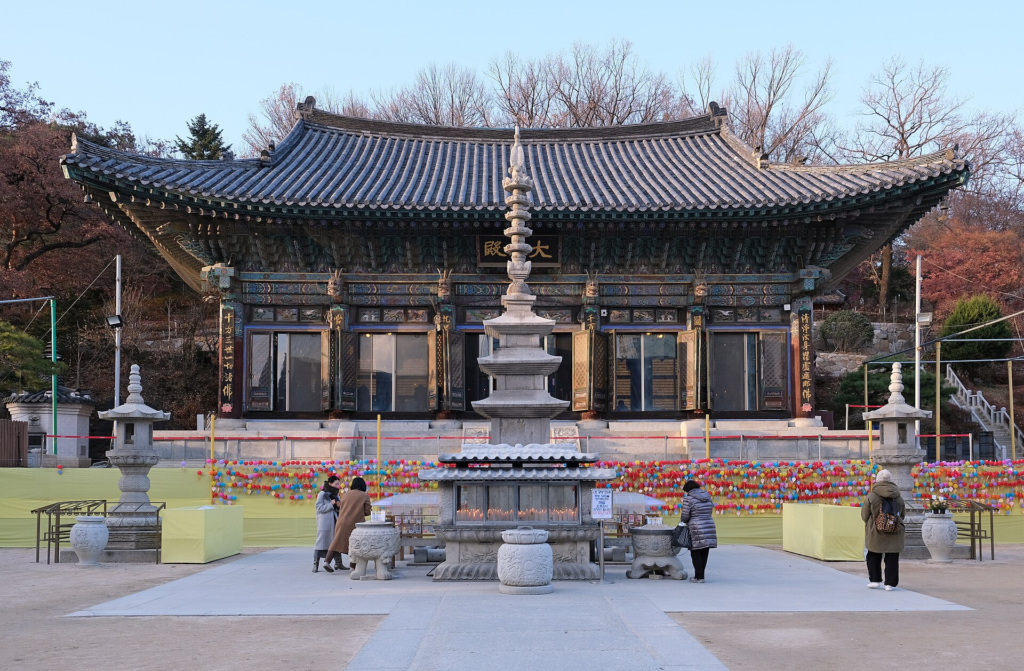
    Daewoongjeon at Bongeunsa, a Buddhist temple in Seoul's Gangnam District
    Daewoongjeon at Bongeunsa, a Buddhist temple in Seoul’s Gangnam District, 2022. Photo: kallerna, CC BY-SA 4.0, via Wikimedia Commons.

    Options With Opinions: Which Seoul Temple

    Visit Seoul lists seven temples with English programmes: Bongeunsa, Geumsunsa, Hwagyesa, the International Seon Center, Jinkwansa, Jogyesa and Myogaksa. Here are the four I’d shortlist for a first timer.

    Option Best For Cost Time My Take
    Bongeunsa, English weekend First timers who want it built for foreigners 90,000 to 120,000 won Sat 2pm to Sun 11am My pick. Subway at the gate, English on the first weekend of each month.
    Jogyesa, one day or rest night A taste of temple life between palaces Check the booking page A few hours, or one night Best location in the city, but the busiest grounds.
    Hwagyesa, experience night Quiet, mountain edge, English speaking monks Check the booking page One night My pick for a reset. Feels miles from Seoul.
    Myogaksa, Saturday programme A small temple, short trip from Dongdaemun About 50,000 won day, 95,000 won night (2026 visitor report) Sat afternoon, or a weekend night Underrated. Tiny, friendly, uphill.

    Prices and English dates move around, so treat the booking page as the final word. Prices normally include your room, meals, temple clothes and activities.

    The Temples And How To Reach Them

    Bongeunsa (봉은사), Gangnam. Take Line 9 (gold) to Bongeunsa Station, Exit 1, and the gate is about 135 metres away, per Visit Seoul. The temple’s programme page (in Korean) describes a Saturday to Sunday programme with the English session on the first weekend of each month and Korean sessions on the other weekends. It costs 90,000 to 120,000 won, for adults 18 and over or high school students with a guardian. You arrive at 2pm, eat at 5pm, sleep at 9pm, wake at 4am for the dawn service and 108 prostrations, and leave around 11am.

    Jogyesa (조계사), Jongno. The head temple of the Jogye Order sits right downtown. From Jonggak Station (Line 1, dark blue), Exit 2, it’s about a three minute walk; Anguk Station (Line 3, orange), Exit 6, is about five minutes. Its English booking page lists a daily one day programme plus experience and free style (rest) nights.

    Hwagyesa (화계사), Gangbuk. Take Line 4 (sky blue) to Suyu Station, Exit 3, then green village bus Gangbuk 02 or city buses 151 or 1165 to the Hanshin University stop, the route the temple area gives locals. Hwagyesa hosts the International Zen Center, with dharma talks in English on Sundays, and its templestay made the city’s Seoul Wellness 100 list in September.

    Myogaksa (묘각사), Jongno. The temple’s own directions start at Dongmyo-ap Station (Line 1, dark blue, also on Line 6, brown), Exit 2, then a short uphill walk through back lanes, about 5 to 10 minutes. Its English booking page lists a Saturday afternoon one day programme and a weekend night.

    International Seon Center (국제선센터), Yangcheon. A modern meditation centre in the west of the city, about 660 metres from Omokgyo Station (Line 5, purple), Exit 8. Good if you’re staying near Yeouido or Gimpo.

    Getting There

    From City Hall, Bongeunsa is about 40 minutes: Line 2 (green) to Dangsan, then a Line 9 (gold) express to Bongeunsa, or Line 2 all the way to Samseong and a walk past COEX from Exit 6, about 600 m. Jogyesa is under 15 minutes from anywhere downtown. Hwagyesa is the long one, about 45 minutes to an hour, so leave a buffer: arriving after orientation starts is the one thing temples really dislike.

    A single subway ride is 1,550 won on a card. If you’re riding a lot, a 1 to 7 day tourist pass still works after the 30 day Climate Card ended; my transit card guide has the maths. Set Naver Map or KakaoMap to English for the last stretch, because Google Maps won’t walk you up the hill to Myogaksa; my travel apps guide shows how.

    Heads Up: Temples close the gate on latecomers to evening programmes and some won’t refund no shows. If you’re flying in that day, book a night later in your trip.

    What A Typical Night Looks Like

    You arrive mid afternoon and change into the loose temple clothes most temples lend you. Orientation covers how to bow, how to walk in the halls and where not to go. Early evening brings dinner, the evening service and meditation, then lights out around 9pm.

    The dawn service is the headline. You step out into the dark, breath fogging, and file into a hall where the chanting starts before you’ve fully woken up. After breakfast there’s usually tea with a monk, a walk or some communal work before you leave late morning.

    What Locals Know

    Templestay is booming, and foreigners are driving it. A record 349,236 people did a templestay in 2025, and foreign participants rose from 26,587 in 2022 to 55,515 in 2025, according to Bulgyo Shinmun (in Korean). English weekends at central temples fill first.

    Late November is retreat season. The monks’ three month winter retreat (동안거, dongangeo) begins on the fifteenth day of the tenth lunar month, which lands in late November. Templestays carry on, but the meditation halls are closed to visitors and the temples go noticeably quieter. Hwagyesa even lets some guests join parts of its retreat, including formal meals.

    Korean blogs obsess over the food. Local reviews rave about the temple meals and warn you, again and again, not to over serve yourself: you eat every grain and rinse the bowl with water. Take half what you think you want.

    Pick Your Version

    If It’s Your First Time. Bongeunsa on its English weekend. It’s on the subway, the programme assumes you know nothing, and Samseong’s restaurants are a five minute walk when you’re released. My November guide covers the weather that week.

    If You’re Travelling Solo. Templestay is one of Seoul’s best solo moves, because the structure does the socialising for you and the silence takes the pressure off. Book a rest night if you want space. My solo Seoul guide has the rest of your week.

    If You’re Here For A Reset. Build a slow three days around it: a temple night, a sweaty evening from my jjimjilbang guide, and a long walk under the last ginkgos. Browse The Reset for more.

    Sunbae’s Picks

    My pick for a first night: Bongeunsa’s English weekend. A 4am service with Gangnam’s towers glowing across the road is the most Seoul contrast I know.

    My pick if you want quiet: Hwagyesa in the north. Mountain behind you, no tour buses, and monks used to foreign guests.

    If you can’t face 4am, do a one day programme at Jogyesa or Myogaksa. You still get meditation, tea and a meal, and you sleep in your own bed.

    I’d go in early November if you can, when the grounds should still hold some gold. Pair it with one of my ginkgo walks. If December is your month, my December guide has the rest of the trip.

    What’s Changing In 2026

    Temples are now part of Seoul’s wellness pitch. When the city launched the Seoul Wellness 100 on 1 September 2026, night meditation at Bongeunsa was a headline pick. Seoul Wellness Travel Week opened on 29 October in Gangnam. My read: more foreign interest in Seoul temples this season, so book English dates as soon as they appear.

    There was a foreigner only deal, and it’s over. In September 2026, 19 temples, including Jogyesa, Hwagyesa and the International Seon Center, ran 30,000 won nights for foreign visitors only, reported Seoul Economic Daily (in Korean). Watch templestay.com in case it returns next year.

    Heads Up: You’ll see Korean headlines about a 30,000 won templestay all November. The official notice (in Korean) is clear: 1 to 30 November 2026 at 101 temples, Korean nationals only. You can’t use it, and it means November weekends are fuller than usual.

    Etiquette That Matters

    Hands together. The greeting is hapjang: palms together at chest height and a small bow. Use it with monks and in the halls.

    Silent meals. The formal monastic meal (baru gongyang) is eaten without talking. Finish everything.

    Shoes off, phone away. Shoes come off before any hall, and phones stay silent and out of sight during services. Never take photos of people praying.

    Dress modestly. Arrive in clothes that cover shoulders and knees; my temple and palace dress code guide has the details.

    Winter Packing List

    • Thermal top and leggings to wear under temple clothes
    • Thick socks (you’re in socks indoors the whole time)
    • A warm jacket you can throw on for the dawn walk
    • Toiletries and a small towel, which the Bongeunsa list says to bring
    • Slip on shoes, because they come off a dozen times a day

    My what to wear guide covers layering for a Seoul winter.

    Worth It / Skip It

    Worth It: One night at a Seoul temple in November, when the air is cold enough to make the dawn service feel serious.

    Worth It: A one day programme if you’re short on time or hate alarms.

    Skip It: A full night booked only for photos. You’ll be tired, cold and hungry by 4am, and the monks can tell.

    A Quick Health Note

    This is general information, not medical advice. Sitting meditation, 108 prostrations and a 4am start are physical; tell the temple about knee, back or other health issues and sit out anything that hurts. If you get unwell on your trip, the Medical Korea Support Center answers on 1577-7129 (+82-2-1577-7129 from abroad), and Medical Korea lists registered hospitals and lets you verify registered medical facilitators. We never take commissions from clinics or hospitals.

    Word Of The Stop

    합장 (hapjang): palms pressed together in greeting. Add a small bow and you’ve covered most of temple etiquette.


    Map And Directions

    1. 1
      Bongeunsa Temple 봉은사
      9Bongeunsa StationEXIT1

      About 135 m from the exit. English weekend templestay on the first weekend of each month, 90,000 to 120,000 won, Sat 2pm to Sun about 11am; office 02-3218-4826

    2. 2
      Jogyesa Temple 조계사
      1Jonggak StationEXIT2

      About 3 min walk; Anguk Station (Line 3) Exit 6 is about 5 min. Daily one day programme plus experience and rest nights

    3. 3
      Hwagyesa Temple 화계사
      4Suyu StationEXIT3

      Then village bus Gangbuk 02 or bus 151 or 1165 to the Hanshin University stop. Home of the International Zen Center; Seoul Wellness 100 pick

    4. 4
      Naksan Myogaksa Temple 낙산 묘각사Area pin
      1Dongmyo-ap StationEXIT2

      Short uphill walk through back lanes, about 5 to 10 min. Saturday afternoon one day programme and weekend nights

    5. 5
      International Seon Center 국제선센터
      5Omokgyo StationEXIT8

      About 660 m from the exit; modern meditation centre with English templestay

    6. 6
      Jinkwansa Temple 진관사

      English templestay at the foot of Bukhansan in Eunpyeong; check Naver Map for the bus from Gupabal Station

    7. 7
      Geumsunsa Temple 금선사

      English templestay on the Bukhansan slopes above Pyeongchang-dong (Jongno); check Naver Map for the route

    Your Tickets

    Green bus지선
    Suyu Station Exit 3→Hanshin University stop (Hwagyesa)
    Timeabout 10 min
    FareFree transfer on a transit card
    Village bus Gangbuk 02, or city buses 151 or 1165
    SEOUL SUNBAE830-1승차권

    Seoul area bus colours: Blue bus · 간선 Green bus · 지선 Red bus · 광역 Yellow bus · 순환

    Last Mile

    • City Hall Station → Bongeunsa Station about 40 min
    • Bongeunsa Station EXIT1 → Bongeunsa Temple about 2 min
    • Jonggak Station EXIT2 → Jogyesa Temple about 3 min
    • Seoul Station → Suyu Station about 30 min
    • Dongmyo-ap Station EXIT2 → Naksan Myogaksa Temple about 5 to 10 min
    Get the map appsNNaver Map App Store Google PlayKKakaoMap App Store Google PlayBoth work in English. With the app installed, the Naver Map and KakaoMap buttons open directions straight to the pin.

    Tap a button to open directions on your phone. In Korea, Naver Map and KakaoMap give full walking directions; Google Maps covers subway and bus but, as of September 2026, still has no turn by turn walking or driving here. Pins marked “Area pin” show a neighbourhood, not a door.

    Frequently Asked Questions

    How Much Does A Templestay In Seoul Cost?

    Roughly 20,000 to 50,000 won for a one day programme and about 50,000 to 120,000 won for a night, depending on the temple and type. Bongeunsa lists 90,000 to 120,000 won for its weekend programme. Check the exact price on templestay.com.

    Can Foreigners Do A Templestay In Seoul?

    Yes. Seven Seoul temples run English programmes, including Bongeunsa, Jogyesa, Myogaksa and Hwagyesa. The November 2026 30,000 won event is for Korean nationals only.

    Do I Need To Be Buddhist?

    No. You follow the schedule and etiquette, and joining the bows is part of the experience, but nobody expects you to be Buddhist.

    Is Templestay Too Cold In Winter?

    Rooms are heated through the floor (ondol), so sleeping is usually warm. The cold hits on the dawn walk and in the halls, so layer up.

    How Far Ahead Should I Book?

    For English weekends in November, book as soon as the date opens. For December weekdays, a week or two is usually enough, but check the booking page.

    Next Stop

    Resources

    • Templestay English booking site: search by region, programme type and date, and book online.
    • Templestay information line: 02-2031-2000 (+82-2-2031-2000 from abroad), or support@templestay.com.
    • 1330 Korea Travel Hotline: call 1330 in Korea or +82-2-1330 from abroad for interpreting and directions.
    • Bongeunsa templestay office: 02-3218-4826.
    • Naver Map or KakaoMap: exit numbers and the last walk uphill.
    • Medical Korea Support Center: 1577-7129 if you get unwell.

    How I Checked This

    On 5 Oct 2026 I rechecked the temple count and programme types on the official Templestay site, the November event’s dates, temple count and nationals only rule on its official notice, the seven English programme temples on Visit Seoul, Bongeunsa’s schedule, price and age rule on the temple’s own page, participant figures in Bulgyo Shinmun, and directions on Visit Seoul and the temples’ own pages. The general price ranges and the Myogaksa price come from 2026 Korean booking guides and visitor reports, not every temple’s official page, and English dates for November and December were not posted for every temple.

    Sources


    Written by your sunbae. Over 20 years in Korea. We learned the lessons the hard way, so you don’t have to, and we’re here to guide you and help you enjoy Korea. Every fact here is checked against official sources and, wherever possible, on the ground.

    Beep Check: verified 5 Oct 2026. Rules, prices and dates change; confirm with the official source before you travel.
    Seoul Sunbae never takes commissions from clinics or hospitals. This is general information, not medical advice.

  • The Unwritten Rules Of Korea: A Sunbae’s Guide

    The Unwritten Rules Of Korea: A Sunbae’s Guide

    TL;DR

    Korea etiquette for tourists comes down to a handful of habits: leave priority seats empty, don’t tip, pour drinks for others and not yourself, take your shoes off on raised floors, cover up at temples, flush toilet paper in public restrooms, and give and receive with both hands. Nobody expects perfection from a visitor. They notice effort.

    Last checked: 4 Oct 2026 What is a Beep Check?

    You tap into the subway and face two empty pink seats, a row of grandparents and a silent crowd. This guide is your map for that moment and every one after it.

    Sunbae Says: When in doubt, watch the person in front of you for five seconds and copy them. Koreans call that skill 눈치 (nunchi), and it fixes more mistakes than any list.

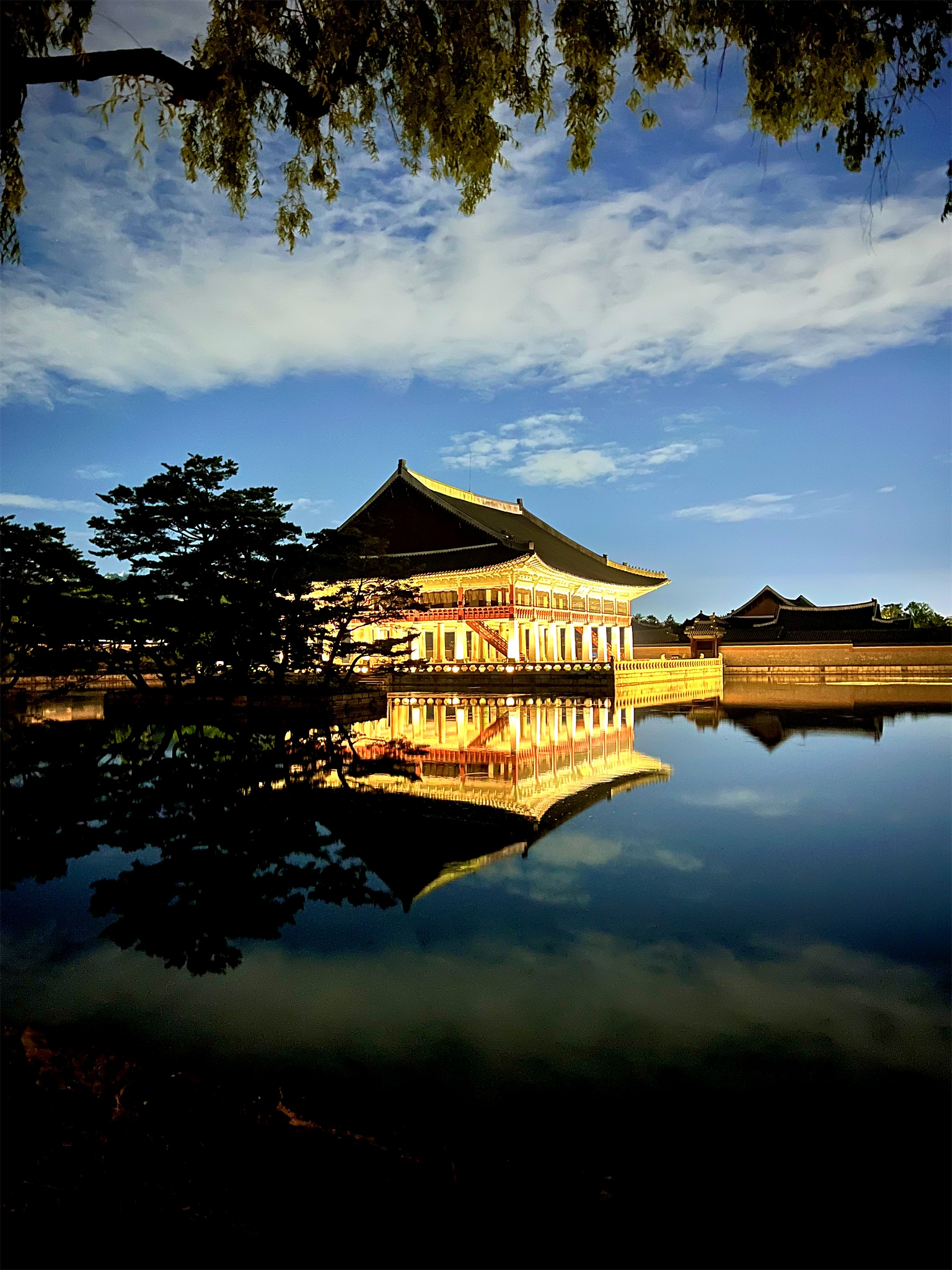
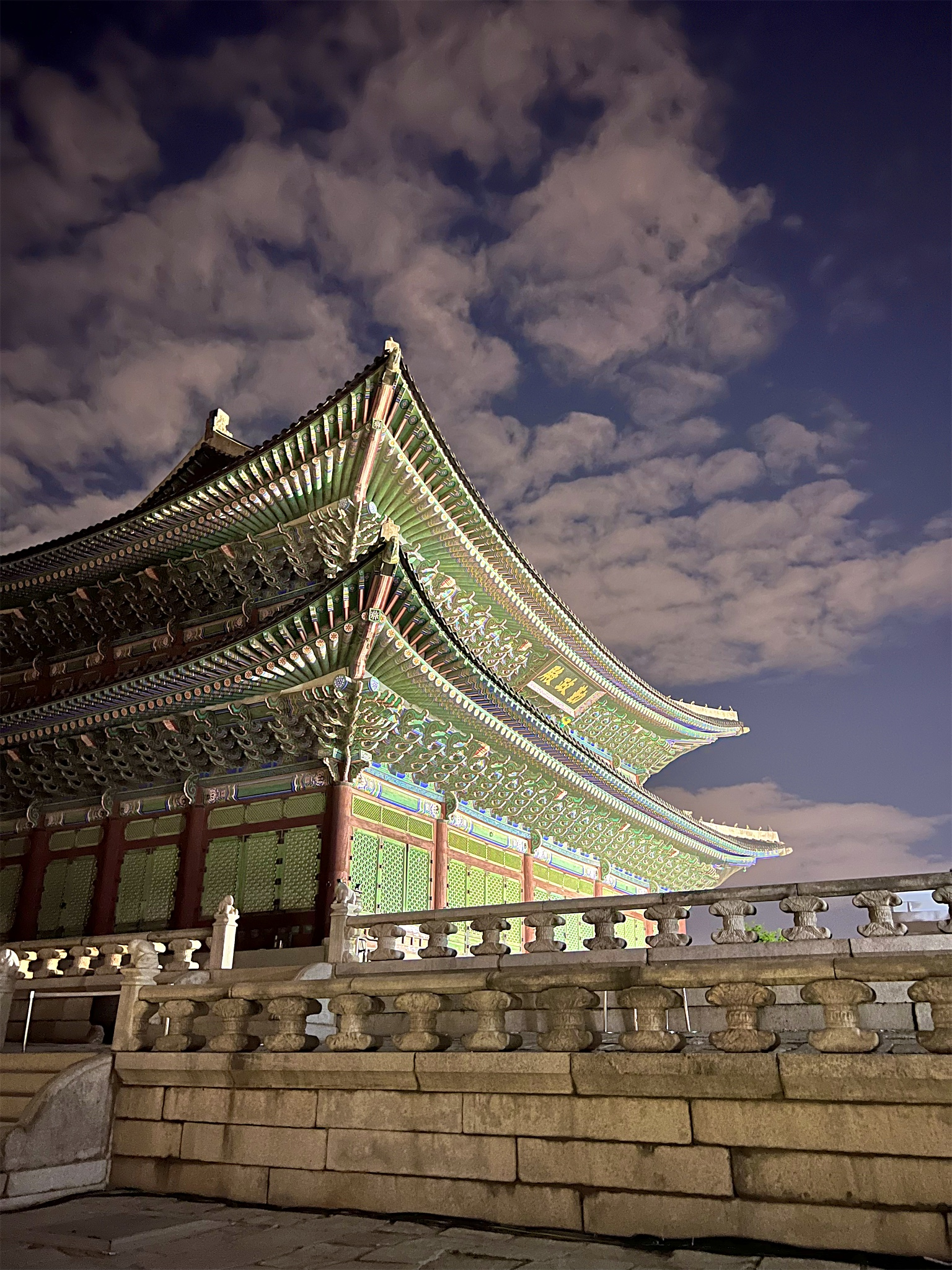
    Gyeonghoeru Pavilion lit up at night and mirrored in the still pond in front of it, with trees framing the top of the picture.
    Gyeonghoeru Pavilion at Gyeongbokgung, reflected at night. Photo: your sunbae

    The Ten Rules I’d Tattoo On Your Hand

    1. Leave the priority seats and the pink pregnancy seats empty, even when the car is packed.
    2. Don’t tip. It’s not expected.
    3. Pour for others, never for yourself, and hold your glass with two hands when an elder pours.
    4. Use two hands (or one hand touching the other wrist) to give or receive cards, cash and gifts.
    5. Shoes off when you step onto a raised floor: homes, temple halls, floor seating restaurants.
    6. Flush toilet paper in public restrooms unless a sign says otherwise.
    7. Carry your trash until you find a bin. Flicking a butt or a tissue can cost you 50,000 won.
    8. Smoke only where it’s clearly allowed, and never within 10 metres of a Seoul subway entrance.
    9. Cover shoulders and knees at temples, and keep your voice low in residential hanok lanes.
    10. On escalators, hold the rail and stand still. That’s now the official message.
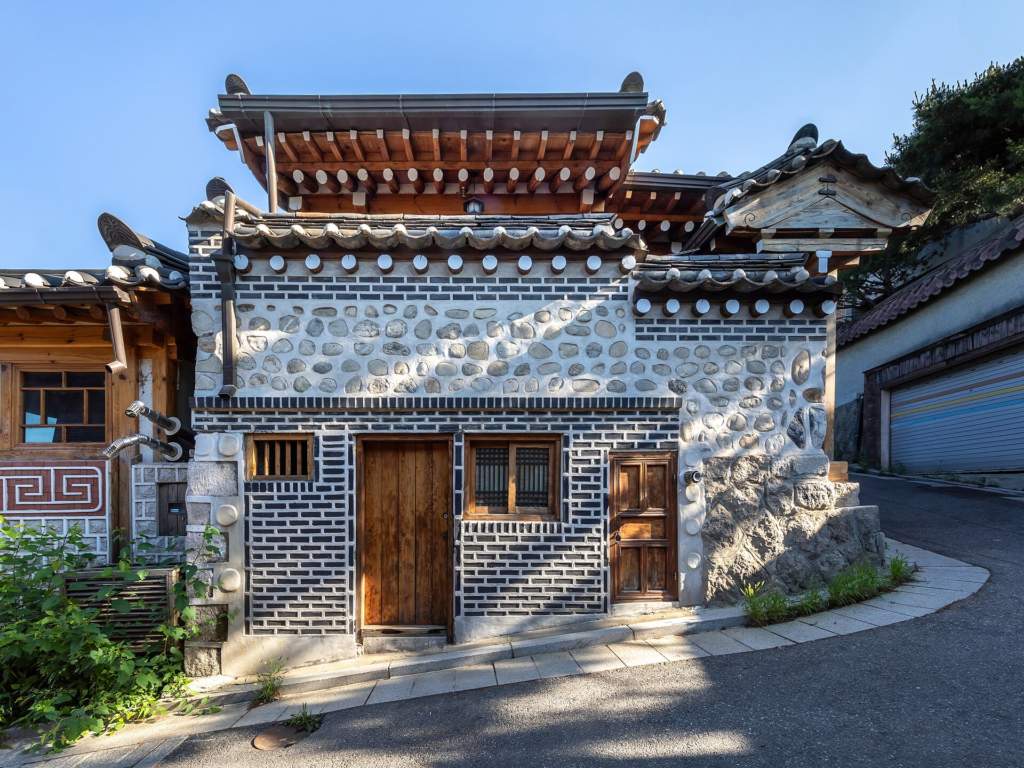
    Traditional hanok house with wooden doors along a steeply sloping street in Bukchon Hanok Village Seoul
    Traditional hanok house with wooden doors along a steeply sloping street in Bukchon Hanok Village Seoul, 2024. Photo: Basile Morin, CC BY-SA 4.0, via Wikimedia Commons.

    Why The Rules Exist

    Three forces sit behind almost every rule: density (habits that keep crowds moving), age and hierarchy (who pours, who sits, who eats first), and speed, the 빨리빨리 (ppalli ppalli, “hurry hurry”) pace that explains the bus pulling away before you sit down.

    After more than 20 years here, my read is that Koreans are forgiving with visitors. What lands badly is not a mistake. It’s ignoring a correction. If someone points at a sign, nod, say 죄송합니다 (joesonghamnida, “sorry”) and fix it.

    On The Subway, Escalator And Bus

    The seats at each end of the car are 노약자석 (noyakjaseok), for older, disabled and pregnant passengers and people with small children. Locals leave them empty at rush hour. The pink seats in the middle are pregnancy seats, introduced in Seoul in 2013, and still a hot topic: complaints about misuse on Seoul Metro trains average about 7,000 a year.

    Now the big one. On 23 September 2026 the Ministry of the Interior and Safety ended an 11 year debate: no more “two line” campaign, and no official side rule either. Instead there are three safety rules, 손잡이 잡기, 걷거나 뛰지 않기, 안전선 지키기: hold the handrail, don’t walk or run, stay behind the safety line, as Seoul Economic Daily reported. There’s no fine. It’s a safety message, not a law.

    Option Best For Cost Time My Take
    Stand still, either side, hold the rail Everyone, luggage, kids Free 20 extra seconds My pick. Matches the official rules; nobody can fault you.
    Stand right, leave the left open Blending in at busy transfer stations Free Same Fine if everyone ahead is doing it.
    Walk up the left Running for a train A glare, maybe a bump Saves under a minute Skip it. The new campaign is aimed squarely at this.

    Heads Up: Never push past or ask someone to move aside on an escalator. The ministry’s public review noted that many escalator accidents come from forcing people aside, not from where they stand.

    On Seoul city buses, drivers can refuse takeaway drinks that could spill, a rule since 4 January 2018 that drivers still apply at their discretion, per Seoul Economic Daily. Finish your iced americano before you board.

    Keep calls short, take your backpack off in a packed car, and tap off the bus too. The seat by seat version is in how not to get a lecture on the Seoul subway, and for cabs, read taxis in Seoul as a foreigner.

    Apps And Kiosks

    Google Maps does not give full walking and driving directions in Korea, so install Naver Map or KakaoMap before your flight and switch it to English. Add Papago for camera translation of menus and signs.

    Kiosks are everywhere. Find the language button in a corner of the start screen, and if a queue builds, step aside and let the next person go. Baemin, the big delivery app, now lets you order without a Korean phone number and pay with foreign cards. My setup steps are in the five apps you need before you land in Korea.

    Money, Tipping And Cards

    Visit Seoul’s etiquette page says it plainly: tipping is not customary in Korea, though some people accept tips and some refuse. Some upmarket hotels add a service charge, so check the bill.

    Cards work almost everywhere, but carry cash for market stalls, street food and T-money top ups. Since 17 March 2026 the newer ticket machines on Seoul Metro Lines 1 to 8 take foreign cards, but Money Today reported (in Korean) that this covers single journey tickets, new Climate Cards and short pass charges only, not T-money top ups. If a terminal offers your home currency, choose won.

    Hand over your card or cash with two hands. Service charges and payment traps are covered in money in Korea.

    Ordering Food

    Water is self service. Press the table call button or say a clear 저기요 (jeogiyo, “excuse me”). In cafés and fast food places, you return your own tray, and you’ll be asked if you’re eating in (매장, maejang) or taking away (포장, pojang).

    Don’t stand chopsticks upright in rice, use your spoon for rice and soup, and wait for the oldest person to start eating, all of which Visit Seoul lists as table basics. How to order in Korea without embarrassing yourself covers the kiosk, the call button and which word to use for staff.

    At The Grill

    Many BBQ places have a two portion minimum. If staff take the tongs and scissors, let them: they’re making sure the meat isn’t burnt. Side dishes are usually refilled free.

    Drinking is where hierarchy shows. Pour for others, never your own glass. When someone older pours for you, hold your glass with two hands, and many younger Koreans turn slightly away from an elder to drink. Full details in Korean BBQ etiquette.

    Toilets, Trash And Cigarettes

    The toilet paper bin is outdated advice in public restrooms. A revised decree under the Public Toilets Act removed bins from public restroom stalls from January 2018 and asked people to flush paper, as The Korea Herald explained. Private buildings don’t have to follow, so if an older café asks you to use the bin, follow the sign. Never flush wet wipes. Subway stations are your reliable free restroom; carry tissues anyway.

    Public bins are scarce, so pocket your wrapper. Dropping a cigarette butt or tissue carries a 50,000 won fine under the Waste Control Act, according to Seocho District’s fine schedule (in Korean). More in the unglamorous guide to toilets, trash and recycling.

    Smokers, read this twice. Seoul bans smoking at central bus stops, Seoul, Gwanghwamun and Cheonggyecheon plazas, 24 city parks and within 10 metres of every subway entrance, with fines of 50,000 to 100,000 won depending on the district, per Seoul’s own non smoking zone page (in Korean). Since 24 June 2026 liquid nicotine vapes count as tobacco too.

    Heads Up: Vapers get caught by the June 2026 change. Using a liquid e-cigarette in a no smoking zone now risks the same fine of up to 100,000 won as a cigarette. Look for a marked smoking booth.

    Photos And Privacy

    Street photography is common, but ask before close ups of strangers, especially children. Secret filming of a sexual nature is a serious crime, with up to seven years in prison for filming or distributing, and bathhouses and changing rooms are strictly camera free. Portrait rights, drones and no camera zones are in can you take photos of people in Korea?. This is general information, not legal advice.

    Temples, Palaces And Hanok Lanes

    At temples, cover shoulders and knees, take your hat off and shoes off before entering a hall, and keep your voice down. Worshippers come first, so step aside if someone is bowing.

    Palaces have no dress code. The fun twist: wear complete hanbok and Visit Seoul confirms free entry to Gyeongbokgung (otherwise 3,000 won for foreign adults; closed Tuesdays; 9am to 5pm in November and December). Details in what to wear to Korean temples and palaces.

    Bukchon Hanok Village is a neighbourhood where 6,000 people live, not a theme park. In the “red zone” around Bukchon-ro 11-gil, tourists are allowed only from 10am to 5pm, and fines of 100,000 won have applied since March 2025, as Kyunghyang Shinmun reported (in Korean). Residents, shop customers and people just passing through are exempt.

    Heads Up: Arrive at Bukchon after 5pm for sunset photos and Bukchon’s security officers can fine you 100,000 won. Go mid morning on a weekday instead.

    People

    Bow slightly when you greet someone, which in practice is a small nod. Don’t point at people. You’ll meet bluntness: a shoulder bump at rush hour, a stare, no small talk. In my experience it’s density and pace, not hostility, and I make the full case in why Koreans seem rude (and aren’t). Plenty of online advice is stale too; I test seven popular claims in Korea myths checked.

    Behind The Scenes

    The escalator vote was close. About 200 citizens and experts debated it in a public deliberation. Support for two line standing rose from 31.4% to 45.9% during the debate, but “safe movement” won with 76.8%, per Money Today (in Korean). Korean headlines boiled it down to “don’t ask people to move aside.”

    The 10 metre rule has been around since May 2016. Seoul designated the zone around every subway entrance to protect commuters from second hand smoke, which is why smokers in Seoul cluster in marked booths a little way from the exit stairs, not on the corner by the steps.

    Where To Sort It Out

    Option Best For Cost Time My Take
    1330 Korea Travel Hotline Interpreting, complaints, any question Free call Minutes My pick. Call +82-2-1330 from a foreign phone.
    Myeong-dong Tourist Information Center Maps, face to face help Free 9am to 6pm daily Great if you’re in Myeong-dong anyway.
    Seoul Metro card machines, Lines 1 to 8 Single tickets and tourist passes by foreign card From 1,550 won fare 2 min Use your hotel’s station, not Seoul Station at rush hour.
    Papago on your phone Reading a sign before you break it Free Seconds Install before you land.

    The Myeong-dong centre is 147 metres from Euljiro 1-ga Station (Line 2, green), Exit 5. For passes, my tourist transit card guide shows which machine and which button.

    What’s Changing In 2026

    Korea welcomed a record 15.05 million foreign visitors from January to August 2026, up 21.6%, with August alone at 2.25 million, according to Korea JoongAng Daily. More first timers in the same busy places means small courtesies buy you more goodwill than five years ago.

    The painted double roof of Geunjeongjeon throne hall lit at night against a cloudy sky, above stone balustrades.
    Geunjeongjeon, Gyeongbokgung’s throne hall, after dark. Photo: your sunbae

    Pick Your Version

    If It’s Your First Time. Learn rules 1, 2, 4 and 10 before you land and you’ll handle most situations.

    If You’re Bringing Kids. I’d teach the priority seat rule on day one and make a game of spotting pink seats. On escalators, kids hold the rail and stand still.

    If You’re Travelling Solo. I’d eat lunch at a counter noodle shop and save BBQ for a night with new friends.

    If You’re Here For A Reset. Temples and bathhouses have the strictest etiquette and reward it most.

    Sunbae’s Picks

    My one rule to learn first: the two hands habit. It costs nothing and people notice.

    If I only had one evening: a BBQ dinner with someone older pouring for you, so you practise the glass, the turn and the thank you.

    I’d skip the “use the bin” advice on old forums. Follow the sign in the stall.

    Offers Worth Knowing

    Complete hanbok means free Gyeongbokgung entry. Shops offering immediate tax refunds take the VAT off at the till: Visit Seoul lists a 15,000 won minimum, with on site refunds for purchases under 1,000,000 won and under 5,000,000 won per trip.

    Worth It / Skip It

    Worth It: learning 저기요, 감사합니다 and the two hands habit before you land. Three minutes of effort, a whole trip of goodwill.

    Skip It: worrying about every rule. Quiet on transit, polite at the table, covered at temples, cigarettes away from subway exits, and you’re fine.

    Word Of The Stop

    눈치 (nunchi): the art of reading the room. It’s the idea behind most of this page: notice what others do and adjust.


    Map And Directions

    1. 1
      Gyeongbokgung Palace 경복궁
      3Gyeongbokgung StationEXIT5

      Free entry in complete hanbok, otherwise 3,000 won for foreign adults; closed Tuesdays; 9am to 5pm in Nov and Dec (last entry 4pm)

    2. 2
      Bukchon Traditional Culture Center (Bukchon Red Zone) 북촌문화센터
      3Anguk StationEXIT2

      Walk straight about 600 m from Exit 2. Tourists allowed in the Bukchon-ro 11-gil red zone 10am to 5pm only; 100,000 won fine outside those hours

    3. 3
      Jogyesa Temple 조계사
      1Jonggak StationEXIT2

      Working temple in central Seoul: cover shoulders and knees, shoes off in halls, step aside for worshippers

    4. 4
      Myeong-dong Tourist Information Center 명동관광정보센터
      2Euljiro 1-ga StationEXIT5

      147 m from the exit; multilingual staff, maps and help; open 9am to 6pm daily, free

    5. 5
      Myeongdong Station card machines 명동역
      4Myeongdong StationInside the station (machines by the gates)

      Newer Line 1 to 8 machines take foreign cards for single tickets and 1 to 7 day tourist passes, not T-money top ups; one of the busiest stations for foreign card sales

    Last Mile

    • Gyeongbokgung Station EXIT5 → Gyeongbokgung Palace about 7 min
    • Gyeongbokgung Station → Anguk Station about 2 min (1 stop)
    • Anguk Station EXIT2 → Bukchon Traditional Culture Center about 10 min
    • Anguk Station → Jogyesa Temple about 10 to 15 min
    Get the map appsNNaver Map App Store Google PlayKKakaoMap App Store Google PlayBoth work in English. With the app installed, the Naver Map and KakaoMap buttons open directions straight to the pin.

    Tap a button to open directions on your phone. In Korea, Naver Map and KakaoMap give full walking directions; Google Maps covers subway and bus but, as of September 2026, still has no turn by turn walking or driving here. Pins marked “Area pin” show a neighbourhood, not a door.

    Frequently Asked Questions

    Is Tipping Rude In Korea?

    Not rude, just not customary. Visit Seoul says some people accept tips and some refuse them. Nobody expects a tip at restaurants, cafés or taxis.

    Can I Walk On The Left Side Of The Escalator In Seoul?

    There’s no fine, but since 23 September 2026 the official message is hold the handrail, don’t walk or run, and stay behind the safety line. Stand still and never push past.

    Can I Put Toilet Paper In The Toilet In Korea?

    In public restrooms, yes: bins were removed from stalls under a 2018 rule change. In some older private buildings a sign may ask you to use a bin; follow it.

    Where Can I Smoke In Seoul?

    In marked smoking booths and areas not designated non smoking. Never at bus stops, in major plazas and parks, or within 10 metres of a subway entrance. Fines run 50,000 to 100,000 won.

    Next Stop

    Resources

    • 1330 Korea Travel Hotline: call 1330 in Korea or +82-2-1330 from abroad for interpreting, information and complaints.
    • Visit Seoul: official city tourism site with attraction hours and directions.
    • Naver Map or KakaoMap: directions and exit numbers that Google Maps can’t give in Korea.
    • Papago: camera translation for signs, menus and kiosk screens.
    • Seoul non smoking zones (in Korean): where smoking is banned and what it costs.
    • 112 for police and 119 for fire and ambulance.

    How I Checked This

    On 4 Oct 2026 I rechecked the escalator decision (Seoul Economic Daily, Money Today), smoking zones (Seoul Metropolitan Government), the littering fine (Seocho District), the vape rule (Newspim), Bukchon hours (Kyunghyang Shinmun, Seoul Media Hub) and attraction details (Visit Seoul, VisitKorea). Customs like turning away to drink come from my years here and vary by person; smoking fines vary by district.

    Sources


    Written by your sunbae. Over 20 years in Korea. We learned the lessons the hard way, so you don’t have to, and we’re here to guide you and help you enjoy Korea. Every fact here is checked against official sources and, wherever possible, on the ground.

    Beep Check: verified 4 Oct 2026. Rules, prices and dates change; confirm with the official source before you travel.

  • Taxis In Seoul As A Foreigner: Kakao T Vs Uber Vs k.ride

    Taxis In Seoul As A Foreigner: Kakao T Vs Uber Vs k.ride

    TL;DR

    For most visitors, k.ride is the easiest taxi app in Seoul: English screens, sign up with Google, Apple or email, and foreign cards, Alipay+, WeChat Pay and PayPal accepted. Uber also works and books licensed Seoul taxis. Kakao T has the most cars but is built for residents. A regular taxi starts at 4,800 won, and costs 20 to 40% more late at night.

    Last checked: 5 Oct 2026 What is a Beep Check?

    Sunbae Says: Before you tap confirm, read the car type. Premium and large car options sit right next to the regular one, and the fare difference is not small.

    This is one chapter of my guide to the unwritten rules of Korea, and the one that matters most at 1am. Picture it: the last train has gone, you’re outside a club in Hongdae with sore feet, and forty other people are waving at the same three taxis. Having the right app, already set up with your card, is the difference between five minutes and forty.

    The Three Apps, Compared

    Travellers online argue endlessly about Kakao vs Uber. Here’s what each verifiably offers in autumn 2026.

    k.ride Uber Kakao T
    Who runs it Kakao Mobility, built for foreign visitors Uber, which runs Uber Taxi in Korea Kakao Mobility, the main app residents use
    Sign up Phone, Google, Apple or email; no Korean number needed Your existing Uber account Accepts overseas numbers, but Korean first
    Pay with Foreign cards, Alipay+, WeChat Pay, PayPal Your Uber payment method, or pay the driver Visa, Mastercard, Amex and JCB added for foreign users; pay the driver as fallback
    Language English, Japanese, Chinese; chat translation in 100+ languages Uber’s usual languages Korean first
    Good to know Airport pickup reservations at Incheon, Gimpo and Jeju since June 2026 Premier Van for five people and four big cases since April 2026 Largest pool of cars
    My Take My pick for first timers Best if it’s already on your phone Worth it only if you live here

    k.ride. Kakao Mobility launched it in June 2024 for exactly your situation. Its App Store listing shows taxi booking in Korea, and version 1.9.0 on 25 June 2026 added airport pickup reservations at Incheon Terminals 1 and 2, Gimpo and Jeju, plus PayPal. Sisa Journal e reported that you can book that airport ride from home before you fly. At launch, Korea JoongAng Daily reported that k.ride offered only Kakao’s Blue, Venti, Black and Deluxe tiers, not the plain regular taxi, and cost slightly more than Kakao T. Check which car types the app offers you before assuming the cheapest option is there.

    Uber. Uber hails ordinary licensed taxis through Uber Taxi, and in December 2024 announced it was taking full ownership of its Korean venture with Tmap Mobility. In April 2026 it added Premier Van, a larger premium vehicle for up to five people and four 30 inch suitcases with an upfront fare, per the Seoul Economic Daily. If you use Uber at home, there’s nothing new to learn.

    Kakao T. The app most Seoul residents use. Kakao Mobility’s own usage report (in Korean) says it added Visa, Mastercard, American Express and JCB for foreign users in late 2023. But Korean press reported in January 2024 that automatic payment with those cards covered only the larger Venti and premium Black cars, and Korean reporting in 2026 still describes sign up and payment hiccups for visitors. You can always choose to pay the driver directly.

    Taxis waiting for clients in Seoul, South Korea
    Taxis waiting for clients in Seoul, South Korea, 2015. Photo: Ilya Plekhanov, CC BY-SA 4.0, via Wikimedia Commons.

    What A Seoul Taxi Actually Costs

    These are the city’s official meter rates, from Seoul City Hall’s taxi fare page (in Korean), last updated 3 Apr 2026.

    Regular (mid size) taxi Deluxe or large taxi
    Base fare 4,800 won for the first 1.6 km 7,000 won for the first 3 km
    Then 100 won per 131 m, or per 30 seconds when slow 200 won per 151 m, or per 36 seconds
    10 to 11pm, 2 to 4am 20% extra 20% extra from 10pm to 4am
    11pm to 2am 40% extra Same 20%
    Leaving Seoul 20% extra (up to 60% combined at night) 20% extra (up to 40% combined)

    Two things follow. First, 11pm to 2am is the priciest time to ride a regular taxi, so leaving at 10:45pm saves you money. Second, a deluxe taxi at 1am carries a smaller surcharge than a regular one, although its base fare is higher.

    You don’t tip. VisitKorea’s taxi page says you can pay by cash, credit card or transport card and tipping isn’t required. One catch: that page still lists older base fares, so trust the city’s table above. For cards and cash everywhere else, see my money in Korea guide.

    Heads Up: If you paid in the app, you don’t pay again in the car. In late June 2026 a Taiwanese visitor who had already paid through Uber was pressed into a second card payment of 690,800 won at Incheon Airport, Asia Economy reported (in Korean). The driver called it a mistake and agreed to refund it. Check the amount on the card reader before you tap, keep the receipt, and call 1330 if something feels off.

    Regular, Deluxe, Large And International Taxis

    Visit Seoul lists four types. Regular taxis come in orange, white and grey and are the cheapest. Deluxe taxis are black with gold stripes and cost more. Large taxis carry up to eight passengers at deluxe rates and are marked 대형. Then there’s the International Taxi, which its own site calls the only foreign tourist taxi officially designated and managed by the Seoul Metropolitan Government, with drivers who speak English, Japanese or Chinese and fixed fares between the airports and Seoul. You book online, in its app or on 1644-2255.

    One warning from Visit Seoul: vans marked 밴 or 콜밴 (call van) are not taxis and don’t use meters. Agree nothing with a van driver at the airport; walk to the official taxi rank.

    Your Airport Choices

    Landing at Incheon tired, with bags? Here’s how I’d choose. Fill in your e-Arrival Card before you fly so you reach the taxi rank faster.

    Option Best For Cost Time To Central Seoul My Take
    AREX (blue) airport railroad (blue) Light luggage, daytime Cheapest About 1 hour to Seoul Station on the all stop train My default; taxi only for the last hop
    k.ride airport reservation Late arrivals, first timers Quoted in app Traffic dependent Book before you fly, no Korean needed
    International Taxi Families, fixed price fans Fixed fare by zone Traffic dependent Good for peace of mind
    Metered taxi from the rank Anyone, anytime Meter plus tolls Traffic dependent Fine; use the official rank only

    When The Bus Or Subway Beats The Taxi

    In Seoul rush hour, the taxi is often the slow option. The city runs 128.9 km of median bus only lanes across 13 corridors, all operating 24 hours, according to Seoul City Hall (in Korean). Taxis sit in the traffic; buses glide past it.

    My rule: for trips across the city on weekday evenings, take the subway or a blue trunk bus, and save taxis for late nights, luggage days and short hops. The subway etiquette guide covers how to ride like a local, and which transit card tourists need now covers the fare side.

    Heads Up: Bus strikes make taxis vanish. Seoul’s buses stopped for two days in January 2026, and a September strike was called off only on the morning it was due, Money Today noted (in Korean). Gyeonggi Province bus talks broke down on 14 Oct 2026, and the union plans a strike from the first bus on 30 Oct, covering about 90% of the province’s routes, if final mediation on 29 Oct fails, Money Today reported (in Korean). On a strike day, take the subway and expect long taxi waits.

    What Locals Know

    Late night is a different market. From 11pm to 2am the meter runs 40% hotter and everyone wants a car at once. My habit after a big night out is to walk a few blocks away from the crowd before calling one, and I’d do the same after Halloween in Seoul.

    Show the destination, don’t say it. Type the place name into the app or show it in Hangul on a map. Many hotels and restaurants go by Korean names that sound nothing like the English.

    Saying stop is enough. “여기서 세워 주세요” a few seconds before your spot does the job, and in my experience nobody expects small talk.

    Hailing On The Street

    It still works. Stand where the taxi can pull in safely, raise your hand, and show your destination in Korean on your phone. Taxi stands sit near major stations and hotels. If anything goes wrong, the 1330 Korea Travel Helpline offers help in several languages.

    Pick Your Version

    If It’s Your First Time

    Set up k.ride at home with your card, then book your first ride from the hotel rather than the street. You’ll see the estimate before you commit. The rest of my setup list is in the apps you need before you land and my Start Here hub.

    If You’re Bringing Kids

    Book a large taxi, Uber’s Premier Van, or an International Taxi from the airport if you have lots of luggage, and check car type and price on screen. My Seoul with kids guide covers the rest of the family logistics.

    If You’re Travelling Solo

    Book through an app at night rather than hopping into the first car on the street: the app records the car, the route and the driver. My solo Seoul guide has my other late night habits.

    Sunbae’s Picks

    My pick for most visitors: k.ride, set up before you fly, with Uber as backup.

    If I only had one late night trick: leave before 11pm. The regular taxi surcharge doubles from 20% to 40% at eleven.

    I’d skip taxis across the Han River at 6pm on a weekday. The subway will beat you there.

    My airport rule: the airport train into the city, and a taxi only for the last short hop with your bags.

    Offers Worth Knowing

    Uber One members get up to 5% back in credits on Premier Van rides, according to Uber’s launch announcement reported by the Seoul Economic Daily. International Taxi uses fixed airport fares, which protects you from surprises on a long ride.

    What’s Changing In 2026

    The apps are competing for you. k.ride passed 600,000 cumulative calls from its June 2024 launch to March 2025, according to inews24, and in 2026 added airport reservations and PayPal. Uber added Premier Van in April. My read: the foreign visitor is now a customer both companies chase, so expect more English features, and check the store listing before your trip.

    Payment is opening up too: Seoul city buses are due to take tapped Visa, Mastercard, JCB and UnionPay cards from 2027, per the Korea Herald. For the full picture on cards and apps, see our money and apps hub.

    Word Of The Stop

    여기서 세워 주세요 (yeogiseo sewo juseyo): please stop here. Say it just before your spot. Add 감사합니다 (gamsahamnida, thank you) as you get out.


    Map And Directions

    1. 1
      Incheon Airport Terminal 1 taxi rank 인천국제공항 제1여객터미널 택시승강장Area pin
      Incheon Int'l Airport Terminal 1 Station1F arrivals, follow the Taxi signs

      Use the official rank only; vans marked 밴 or 콜밴 are not metered taxis. k.ride airport pickups can be booked before you fly

    2. 2
      Incheon Airport Terminal 2 taxi rank 인천국제공항 제2여객터미널 택시승강장Area pin
      Incheon Int'l Airport Terminal 2 Station1F arrivals, follow the Taxi signs

      If you paid in an app, don't pay again in the car; check the amount on the card reader

    3. 3
      Seoul Station taxi stand 서울역 택시승강장Area pin
      ASeoul StationCheck Naver Map for the stand nearest your exit

      My airport rule: AREX into Seoul Station, then a short taxi hop with your bags; regular taxi from 4,800 won

    4. 4
      Gimpo Airport 김포국제공항
      AGimpo Airport StationFollow the Taxi signs from arrivals

      k.ride airport reservations cover Gimpo too

    Your Tickets

    AREX공항철도
    Incheon Airport T1→Seoul Station
    Timeabout 1 hour on the all stop train
    FarePay with T-money (check the fare at the gate)
    Cheapest way in; take a taxi only for the last hop
    SEOUL SUNBAE940-1승차권

    Last Mile

    • Seoul Station → Your hotel in central Seoul about 10 to 20 min
    • Incheon Airport → Central Seoul traffic dependent
    Get the map appsNNaver Map App Store Google PlayKKakaoMap App Store Google PlayBoth work in English. With the app installed, the Naver Map and KakaoMap buttons open directions straight to the pin.

    Tap a button to open directions on your phone. In Korea, Naver Map and KakaoMap give full walking directions; Google Maps covers subway and bus but, as of September 2026, still has no turn by turn walking or driving here. Pins marked “Area pin” show a neighbourhood, not a door.

    Frequently Asked Questions

    Does Uber Work In Seoul?

    Yes. Uber hails licensed Seoul taxis through Uber Taxi, and you use your existing account. It has also offered Premier Van for groups with luggage since April 2026.

    Can I Use Kakao T With A Foreign Credit Card?

    Kakao Mobility added Visa, Mastercard, American Express and JCB for foreign users in 2023, but results vary by car type and card. k.ride, Kakao’s app for visitors, is built for foreign cards. You can always pay the driver directly.

    How Much Is A Taxi In Seoul?

    A regular taxi starts at 4,800 won for the first 1.6 km, then 100 won per 131 m. Late at night it costs 20% more from 10 to 11pm and 2 to 4am, and 40% more from 11pm to 2am.

    Can I Book An Airport Taxi Before I Land?

    Yes. k.ride has taken airport pickup reservations at Incheon, Gimpo and Jeju since June 2026, and the International Taxi takes bookings online or on 1644-2255.

    Do You Tip Taxi Drivers In Korea?

    No. Taxis charge by the meter and tips aren’t expected.

    Next Stop

    Resources

    • Seoul taxi fare table: the official meter rates (in Korean).
    • International Taxi: bookings online, in the app or on 1644-2255.
    • k.ride, Uber and Kakao T apps: install and add your card before you fly.
    • 1330 Korea Travel Hotline: call 1330 (+82-2-1330 from abroad) or chat for interpreting and complaints.
    • Seoul Dasan Call Center 120: city service line for taxi complaints and transport questions.

    How I Checked This

    On 5 Oct 2026 I checked fares against Seoul City Hall’s taxi fare table (updated 3 Apr 2026), taxi types against Visit Seoul and VisitKorea, k.ride features against its App Store version history and Sisa Journal e, Kakao T’s foreign cards against Kakao Mobility’s report, Uber’s services against the Seoul Economic Daily, the double charge case against Asia Economy, and the bus strike situation against Money Today and Yonhap. Still unconfirmed: whether k.ride now offers the plain regular taxi tier, the exact International Taxi airport fares (its page names fixed fares but I couldn’t load the table), and whether the Gyeonggi strike goes ahead.

    Sources


    Written by your sunbae. Over 20 years in Korea. We learned the lessons the hard way, so you don’t have to, and we’re here to guide you and help you enjoy Korea. Every fact here is checked against official sources and, wherever possible, on the ground.

    Beep Check: verified 5 Oct 2026. Rules, prices and dates change; confirm with the official source before you travel.
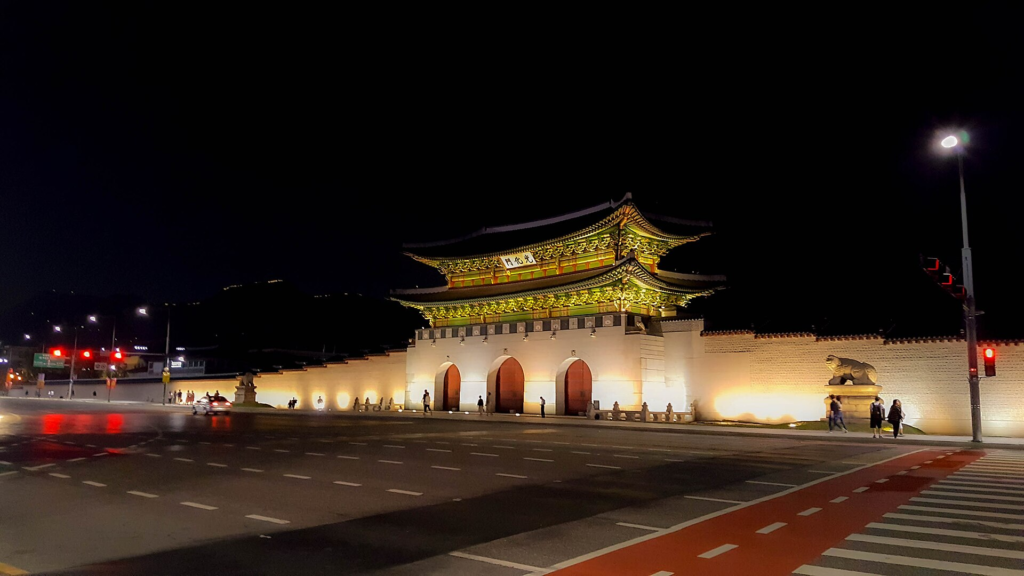
  • Korea In November 2026: Weather, Events And What To Pack

    Korea In November 2026: Weather, Events And What To Pack

    TL;DR

    November is a very good month for Korea if you like cool, clear days and fewer crowds than October. Seoul averages 11.9°C by day and 3.5°C at night, the last autumn colour hangs on into the first week, and the calendar is packed: Busan’s fireworks on Sat 7 Nov, the Melon Music Awards on 14 and 15 Nov, and the first Christmas lights. Pack layers, not a snowsuit.

    Last checked: 22 Oct 2026 What is a Beep Check?

    Sunbae Says: Do your leaf peeping in the first week of November, then switch to food, spas and lights. By the last week the trees are bare and the wind has teeth.

    A wide, calm stretch of the Han River under a clear blue sky, with Lotte World Tower and apartment blocks along the far bank.
    A crisp November morning on the Han River. Photo: your sunbae

    November Weather In Korea: The Real Numbers

    You step out of Incheon on 3 Nov and a light jacket is plenty. On the 25th, that same jacket feels like paper once the sun drops. That is November.

    These are the Korea Meteorological Administration’s 1991 to 2020 averages, the honest baseline. Any single year can swing warmer or colder.

    City Avg High Avg Low Rain Snow Days
    Seoul 11.9°C 3.5°C 51 mm 2.3
    Busan 16.6°C 8.3°C 50 mm 0.1
    Jeju City 16.4°C 10.4°C 70 mm n/a

    Late November is a different animal: nights drop close to freezing, and the Han River wind bites harder than the thermometer suggests. Seoul gets only about 6 rainy days in the month.

    Want the mild version? Go south. Busan and Jeju run roughly 5°C warmer than Seoul by day, and my Jeju In November guide covers the island properly.

    Deoksugung Palace in autumn
    Deoksugung Palace in autumn, 2014. Photo: travel oriented, CC BY-SA 2.0, via Wikimedia Commons.

    Early Or Late November? Pick Your Week

    Option Best For Cost Time My Take
    1 to 8 Nov Last foliage, fireworks, mild days Highest (Busan hotels spike for 7 Nov) 7 to 10 days My pick. Colour, events and comfort in one week.
    9 to 18 Nov K-pop fans, city breaks, quieter palaces Mid 5 to 7 days Great if the MMA is your reason to fly.
    19 Nov (Suneung) Nobody, if you are flying Same 1 day Avoid flying this day. Fine for sightseeing after lunch.
    20 to 30 Nov Budget, spas, early Christmas lights Lowest Any Cold, bare trees, but cheaper and calmer. Pack properly.

    I’d book 1 to 8 Nov without hesitation. Stuck with late dates? Lean into hot water, street food and lights.

    Autumn Foliage: Catch The Tail End

    The Korea Forest Service released its 2026 forecast on 22 Sep, and the Kyunghyang Shinmun report on the forecast map (in Korean) puts the national ginkgo peak around 30 Oct and maple around 31 Oct. Seoul’s palaces and boulevards should still be golden in the first days of November. These are forecasts, not promises.

    The season is running on time. Seoraksan showed its first colour on 28 Sep, exactly the long term average and four days earlier than 2025, according to the KMA as reported by Newsis (in Korean).

    Option Best For Cost Time My Take
    Seoul palaces and ginkgo streets First timers, families Low Half a day Easiest win in week one.
    Naejangsan (forecast peak about 4 Nov) Maple lovers, photographers KTX plus local bus Long day trip The best red in Korea, on a weekday only.
    Hallasan, Jeju (about 6 Nov) Hikers, Olle walkers Flight to Jeju 2 days or more Pair it with the Olle festival.

    Worth It: a weekday at Naejangsan in the first week of November; the 4th is a Wednesday. Skip It: Seoraksan in November, whose peak is forecast for 20 Oct. If you land in October instead, my Seoraksan day trip guide has you covered. Every Seoul spot I trust is in Seoul Fall Foliage 2026.

    Big November 2026 Events

    These are the ones worth planning around. Everything else lives on the Seoul Sunbae events calendar.

    JTBC Seoul Marathon, Sun 1 Nov. The full course starts at Sangam World Cup Park at 7:30am and finishes at Olympic Park. Entries are closed, but roads close along the route that morning, so take the subway, not a taxi.

    Busan Fireworks Festival, Sat 7 Nov. Korea’s biggest fireworks show over Gwangan Bridge, the 21st edition, with viewing zones at Gwangalli Beach, Igidae and Dongbaekseom. The beach is free. Paid seats are 100,000 won (R, table and chairs) or 70,000 won (S, chair only), on sale through NOL Ticket until 5pm on 6 Nov, per the official ticket page (in Korean). In 2024 the main show ran from 7pm for about an hour; the 2026 timetable is not posted yet. My full survival plan is in Busan Fireworks Festival 2026.

    Heads Up: the early bird seats sold out within a minute on 26 Aug, and resale tickets on social media are a known scam route. Buy only through NOL Ticket or Busan Bank, and if you are going free, be on the sand by mid afternoon.

    Jeju Olle Walking Festival, 5 to 7 Nov. Three days of group walks on Olle Routes 19 and 20 with haenyeo dance and village food markets. The Visit Jeju festival page lists 30,000 won entry; advance registration closed on 9 Oct, so check the festival page before you go.

    Melon Music Awards, Sat 14 and Sun 15 Nov. The first two day edition, at Gocheok Sky Dome, with 26 acts including aespa, IVE, ATEEZ, RIIZE, NCT 127, ILLIT and PLAVE. Melon Ticket sales opened at 8pm on 19 Oct for Melon GOLD members and above, with a second round at 8pm on 22 Oct for Melon subscribers, Gukje News reports (in Korean). Seats cost 65,000 won, with a limit of two per Melon ID, Wikitree reports (in Korean); no global sale had been announced. Watch Melon Ticket, and see K-pop In Seoul This Winter for the rest of the season.

    Halloween runs long. Lotte World’s autumn horror festival runs to 15 Nov with a nightly 8:20pm parade, reports New Daily (in Korean), and Everland’s zombie zone Blood City Zero runs to 22 Nov, 4pm to 9pm daily, per Aju News (in Korean). My Halloween In Seoul guide compares both.

    Seoul Autumn Festa links performances and festivals across the city until 29 Nov, says the Seoul city government.

    Christmas lights start. The Shinsegae facade in Myeongdong was unveiled on 9 Nov in 2023 and around 7 Nov in 2025. In 2026 it started on 6 November and runs daily from 5pm to midnight until 31 January 2027, Aju Business Daily (in Korean) reported.

    The Exam Day Nobody Warns You About

    Thursday 19 Nov is Suneung, the national university entrance exam, confirmed in the government’s official exam notice (in Korean). It matters to you.

    During the English listening section, every takeoff and landing in the country stops. In 2025 that window was 1:05pm to 1:40pm and about 140 flights were rescheduled, reported the Kyunghyang Shinmun (in Korean). Banks and many offices also open an hour late so students get clear roads.

    Heads Up: the 2026 flight freeze times are usually confirmed about a week before the exam. If you fly on 19 Nov, expect a retimed departure, and leave early for the airport because morning roads near schools are restricted.

    What Locals Know

    “Peak” means two different things. The Forest Service calls a mountain at peak when 50% of leaves have turned. The KMA waits for about 80%. That is why Korean sites disagree by days. For a first timer, the Forest Service date is your “go now” date; the KMA date is the last good weekend.

    Locals book Busan the minute sales open. Busan residents get 10% off paid seats this year, and the hotel packages close on 25 Oct. If you have not booked a Gwangalli hotel by now, stay in Seomyeon or Haeundae and ride in.

    Your tourist pass starts the day you charge it. The Seoul short term passes cannot be loaded in advance; the clock starts on the charging day. So charge it on the morning you start riding, not the night you land.

    The stadium knows the crush. Gocheok’s operator, the Seoul Facilities Corporation, suggests Guro or Gaebong stations to dodge the Guil Station jam. After the MMA, that 15 to 20 minute walk will beat a 40 minute platform queue.

    Getting There

    1. Busan for the fireworks: KTX from Seoul Station or Suseo Station, about 2.5 hours, standard fare 54,400 won, booked in the Korail+ app. Then Busan Metro Line 2 to Gwangan Station and walk about 10 minutes to the beach. Check Naver Map for the exit on the night, since police manage exits during the show.
    2. Naejangsan: KTX from Yongsan to Jeongeup, roughly 1.5 to 2 hours, then local bus 171 to the park entrance in about 30 minutes. Confirm the bus on Naver Map; autumn weekends add queues.
    3. Gocheok Sky Dome: Line 1 to Guil Station, Exit 2, a 3 minute walk.
    4. Shinsegae facade: Line 4 to Hoehyeon Station, Exit 7, which leads straight to the store.
    5. Lotte World: Line 2 (green) or 8 to Jamsil Station, Exit 4.

    Pick Your Version

    If It’s Your First Time: I’d book 1 to 8 Nov. Three days of golden trees in Seoul, then KTX to Busan for the fireworks.

    If You’re Bringing Kids: I’d do Seoul first while the Lotte World and Everland Halloween seasons are still on, then base yourself in Busan where afternoons stay near 17°C.

    If You’re Travelling Solo: Weekdays everywhere: Naejangsan on Wednesday 4 Nov, palaces on a Thursday morning, and the fireworks only if you can stand in a crowd for hours.

    If You’re Here For A Reset: Seoul Wellness Travel Week starts 29 Oct, so I’d arrive at the very end of October, then finish with a jjimjilbang on a cold night. My Seoul Wellness Travel Week guide has the programme.

    Sunbae’s Picks

    My pick for the best week: 1 to 8 Nov. After more than 20 autumns here, I’d take it over the shoulder to shoulder peak of mid October every time.

    If I only had one November evening in Seoul, I’d walk a ginkgo street at dusk, then warm up with fish cake broth from a street cart. Cheap, warm, very local.

    My pick for late November: stop chasing leaves. Markets, lights and spas, and you will enjoy the cold instead of fighting it.

    Offers Worth Knowing

    The Busan fireworks are free from the beach, and many Seoul Autumn Festa events cost nothing. In Seoul the short tourist transit passes survive: the city lists 1, 2, 3, 5 and 7 day passes (in Korean) at 5,000 to 20,000 won, plus 3,000 won for the physical card, sold from machines at Line 1 to 8 stations. See Which Transit Card You Need. And the KTX to Busan just got cheaper (below).

    What’s Changing In 2026

    Busan got cheaper by train. After KTX and SRT merged on 1 Sep 2026, the standard Seoul to Busan fare fell from 59,800 to 54,400 won (in Korean), and you now book both Seoul Station and Suseo Station departures in one app. My read: fireworks weekend trains will go fast, so book the moment your dates are fixed.

    The rest of Korea is catching up with Seoul. Foreign arrivals through regional airports rose 42.5% in the first half of 2026, against 18.2% at Incheon and Gimpo, reports Korea JoongAng Daily. Fly straight into Busan or Jeju and skip the Seoul transfer.

    What To Pack For November

    Think three layers you can peel off in a warm café and put back on at a bus stop.

    • A light down jacket or padded coat (essential after mid November)
    • A hoodie or knit sweater for the middle layer
    • A thermal base layer for late November
    • Walking shoes for 20,000 steps
    • A scarf and light gloves

    Indoor heating is strong, so one thick layer means you cook on the subway. Hand warmers and gloves are at every convenience store. My full list is in What To Wear In Korea From October To December.

    Deep red maple leaves and pine branches above an engraved memorial stone in a Seoul park.
    Late-autumn maples in Seoul. Photo: your sunbae

    Before You Fly

    Two admin jobs. If you are a visa exempt visitor without a K-ETA, file the free e-Arrival Card within 3 days before you land; my e-Arrival Card guide walks you through it. If you hold a passport from one of the 22 K-ETA exempt countries, that exemption runs to 31 Dec 2026, and as of 4 Oct nothing has been announced for 2027. Load Naver Map and a translation app before you go; my Korea travel apps guide lists the ones I actually use.

    Heads Up: lookalike sites charge fees for the free e-Arrival Card and for K-ETA. Only use k-eta.go.kr and e-arrivalcard.go.kr.

    Word Of The Stop

    단풍 (danpung): autumn foliage. Say “danpung gugyeong” (단풍 구경) and you are talking about leaf peeping, the national autumn hobby. Every hiker in full gear on the subway in early November is doing it.


    Map And Directions

    1. 1
      Gwangalli Beach 광안리해수욕장
      Gwangan Station

      Busan Fireworks Festival, Sat 7 Nov 2026; beach free, paid seats 70,000 to 100,000 won on NOL Ticket; check Naver Map for the open exit on the night

    2. 2
      Gocheok Sky Dome 고척스카이돔
      1Guil StationEXIT2

      Melon Music Awards, 14 and 15 Nov; 3 min walk from Guil Exit 2; Guro or Gaebong stations avoid the crush

    3. 3
      Shinsegae Main Store Christmas Facade 신세계백화점 본점
      4Hoehyeon StationEXIT7

      Christmas film on since 6 Nov 2026, 5pm to midnight daily, to 31 Jan 2027

    4. 4
      Lotte World Adventure 롯데월드 어드벤처
      2Jamsil StationEXIT4

      Autumn horror festival to 15 Nov; nightly parade 8:20pm

    5. 5
      Everland 에버랜드
      Jeondae-Everland Station

      Blood City Zero zombie zone to 22 Nov, 4pm to 9pm; check Naver Map for the shuttle from the station

    6. 6
      Naejangsan National Park 내장산국립공원Area pin
      Jeongeup Station

      Maple peak forecast about 4 Nov; local bus 171 from Jeongeup Station, about 30 min; go on a weekday

    7. 7
      Jeju Olle Walking Festival Start (Jocheon) 제주올레걷기축제Area pin

      5 to 7 Nov on Olle Routes 19 and 20; 30,000 won; advance registration closes 9 Oct

    Your Tickets

    KTX고속열차
    Seoul Station or Suseo Station→Busan Station
    Timeabout 2.5 hours
    Fare54,400 won (standard fare)
    Fare fell from 59,800 won after the KTX and SRT merger on 1 Sep 2026; book in Korail+, early for 7 Nov
    SEOUL SUNBAE101-1승차권
    KTX고속열차
    Yongsan Station→Jeongeup Station
    Timeabout 1.5 to 2 hours
    Farecheck Korail+
    Honam Line; book weekday trains in the first week of November
    SEOUL SUNBAE101-2승차권
    Green bus지선
    Jeongeup Station→Naejangsan
    Timeabout 30 min
    Farelocal bus fare
    Bus 171; confirm times on Naver Map
    SEOUL SUNBAE101-3승차권

    Seoul area bus colours: Blue bus · 간선 Green bus · 지선 Red bus · 광역 Yellow bus · 순환

    Last Mile

    • Busan Station → Gwangan Station about 35 min
    • Gwangan Station → Gwangalli Beach about 10 min
    • Guil Station EXIT2 → Gocheok Sky Dome about 3 min
    Get the map appsNNaver Map App Store Google PlayKKakaoMap App Store Google PlayBoth work in English. With the app installed, the Naver Map and KakaoMap buttons open directions straight to the pin.

    Tap a button to open directions on your phone. In Korea, Naver Map and KakaoMap give full walking directions; Google Maps covers subway and bus but, as of September 2026, still has no turn by turn walking or driving here. Pins marked “Area pin” show a neighbourhood, not a door.

    Frequently Asked Questions

    Is November A Good Time To Visit Korea?

    Yes. Early November has foliage, days around 12°C, the Busan fireworks and the Melon Music Awards. Late month is shorter and colder.

    Does It Snow In Seoul In November?

    Rarely. Seoul averages 2.3 snowy days in November, mostly flurries that do not settle.

    Where Is Warmest In Korea In November?

    Busan and Jeju. Both average highs above 16°C, about 5°C warmer than Seoul.

    When Is The Autumn Foliage Peak In November 2026?

    The Korea Forest Service forecasts Naejangsan around 4 Nov and Hallasan around 6 Nov. Seoul’s ginkgo and maple are forecast for around 30 and 31 Oct, so early November is your last good window in the capital.

    Are Melon Music Awards 2026 Tickets On Sale?

    Yes. Melon Ticket opened sales at 8pm on 19 Oct 2026 for Melon GOLD members and above, and the second round, for Melon subscribers, was set for 8pm on 22 Oct. Seats cost 65,000 won, two per Melon ID. The shows are on 14 and 15 Nov at Gocheok Sky Dome.

    Next Stop

    Resources

    How I Checked This

    On 4 Oct 2026 I rechecked every date, price and station (and on 22 Oct 2026 the Melon Music Awards ticket details) against the official, tourism board and Korean news sources linked above, plus local blogs and expat coverage. On 12 Nov 2026 I checked the Shinsegae facade start date in Korean news. Still unconfirmed: the 2026 Suneung flight freeze times, the fireworks timetable and any 2027 K-ETA decision. Foliage dates are forecasts and can shift.

    Sources


    Written by your sunbae. Over 20 years in Korea. We learned the lessons the hard way, so you don’t have to, and we’re here to guide you and help you enjoy Korea. Every fact here is checked against official sources and, wherever possible, on the ground.

    Beep Check: verified 22 Oct 2026. Rules, prices and dates change; confirm with the official source before you travel.

  • How Not To Get A Lecture From A Grandma On The Seoul Subway

    How Not To Get A Lecture From A Grandma On The Seoul Subway

    TL;DR

    Seoul subway etiquette comes down to six habits: leave the priority seats at the ends of each car and the pink pregnancy seats empty, hold the handrail and stand still on escalators (Korea’s official rule since 23 September 2026), keep your voice down and use earphones, don’t eat a meal on the train, tap your card in and out, and keep your suitcase out of the doorway.

    Last checked: 5 Oct 2026 What is a Beep Check?

    Sunbae Says: When the doors open, stand to the side and let people off first. It’s the one habit that instantly marks you as someone who gets it.

    This is one chapter of my guide to the unwritten rules of Korea, and the one you’ll use every day. Picture it: you step onto Line 2 (green) at Hongik University, the car is half empty, and the seat by the door looks perfect. Two stops later a grandmother boards, looks at you, then at the sign above your head. Let’s make sure that never happens.

    Priority Seats And The Pink Seats

    Every Seoul subway car has two kinds of reserved seating. At each end of the car are the 노약자석 (noyakjaseok), priority seats for older people, people with disabilities, pregnant women and anyone with a small child. Younger locals leave them empty even when the train is packed. Do the same.

    In the middle section you’ll see pink seats: the 임산부 배려석 (imsanbu baeryeoseok), or pregnancy consideration seats, two per car. Seoul City began running them in December 2015 and asks riders to keep in mind women in early pregnancy who don’t show yet, as its transport news page (in Korean) explains. Sitting there isn’t illegal, but it’s touchy: complaints about non pregnant riders in pink seats average about 7,000 a year on Seoul Metro trains, roughly 20 a day, The Korea Herald reported in April 2026.

    My rule: don’t sit in pink, ever. It costs you nothing, and a pregnant woman never has to ask.

    Not everyone who needs a priority seat looks like it. A younger person there may be recovering from surgery or living with chronic pain, so assume they have a reason. Your job is to leave the seat, not to police it, and definitely not to photograph anyone in it: the same Herald report notes that posting such photos online can bring defamation charges.

    Travellers online claim the newer GTX-A (purple) express trains are more relaxed about priority seating. I haven’t seen evidence either way, so I’m testing it.

    Seoul Metro Line 2 train interior 13 Jan 2024
    Seoul Metro Line 2 train interior 13 Jan 2024, 2024. Photo: R151trains, CC0, via Wikimedia Commons.

    Escalators: The Rule Just Changed

    Forget “stand right, walk left”, and forget “stand on both sides”. On 23 September 2026 the Ministry of the Interior and Safety dropped its two line standing campaign and replaced it with three safety rules, per Seoul Economic Daily:

    1. 손잡이 잡기: hold the handrail.
    2. 걷거나 뛰지 않기: don’t walk or run.
    3. 안전선 지키기: stay inside the yellow safety lines.

    There’s no side rule now, and no fine. It’s a safety message, and the ministry says it’ll back it with more floor markings, signs, handrail sanitisers and safety staff at long or crowded escalators, as Public25 (in Korean) detailed.

    Why the fuss? Korea has flip flopped for almost three decades: one side standing from 1998, two line standing from 2009 to 2014, then official silence from 2015, according to The Korea Herald’s history of the debate. A government survey of 1,000 adults split 50.1% to 49.9%, which is why “stand right, walk left” made my list of Korea myths checked. Meanwhile Seoul Metro logged 86 escalator accidents in 2025, up from 54 in 2024, and says about 94% came from people not holding the rail or walking and running, per Redaily (in Korean).

    Option Best For Cost Time My Take
    Stand still on either side, hold the rail Everyone, kids, luggage Free 20 extra seconds My pick. It’s the official rule, and nobody can fault you.
    Stand on the right like the people ahead Busy transfer stations at rush hour Free Same Fine. Habits outlast campaigns, so you’ll still see a walking lane.
    Walk up the left Sprinting for the last train A glare, maybe a bump Saves under a minute Skip it. This is exactly what the new rules target.

    Heads Up: Never push past someone or ask them to step aside on an escalator. Korean headlines boiled the new policy down to “don’t make people move”, and forcing your way through is how accidents start. Suitcase, stroller or wheelchair? Take the elevator.

    Voices, Calls And Earphones

    The quietest thing on a Seoul train is usually the train. Riders talk softly, if at all, and watch videos with earphones in. Seoul Metro ran an earphone campaign in June 2025 after 2,734 complaints about phone noise in the first four months of that year, per the Seoul Shinmun (in Korean).

    So keep calls short and quiet, keep your group’s voices low, and never play audio through your speaker. Excited friends on holiday are the usual offenders, and I say that with love. In a packed car, take your backpack off and hold it low or put it on the rack; Seoul’s operators have run backpack campaigns since 2015.

    Food And Drink: Custom On The Subway, Rule On The Bus

    On the subway, no law bans food. Seoul Metro’s passenger terms only prohibit items dirty or smelly enough to bother others. The custom is still clear: water or a lidded coffee is fine, a meal is not. Eat on the platform, not in the car.

    City buses are different. Since 4 January 2018, Seoul bus drivers can refuse riders carrying drinks in takeaway cups, cans or bottles with straws, or unwrapped food, under a city ordinance. The city’s guidelines (in Korean) allow sealed bottles, unopened cans, closed tumblers and boxed food such as pizza. Drivers have discretion: in September 2026 a passenger was ordered off with an empty cup, as Seoul Economic Daily explained. Finish your iced americano and bin the cup before the bus comes.

    Tap On, Tap Off, Hold On

    On the subway you tap at the gate going in and coming out. On buses, tap when you board and again when you get off: the transfer discount only applies with a transport card, and you get it if you change within 30 minutes (one hour between 9pm and 7am), according to Visit Seoul. A basic subway ride is 1,550 won on a card. For which card to buy, see which transit card tourists need now, and keep my Seoul subway map open for line colours.

    Seoul buses pull away briskly. Have your card ready, tap, and grab a pole before you look for a seat. Press the bell before your stop and stay seated until the bus stops.

    Suitcases On Buses And Trains

    On city buses, drivers can refuse bulky luggage. National guidance from May 2026 says city bus limits are set by each region, typically 50 x 40 x 20cm and under 10 to 20kg per person, per the government policy briefing (in Korean). A full size suitcase is outside that, so plan on the subway, the AREX (blue) airport train or a taxi.

    On the subway, a suitcase is normal at off peak times. Keep it out of the doorway, hold it on curves, and use the elevator. For heavy luggage days, my guide to taxis in Seoul as a foreigner covers booking a bigger car.

    What Locals Know

    The car you board matters. Locals pick the car that stops nearest their exit or transfer stairs, which is why some doors get crushed and others don’t. Seoul Metro’s Ttatta Subway (또타지하철) app shows how crowded trains are before you board, and Naver Map often tells you the fastest door.

    Elderly riders ride free. Korean citizens aged 65 and over ride the subway at no charge, so off peak trains carry plenty of grandparents heading to the mountains or markets. That’s why the end seats matter more here than in most cities.

    “Excuse me” is a whisper, not a tap. Locals squeezing to the doors say 잠시만요 or 내릴게요 (“I’m getting off”) softly and move. A gentle shoulder brush in a crush is normal and nobody apologises for it.

    Heads Up: Lost something? Seoul Metro’s lost property centres sit at City Hall Station for Line 1 (dark blue) and Line 2 (green) (02-6110-1122) and Chungmuro Station for Line 3 (orange) and Line 4 (sky blue) (02-6110-3344). Note your car number (printed by the doors) and the time, and ask station staff first.

    Pick Your Version

    If It’s Your First Time

    Stand aside at the doors, skip the end seats and the pink seats, and keep your voice low. That covers most of it. Naver Map tells you which exit to use, which I cover in the apps you need before you land. More basics live on our first timer hub.

    If You’re Bringing Kids

    Older riders often offer a seat or fuss over small kids. Use the elevator with a stroller and ride outside the commute (roughly 7am to 9am and 6pm to 8pm) if you can. My Seoul with kids guide has family routes.

    If You’re Travelling Solo

    The subway is where Seoul feels easiest alone: earphones in, and nobody will bother you. If a grandmother does tell you off, smile, say sorry and move; my ajumma survival guide explains why it’s rarely personal.

    Sunbae’s Picks

    My one habit: let people off before you get on, then step in and move to the middle of the car.

    My escalator line: hold the rail, stand still, either side. You’ll never be wrong.

    I’d skip the city bus with a suitcase. Take the airport train or a taxi instead.

    For groups: agree on an exit number as your meeting point before you split up.

    Offers Worth Knowing

    The transfer discount is the everyday saving most visitors miss, and it only works if you tap out of the bus. If you ride a lot, Seoul’s short term Climate Card passes (1, 2, 3, 5 and 7 days, 5,000 to 20,000 won) give unlimited Seoul subway and city bus rides, per the city’s Climate Card FAQ (in Korean).

    What’s Changing In 2026

    The escalator reversal is the big one: the official message has moved from where to stand to how to be safe. My read: expect new signs and handrail sanitisers over the coming months, and expect the stand right habit to carry on at rush hour for a while. Stand still and hold on and you’re fine either way.

    The second trend is noise and pressure: record visitor numbers mean fuller trains, and phone noise complaints keep Seoul Metro campaigning for earphones. Being the quiet group in the car earns goodwill fast. If people here ever seem blunt, why Koreans seem rude (and aren’t) gives the other side.

    Word Of The Stop

    잠시만요 (jamsimanyo): excuse me, one moment. Say it softly as you squeeze toward the doors in a packed car, and people make room.


    Map And Directions

    1. 1
      City Hall Station Lost Property Centre (Lines 1 and 2) 시청역 유실물센터Area pin
      1City Hall StationInside the station; ask station staff

      Seoul Metro lost property for Lines 1 and 2; 02-6110-1122. Note your car number and time

    2. 2
      Chungmuro Station Lost Property Centre (Lines 3 and 4) 충무로역 유실물센터Area pin
      3Chungmuro StationInside the station; ask station staff

      Seoul Metro lost property for Lines 3 and 4; 02-6110-3344

    3. 3
      Myeongdong Station ticket machines 명동역
      4Myeongdong StationInside the station (machines by the gates)

      Newer machines take foreign cards for single tickets and 1 to 7 day tourist passes; basic fare 1,550 won on a card

    4. 4
      Hongik University Station 홍대입구역
      2Hongik University StationCheck Naver Map for the exit

      One of the busiest Line 2 stops; good place to practise letting people off first

    5. 5
      Seoul Station (AREX and luggage hub) 서울역
      ASeoul StationFollow signs for the Airport Railroad

      Take the AREX airport train with big suitcases instead of a city bus; use elevators, not escalators, with luggage

    Your Tickets

    AREX공항철도
    Incheon Airport Terminal 1→Seoul Station
    Timeabout 60 min (all stop train)
    FareDistance based fare on a transit card
    Suitcases are fine on the AREX; keep them out of the doorway
    SEOUL SUNBAE233-1승차권
    Blue bus간선
    Any Seoul bus stop→Your stop
    Timevaries
    Fare1,500 won on a card
    No takeaway cups; tap on and tap off to get the transfer discount within 30 min (1 hour from 9pm to 7am)
    SEOUL SUNBAE233-2승차권

    Seoul area bus colours: Blue bus · 간선 Green bus · 지선 Red bus · 광역 Yellow bus · 순환

    Last Mile

    • Hongik University Station → City Hall Station about 15 min
    Get the map appsNNaver Map App Store Google PlayKKakaoMap App Store Google PlayBoth work in English. With the app installed, the Naver Map and KakaoMap buttons open directions straight to the pin.

    Tap a button to open directions on your phone. In Korea, Naver Map and KakaoMap give full walking directions; Google Maps covers subway and bus but, as of September 2026, still has no turn by turn walking or driving here. Pins marked “Area pin” show a neighbourhood, not a door.

    Frequently Asked Questions

    Can I Sit In The Pink Seats If The Train Is Empty?

    It isn’t illegal, but locals keep them empty and it draws about 7,000 complaints a year. A woman in early pregnancy may not look pregnant, so take a regular seat.

    Do Koreans Stand On The Right Or Left On Escalators?

    Many still stand on the right and some walk on the left. But since 23 September 2026 the official rule has no side at all: hold the handrail, don’t walk or run, and stay inside the safety lines.

    Can You Eat On The Seoul Subway?

    No law bans it, but eating a meal on the train is considered rude. Water or a lidded drink is fine.

    Can I Take Coffee On A Seoul Bus?

    Not in a takeaway cup. Since 2018, Seoul bus drivers can refuse takeaway cups, open cans and drinks with straws. Sealed bottles and tumblers are fine.

    Can I Bring A Suitcase On A Seoul Bus?

    Only a small one. City buses generally allow bags up to about 50 x 40 x 20cm and 10 to 20kg, and drivers can refuse bulky bags, especially when the bus is crowded.

    Next Stop

    Resources

    • Seoul Metropolitan Government transport news (in Korean): official fare, pass and rule updates.
    • Visit Seoul: getting around: transfer discounts and transport basics in English.
    • 1330 Korea Travel Hotline: call 1330 in Korea or +82-2-1330 from abroad for interpreting and directions.
    • Seoul Metro lost property: City Hall Station centre for Line 1 (dark blue) and Line 2 (green), 02-6110-1122; Chungmuro Station centre for Line 3 (orange) and Line 4 (sky blue), 02-6110-3344.
    • Naver Map or KakaoMap: exits, fastest doors and live arrival times.
    • Ttatta Subway (또타지하철): Seoul Metro’s app with live train crowding.

    How I Checked This

    On 5 Oct 2026 I rechecked the escalator decision against Seoul Economic Daily, Public25 and the Seoul Shinmun reports of 23 September 2026 and The Korea Herald’s August 2026 history, accident figures against Seoul Metro’s February 2026 campaign coverage, pink seat facts against Seoul City and The Korea Herald, bus food rules against the city’s 2018 guidelines, and luggage limits against the May 2026 government briefing. Still unconfirmed: priority seat practice on GTX-A (field test above) and how quickly the new escalator signage appears.

    Sources


    Written by your sunbae. Over 20 years in Korea. We learned the lessons the hard way, so you don’t have to, and we’re here to guide you and help you enjoy Korea. Every fact here is checked against official sources and, wherever possible, on the ground.

    Beep Check: verified 5 Oct 2026. Rules, prices and dates change; confirm with the official source before you travel.
  • What To Wear In Korea From October To December

    What To Wear In Korea From October To December

    TL;DR

    Wear layers. In November, Seoul averages about 12°C in the afternoon and 3.5°C before dawn, so you want a warm jacket over a thin knit, a scarf, and thermals by late month. October still feels like spring (20°C highs), December is real winter (4°C highs, lows below zero). Layers let you strip off indoors, where Korea runs its heating hot.

    Last checked: 4 Oct 2026 What is a Beep Check?

    Sunbae Says: Pack one warm outer layer and zero heavy jumpers. Koreans dress thin underneath and warm on top, because the subway, cafés and restaurants are toasty.

    Picture it: you land at Incheon on a November evening and the air outside is a few degrees above freezing. Twenty minutes later you are on a heated train, sweating in the jumper you packed for the cold. Dress for both and you win.

    A narrow paved path carpeted with fallen brown leaves, under orange and yellow autumn trees, leading toward apartment buildings.
    A path covered in fallen leaves in November. Photo: your sunbae

    The Numbers: Seoul Month By Month

    These are the official 1991 to 2020 averages for Seoul from the Korea Meteorological Administration’s climate normals (in Korean).

    Month Average high Average low Rain days Snow days
    October 20.2°C 10.6°C 4.8 0
    November 11.9°C 3.5°C 6.4 2.3
    December 4.2°C minus 3.4°C 4.2 6.4

    The swing between dawn and afternoon is 8 to 10 degrees in every month. That single fact decides your packing: you will be cold at 8am and warm at 2pm on the same day.

    Averages hide cold snaps. Seoul’s record lows are minus 11.9°C in November and minus 23.1°C in December; you won’t see those, but one sharp week is normal.

    Now the 2026 reality. September was 1.2°C warmer than normal nationwide with only 17% of normal rain, Money Today reported from the KMA’s monthly review (in Korean). October has stayed mild too: Seoul was forecast at 14°C in the morning and 23°C in the afternoon on 16 Oct, Newspim reported (in Korean), and the KMA expects above normal temperatures to continue for now, with heavy rain likely nationwide on 18 Oct, per Kyunghyang Shinmun (in Korean).

    Heads Up: If you land in the second half of October, do not pack only winter gear. Afternoons are still reaching the low to mid 20s, with mornings about 10 degrees cooler. Check the forecast three days before you fly and adjust.

    500px provided description: autumn [#autumn ,#city ,#street ,#travel ,#tree ,#fall ,#korea ,#seoul ,#Ginkgo]
    500px provided description: autumn [#autumn ,#city ,#street ,#travel ,#tree ,#fall ,#korea ,#seoul ,#Ginkgo]. Photo: Jaeseop An, CC BY 3.0, via Wikimedia Commons.

    What Koreans Actually Wear By Temperature

    Korea has a habit English sites miss: the 기온별 옷차림 (gion byeol otchharim, “outfits by temperature”) chart, which people check before getting dressed. Here is the consensus, drawn from the common Korean chart on Namuwiki and E-Land’s seasonal style guide, mapped to when you will meet each band in Seoul.

    Temperature What Koreans wear When you will meet it
    20 to 22°C Thin cardigan, long sleeve shirt, jeans Mid October afternoons
    17 to 19°C Light jacket or windbreaker, sweatshirt Late October afternoons
    12 to 16°C Jacket, fleece, knit Early November afternoons, October nights
    9 to 11°C Trench coat, layered tops, thermal leggings Mid November days
    5 to 8°C Wool coat or leather jacket, scarf, thermals Late November, early December days
    4°C and under Padded coat, gloves, scarf, thermals December, and any November morning cold snap

    The chart’s smartest footnote: dress for the cold morning too, because the daily low hits around 4am.

    Mid To Late October: Light Layers

    October is easy: a long sleeve top, a light jacket and jeans. Evenings drop to around 10°C, so carry the jacket after dark. My Seoul in late October guide has what is on that fortnight, and the Seoul autumn foliage guide tells you when the leaves turn.

    Heading to the mountains? Dress a level warmer: ridges on Seoraksan are far colder and windier than the city.

    November: The Month Most People Underpack

    November is the trap. The first week can feel like October; by the last, mornings sit near freezing and a couple of snow days are normal. My Korea in November guide walks you through the month week by week.

    My November kit: a warm jacket or knee length padded coat, a thin knit, one thermal top, a scarf and closed shoes. Gloves join after mid month.

    December: Proper Winter

    December means a real winter coat. The long padded coat (Koreans call it 롱패딩, “long padding”) is the unofficial uniform on the street and the subway, and there is a reason: wind funnels between towers, and 6.4 snowy days a month on average means slush.

    Add thermals under your jeans, an ear covering hat and touchscreen gloves for map checks. My Korea in December guide covers the rest of the month, and if you are hitting the slopes, see ski resorts near Seoul and bring your own base layers.

    Pick Your Outer Layer

    Option Best For Cost Time My Take
    Packable down jacket October to late November, carry on travellers Bring your own Zero My pick for most trips before December
    Knee length padded coat Late November and December Bring or buy here An hour of shopping Essential from December, overkill in October
    Buy everything on arrival Last minute packers Varies Half a day Fine for thermals and gloves, risky for a coat

    My verdict: until late November, a packable down jacket plus a thermal top beats any coat, because it squashes into a day bag the second you walk into a heated café. After that, go long padding.

    Shoes, Socks And The Indoor Rule

    You will walk far more than you expect, much of it up subway stairs. Grippy sneakers beat fashion boots, and in December go water resistant.

    Now the unwritten rule: socks matter. Floor seating restaurants, temples, guesthouses and every jjimjilbang mean shoes off, so holes will be seen. Slip ons save lacing at the door. My unwritten rules of Korea guide covers the rest of the shoes off etiquette.

    Floors are often heated (ondol). After more than 20 winters here, my rule: the best outfit is one whose top layer comes off in two seconds.

    Temples And Palaces: What To Wear

    Temples. The official Templestay etiquette page asks for dress that is “clean, neat and conservative”: no sleeveless tops, mini skirts or short shorts, and bare feet are not allowed inside. In late autumn that mostly solves itself, because you will be in trousers anyway. For Jogyesa downtown, take Anguk Station (Line 3, orange) Exit 6 and walk about 10 minutes.

    Staying overnight? Templestay’s FAQ says temples hand you a vest and trousers, but mountain mornings are cold, so bring a jacket and thick socks. My templestay guide has the full kit.

    Palaces. No dress code at all. The deal is hanbok: Visit Seoul’s Gyeongbokgung page says a complete hanbok gets you in free, otherwise foreign adults aged 19 to 64 pay 3,000 won. In November and December it opens 9am to 5pm, last entry an hour before, closed Tuesdays. Take Gyeongbokgung Station (Line 3) Exit 5.

    Heads Up: “Complete” is checked. Under the National Heritage Service standard reported by Asia Economy in May 2026 (in Korean), you need a jeogori (jacket) with a chima (skirt) or baji (trousers). A jeogori over your jeans, or a hanbok skirt with a T shirt, does not count.

    Where To Buy Cheap Warm Layers In Seoul

    Forgot something? Korea is the easiest place in the world to fix a packing mistake.

    Option Best For Cost Time My Take
    Convenience store Hot packs, a cheap scarf or gloves in a pinch Cheapest Five minutes Grab hot packs here, nothing else
    Daiso Myeongdong Hot packs, socks, gloves, fleece bits Most items 1,000 to 5,000 won 45 minutes My pick for small warm stuff
    GOTOMALL Knits, coats, scarves at underground mall prices Budget Two hours My pick for a coat or knitwear
    Namdaemun Market Hats, gloves, thermals, outdoor gear Budget, haggle politely Two hours Best for a market morning plus shopping

    Convenience stores. GS25, CU and 7 Eleven stock hot packs once it turns cold. The CU in Incheon Terminal 1 arrivals runs 24 hours.

    Daiso Myeongdong. Twelve floors, a few minutes’ walk from Myeong-dong Station (Line 4, sky blue), open 10am to 10pm. Sources disagree on Exit 1 or 2, so check Naver Map for the exit.

    GOTOMALL. The giant mall under Express Bus Terminal. Per GOTOMALL’s own access guide, use Exit 8-1 or 8-2 from Line 3 (orange), Exit 8 from Line 7 (olive), or Exit 8, 8-1 or 8-2 from Line 9 (gold). It runs 10am to 8pm every day of the year.

    Namdaemun Market. Take Hoehyeon Station (Line 4) Exit 5; the Namdaemun Market Tourist Information Center is 80 m from the exit, open 10am to 7pm, with English help. Go in daylight; stall hours vary.

    Offers Worth Knowing

    At participating tax free shops, foreign visitors get an immediate refund at the till on purchases from 15,000 won to under 1,000,000 won each, up to 5,000,000 won per trip, per Visit Seoul’s tax refund guide (see Resources). Bring your passport.

    What Locals Know

    Koreans switch wardrobes in one weekend. When minimum temperatures fell into single digits on 19 October 2025, GS25 saw hot pack sales jump 587.3% on the week before and winter accessories 257.3%, per Digital Chosun (in Korean). One cold Sunday and the city is in padding by Monday.

    Watch for “수능 한파”. Koreans joke that the national university entrance exam always brings the first real cold, the “Suneung cold snap”. This year’s exam is on 19 November, per the Ministry of Education notice (in Korean). Folklore, not a forecast, but carry your warm layer that week.

    Thermals have Korean brand names. Uniqlo’s Heattech is the famous one, but Korean rivals have sold their own lines, such as Topten’s OnAir, SPAO’s Warmtech and BYC’s Bodyheat. Ask any clothing shop for 발열내의 (bareol naeui, heat generating underwear).

    Pick Your Version

    If It’s Your First Time

    You will overpack. I’d bring one warm outer layer, three thin layers and comfy shoes, then buy anything missing on day two. Start with my first timer hub for the rest of your prep, and sort your transit card before you go shopping across town.

    If You’re Bringing Kids

    Children lose gloves at a spectacular rate, so pack cheap spares and top up at Daiso. Zip layers they can remove themselves on the subway save meltdowns.

    If You’re Travelling Solo

    You carry everything all day. I’d choose a packable down jacket and one pair of shoes that works for a palace at 9am and a bar at 11pm.

    If You’re Here For A Reset

    Bathhouses and temple stays mean shoes off and warm floors. Pack soft layers you can sit cross legged in. This is general information, not medical advice: if you have a heart condition or high blood pressure, check with your doctor before hot baths after a cold walk.

    Sunbae’s Picks

    My one must pack item: a thin thermal top. It weighs nothing and turns a light jacket into a November jacket.

    If I only had one coat for a mid November trip, I’d bring a knee length padded coat, not a wool one. It shrugs off drizzle and wind.

    Worth It: a lightweight packable down jacket. It comes off in the café and back on at the bus stop.

    Skip It: a thick wool jumper. You will sweat on the subway and have nowhere to put it.

    Air Quality: Pack A Few Masks

    Seoul runs a seasonal fine dust programme every December to March, because 91% of recent high concentration days fell in those months, per its clean air portal. Check AirKorea or your weather app before a long outdoor day, and buy KF94 masks at any pharmacy or convenience store. This is general information, not medical advice; if you have asthma, bring your usual medication.

    What’s Changing In 2026

    Autumn is running warm. September 2026 was the sixth straight year of an above normal September, and the KMA’s late August three month outlook leaned warmer than normal through November, with a 60% chance of an above normal November in its Daejeon and Chungcheong breakdown, Newspim reported (in Korean). My read: October may feel like late summer, but warm autumns still bring sharp cold snaps. Pack the thermal anyway.

    A Quick Packing List

    • Warm jacket or padded coat (November and December)
    • Two or three thin knits or fleeces
    • One or two thermal tops and leggings (late November and December)
    • Scarf, beanie, touchscreen gloves
    • Grippy walking shoes, ideally slip on
    • Good socks, no holes
    • A few KF94 masks
    • Lip balm and hand cream for dry air

    Word Of The Stop

    내복 (naebok): thermal underwear. Korean grandparents swear by it, and so do I. Ask for it in any clothing shop from November onward.


    Map And Directions

    1. 1
      Daiso Myeongdong 다이소 명동역점Area pin
      4Myeong-dong Station

      12 floors, 10am to 10pm, most items 1,000 to 5,000 won. Hot packs, socks, gloves. Sources disagree on Exit 1 or 2: check Naver Map.

    2. 2
      GOTOMALL (Express Bus Terminal Underground Shopping Center) 고투몰 강남터미널지하쇼핑몰
      Express Bus Terminal StationEXIT8-1 or 8-2 (Line 3), EXIT8 (Line 7), EXIT8, 8-1 or 8-2 (Line 9)

      Budget knits, coats and scarves. 10am to 8pm, open every day of the year.

    3. 3
      Namdaemun Market 남대문시장
      4Hoehyeon StationEXIT5

      Hats, gloves, thermals and outdoor gear. Tourist Information Center 80 m from Exit 5, 10am to 7pm, English help. Go in daylight.

    4. 4
      CU Incheon Airport T1 Arrivals CU 인천국제공항1호점Area pin
      Incheon Int'l Airport Terminal 1 Station1F international arrivals

      Open 24 hours. Grab your first hot pack before the cold taxi rank.

    5. 5
      Gyeongbokgung Palace 경복궁
      3Gyeongbokgung StationEXIT5

      No dress code. Free in a complete hanbok (jeogori plus chima or baji), otherwise 3,000 won. Nov and Dec 9am to 5pm, closed Tuesdays.

    6. 6
      Jogyesa Temple 조계사
      3Anguk StationEXIT6

      Free. Cover shoulders and knees, socks on: bare feet are not allowed in halls. About 10 min walk.

    Last Mile

    • Myeong-dong Station (Line 4) → Hoehyeon Station (Line 4), Exit 5 about 2 min, one stop
    • Hoehyeon Station EXIT5 → Namdaemun Market Tourist Information Center about 1 min (80 m)
    • Myeong-dong Station (Line 4) → Express Bus Terminal Station (GOTOMALL) about 25 min, change at Chungmuro to Line 3
    • Gyeongbokgung Station (Line 3) → Anguk Station (Line 3), Exit 6 about 2 min, one stop
    Get the map appsNNaver Map App Store Google PlayKKakaoMap App Store Google PlayBoth work in English. With the app installed, the Naver Map and KakaoMap buttons open directions straight to the pin.

    Tap a button to open directions on your phone. In Korea, Naver Map and KakaoMap give full walking directions; Google Maps covers subway and bus but, as of September 2026, still has no turn by turn walking or driving here. Pins marked “Area pin” show a neighbourhood, not a door.

    Frequently Asked Questions

    Is Korea Cold In November?

    Cool to cold: 11.9°C by day and 3.5°C at night on average, with freezing mornings by late month. A warm jacket, a knit and a scarf cover most days.

    What Should I Wear In Seoul In October?

    Spring layers: highs average 20.2°C and lows 10.6°C, and mid October 2026 is running warmer than that, with afternoons in the low to mid 20s. A long sleeve top and light jacket work.

    Do I Need A Winter Coat In December?

    Yes. December averages 4.2°C by day and minus 3.4°C at night, with snow on about six days. Bring an insulated coat, hat and gloves.

    Can I Wear Shorts To Temples In Korea?

    You won’t be turned away from the grounds, but Templestay etiquette asks you to skip short shorts, mini skirts and sleeveless tops, and never go barefoot inside.

    Where Can I Buy Cheap Winter Clothes In Seoul?

    Hot packs at convenience stores, small warm items at Daiso Myeongdong, and coats and knits at GOTOMALL (Express Bus Terminal, Exit 8) or Namdaemun Market (Hoehyeon Station, Exit 5).

    Next Stop

    Resources

    • KMA weather portal: official forecasts, including the 10 day outlook.
    • AirKorea: live fine dust readings before a long outdoor day.
    • Naver Map or KakaoMap: shop exits, opening hours and walking routes in Korean and English.
    • Visit Seoul tax refund guide: limits for tax free shopping.
    • 1330 Korea Travel Hotline: dial 1330 (+82-2-1330 from abroad) for help in English, 24 hours.

    How I Checked This

    On 4 October 2026 I rechecked Seoul’s averages against the KMA’s 1991 to 2020 normals, read that morning’s KMA medium range forecast and Korean reporting on September’s climate and the seasonal outlook, and verified exits and hours on GOTOMALL’s and Visit Seoul’s pages. Temple and palace rules come from Templestay, Visit Seoul and Korean reporting. I could not find the KMA’s October to December outlook, Daiso’s exit is unconfirmed, and nobody can forecast cold snaps, so check the KMA before you fly.

    Sources


    Written by your sunbae. Over 20 years in Korea. We learned the lessons the hard way, so you don’t have to, and we’re here to guide you and help you enjoy Korea. Every fact here is checked against official sources and, wherever possible, on the ground.

    Beep Check: verified 4 Oct 2026. Rules, prices and dates change; confirm with the official source before you travel.
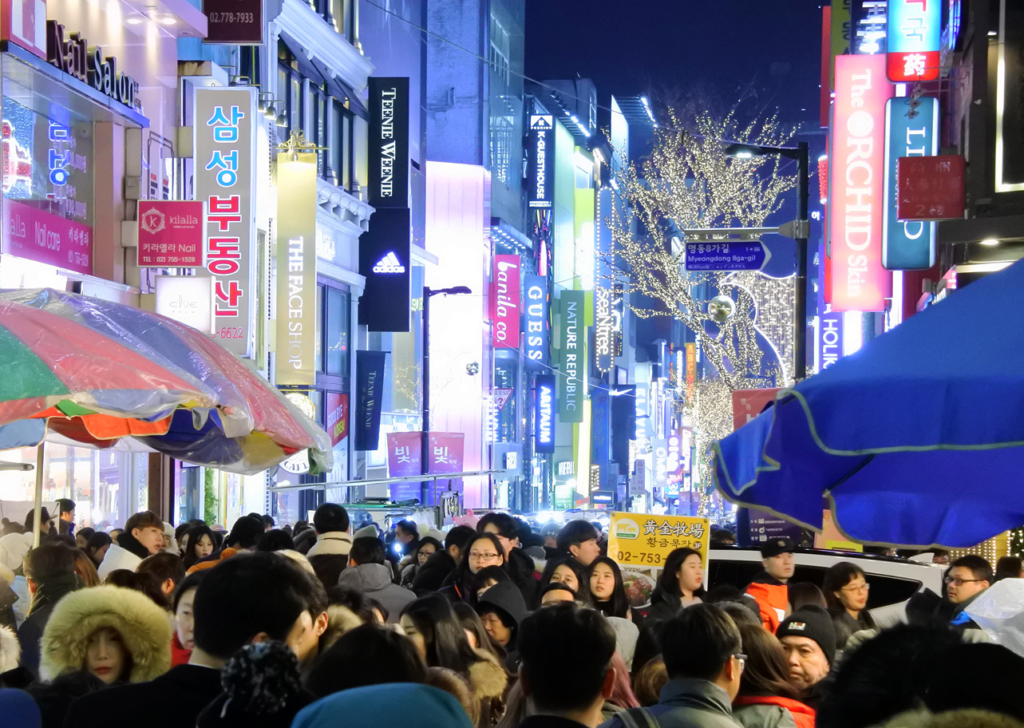
  • Korean Winter Street Food: Ten Things To Eat When It Gets Cold

    Korean Winter Street Food: Ten Things To Eat When It Gets Cold

    TL;DR

    Korean winter street food means hot, cheap snacks sold from carts once the cold arrives: fish shaped bungeoppang, syrupy hotteok, fish cake skewers in broth, spicy tteokbokki, egg bread, roasted sweet potatoes and chestnuts. Budget about 1,000 to 5,000 won per snack. Myeongdong, Gwangjang Market and Namdaemun are the easiest places to find them on a first trip.

    Last checked: 5 Oct 2026 What is a Beep Check?

    Sunbae Says: Download 가슴속3천원 before you land. Koreans use it to find the nearest bungeoppang cart, and it only shows stalls someone has visited in the past month.

    Picture it: you come up out of the subway on a November night, your breath is showing, and a cart on the corner is steaming. Here is what to order, what it should cost you, and how not to overpay.

    What Changed: The 1,000 Won Fish

    If you read an older guide, you will see “three bungeoppang for 2,000 won”. In most of Seoul that era is over. In October 2025, a Chosun report carried on Daum (in Korean) found more carts charging 1,000 or even 1,500 won for a single fish, with domestic red bean wholesale prices up 58.3 percent in a year. By December, Korea JoongAng Daily was calling it “bung-flation”: 40 kg of domestic red beans cost 721,800 won wholesale, up 33.8 percent on the year before.

    The fallout is useful for you. Convenience stores moved in, and this year they moved early: GS25 started its winter hot food on 1 October 2026, about two weeks earlier than last year (in Korean), with a 1,000 won fish cake and two for one style deals on bungeoppang. The cart version is still better, and after more than 20 winters here I will die on that hill.

    For perspective, Louis Vuitton sold a leather bungeoppang bag charm last winter for 1.41 million won. The 1,000 won one tastes better.

    시장 2
    시장 2, 2015. Photo: Chae Ji-young, CC BY 4.0, via Wikimedia Commons.

    The Ten Snacks, Ranked By How Fast They Warm You Up

    1. Bungeoppang (붕어빵)

    A crisp fish shaped waffle filled with sweet red bean, sometimes custard (슈크림, shu cream). Budget 1,000 won each at a typical Seoul cart; three for 2,000 won now counts as a bargain worth queueing for. Eat it head first so the filling does not escape out the tail.

    2. Hotteok (호떡)

    A pan fried pancake stuffed with brown sugar, cinnamon and seeds. The filling is molten, so bite a small hole and let it breathe. Neighbourhood stalls still sell them from about 1,000 won. The famous Namdaemun yachae hotteok (vegetable hotteok with glass noodles and chives) was 2,500 won in Korean visitor posts from September 2026, at stalls a minute from Hoehyeon Station (Line 4, sky blue) Exit 5.

    3. Eomuk (어묵)

    Fish cake threaded on a skewer and simmered in broth, about 1,000 to 1,500 won a skewer. At most carts you pick straight from the pot and settle up when you finish, so keep count. Sip the broth from a paper cup while you stand there; it is the best hand warmer in Seoul.

    4. Tteokbokki (떡볶이)

    Chewy rice cakes in red chilli sauce. A cart portion runs about 4,000 to 5,000 won. For a sit down version, Sindang-dong Tteokbokki Town near Sindang Station (Line 2, green; Line 6, brown) is the classic; Visit Seoul lists Exit 8.

    5. Gyeranppang (계란빵)

    A small oblong loaf of sweet bread baked with a whole egg on top. Breakfast in one hand, which makes it perfect before a palace morning.

    6. Gun Goguma (군고구마)

    Roasted sweet potato, often from a drum oven on wheels. Sweet enough for dessert, filling enough for lunch. The convenience store version works when no cart is around.

    7. Gunbam (군밤)

    Roasted chestnuts in paper bags. Pure winter nostalgia for Koreans.

    8. Deli Manjoo (델리만쥬)

    Corn shaped mini cakes filled with custard, a Myeongdong Station favourite. The Korea Times’ winter street food guide put a bag at 3,000 to 10,000 won depending on size.

    9. Sundae (순대)

    Korean blood sausage with glass noodles, dipped in salt. A plate runs about 5,000 to 7,000 won around Jongno. Try it once, even if you are sure you will hate it.

    10. Twigim (튀김)

    Fried vegetables, squid, dumplings and seaweed rolls, usually about 1,000 won a piece. Ask for them dunked in tteokbokki sauce.

    Where To Find Them

    Spot Best For Typical Cost When My Take
    Myeongdong street stalls Seeing everything in one street Tourist pricing, 5,000 won plus for the showy items From mid afternoon to about 10 or 11pm Go once, for the spectacle
    Gwangjang Market food street Sitting down to the real thing Fair, with posted prices 9am to 11pm daily My pick for your best evening
    Namdaemun Market Yachae hotteok and a market morning 2,500 won hotteok Weekday mornings; most of the market closes Sundays Go before the lunch queue
    Neighbourhood carts near any station The cheapest fish and hotteok 1,000 won a piece Evenings and commute hours Find them on 가슴속3천원

    Myeongdong: the stalls line Myeongdong-gil from Myeongdong Station (Line 4, sky blue) Exits 6 and 8, or Euljiro 1-ga Station (Line 2, green) Exits 5 and 6. Korean posts from 2026 say stalls open from about 4 to 5pm on weekdays and 2 to 3pm at weekends, closing around 10 to 11pm, and many now take cards.

    Gwangjang Market: about five minutes on foot from Jongno 5-ga Station (Line 1, dark blue) or Euljiro 4-ga Station (Line 2, green; Line 5, purple); use Jongno 5-ga Exit 8 or Euljiro 4-ga Exit 4. VisitKorea lists the food street as open 9am to 11pm, even on Sundays when the rest of the market closes.

    Namdaemun Market: come up at Hoehyeon Station (Line 4, sky blue) Exit 5 and the hotteok queues start almost at the top of the stairs.

    Hongdae: for an evening snack, the pedestrian street is a short walk from Hongik University Station (Line 2, green); Exit 9 is the usual one, but check Naver Map.

    Heads Up: In markets popular with tourists, the trick is usually a small portion, not a big price. Check the posted price and the portion on the display before you sit, and if no price is shown anywhere, walk on.

    What Locals Know

    The app is crowdsourced, and that is the point. 가슴속3천원 (roughly “3,000 won in my heart”, the cash Koreans used to keep in a pocket for winter snacks) is a map users fill in themselves. Yonhap reported (in Korean) that it passed 100,000 downloads and hides stalls nobody has visited in a month. Our travel apps guide covers it alongside Naver Map.

    Gwangjang has been in the news, and it is cleaning up. A 2023 video of a thin 15,000 won plate of jeon got one stall a 10 day suspension from the market’s own merchants’ association, and CBS Nocut News’ timeline (in Korean) shows hygiene and pricing rows came back in 2026, with the district promising warnings and then suspensions for offenders. Every stall is supposed to post fixed prices. My read: the food is still the best value in central Seoul, but you check the board like a local.

    Time it like Koreans do. Korean visitors say weekday afternoons from 2 to 5pm are the calmest at Gwangjang and weekend lunch from 11am to 3pm the worst. Neighbourhood carts are busiest at the evening commute, which is also when the batter is freshest.

    Fish cake follows the thermometer. GS25 found its hot fish cake sells 74 percent more on days averaging below 15°C. Translation: the first week the temperature drops is when every cart in the city switches on.

    Pick Your Version

    If It’s Your First Time

    Do Myeongdong on your first night so you see it all in one street, then do Gwangjang the next evening for the real thing. I’d order eomuk first, every time, because the broth warms you enough to be brave with the sundae. Still sorting cards and passes? My Start Here hub covers it.

    If You’re Bringing Kids

    Bungeoppang, hotteok and gyeranppang are the safe bets for small eaters, but let hotteok cool for a minute: the sugar inside is hotter than the dough suggests. I’d do Namdaemun in the morning, when crowds are thinner and little legs are fresh. My guide to Seoul with kids in winter builds the rest of the day around warm indoor stops.

    If You’re Travelling Solo

    Street food is the easiest meal in Seoul to eat alone, because nobody sits down anyway. I’d go to Gwangjang on a weekday night, take a counter seat and point. My solo travel guide to Seoul has more on eating alone without any awkwardness.

    Sunbae’s Picks

    My pick for a first bite: a single fish cake skewer and a cup of broth from any cart with a steaming pot and a queue of office workers. That queue is your quality check.

    If I only had one evening, I’d skip Myeongdong and spend it at Gwangjang Market, walking the full food street once before ordering anything.

    I’d skip the giant “Instagram” skewers on the busiest Myeongdong corners and spend the same money on three proper snacks.

    My cold night move: eat after dark in December, then walk it off at the lights in my Seoul Christmas market guide.

    Offers Worth Knowing

    GS25’s October 2026 line up includes a 1,000 won fish cake and a 2+1 deal on a double fish cake, plus bungeoppang and roasted sweet potato promotions, according to the same Electronic Times report. Promotions change monthly, so look at the shelf talker by the hot case.

    For getting between markets, the Seoul government confirms the 1, 2, 3, 5 and 7 day tourist passes continue (in Korean) now that the 30 day version has ended. My guide to which transit card tourists need compares them.

    What’s Changing In 2026

    Red bean prices have not come back down. Korean reporting in December 2025 put a 500 g bag of red beans at more than 14,000 won, about 44 percent above a year earlier, and found carts in Gangnam and Myeongdong charging 1,500 won a fish. My read: treat 1,000 won a fish as the floor, and do not argue with a vendor charging it.

    Convenience stores are now a real rival. GS25 brought its winter range forward by two weeks this year and partnered with a 60 year old Busan fish cake maker. That means a hot snack at 2am when the carts have gone home.

    You are part of a spending boom. Foreign card spending in Korea passed 10 trillion won in the first half of 2026, up 50.8 percent, according to Korea JoongAng Daily. The government has said it plans to extend one strike penalties for overcharging to restaurants after lodging. That is a plan, not yet a rule for carts, so your best protection is still a visible price board.

    Worth It Or Skip It

    Worth It: Gwangjang Market on a weekday night. Eomuk, sundae and tteokbokki a few steps apart, and you eat sitting at the stall counters instead of juggling cups on a pavement.

    Skip It: Paying tourist premiums in the busiest spots. In 2025 a Busan tourist area stall charging 3,000 won for one eomuk skewer made national news. If a board shows no price, walk on.

    How To Order Like A Local

    Point, hold up fingers, and say “hana juseyo” (one, please). Carry small notes and coins: more carts take cards and transfers than before, but not all, and the app lists each stall’s payment options. Eat standing at the cart and hand the broth cup back when you are done. Our unwritten rules guide covers the rest of the queue and payment etiquette.

    Heads Up: Bungeoppang and hotteok carts are seasonal and weather dependent. A rainy night or a warm spell can mean the corner cart simply does not open, so check the app before you trek across town for one.

    Dress for it, too. Street food is an outdoor sport in December, so read what to wear in Korea from October to December. For the wider picture, see Korea in November and Korea in December, and check what’s on in Seoul for the night markets and festivals where carts gather.

    Word Of The Stop

    포장 (pojang), “takeaway”. Say “pojangiyo” and the vendor bags your hotteok instead of handing it over bare. It is also the first half of pojangmacha, the orange tent bars you will see on winter nights.


    Map And Directions

    1. 1
      Gwangjang Market food street 광장시장 먹자골목
      1Jongno 5-ga StationEXIT8

      Food street 9am to 11pm daily, even Sundays; calmest weekdays 2 to 5pm; check posted prices; also 5 min from Euljiro 4-ga (Lines 2 and 5)

    2. 2
      Myeongdong street stalls 명동 길거리 음식Area pin
      4Myeongdong StationEXIT6 / 8

      Stalls open about 4 to 5pm weekdays, 2 to 3pm weekends, close 10 to 11pm; tourist pricing; many take cards

    3. 3
      Namdaemun Market yachae hotteok 남대문시장 야채호떡Area pin
      4Hoehyeon StationEXIT5

      Vegetable hotteok about 2,500 won; go on a weekday morning; most of the market closes Sundays

    4. 4
      Sindang-dong Tteokbokki Town 신당동 떡볶이타운
      2Sindang StationEXIT8

      Classic sit down tteokbokki alley since the 1970s

    5. 5
      Hongdae pedestrian street 홍대 걷고싶은거리Area pin
      2Hongik University StationEXIT9 (check Naver Map)

      Evening snack stop

    Last Mile

    • Hoehyeon Station EXIT5 → Namdaemun yachae hotteok stalls about 1 to 5 min
    • Myeongdong Station → Euljiro 4-ga Station about 10 min
    • Euljiro 4-ga Station → Gwangjang Market about 5 min
    • Myeongdong Station EXIT6 → Myeongdong street stalls 1 min
    Get the map appsNNaver Map App Store Google PlayKKakaoMap App Store Google PlayBoth work in English. With the app installed, the Naver Map and KakaoMap buttons open directions straight to the pin.

    Tap a button to open directions on your phone. In Korea, Naver Map and KakaoMap give full walking directions; Google Maps covers subway and bus but, as of September 2026, still has no turn by turn walking or driving here. Pins marked “Area pin” show a neighbourhood, not a door.

    Frequently Asked Questions

    How Much Does Street Food Cost In Seoul In 2026?

    Most winter snacks cost 1,000 to 5,000 won each. Bungeoppang is usually 1,000 won (up to 1,500 won at some carts), eomuk 1,000 to 1,500 won a skewer, hotteok 1,000 to 2,500 won and a cart portion of tteokbokki 4,000 to 5,000 won.

    When Does Winter Street Food Season Start In Korea?

    Carts selling bungeoppang, roasted sweet potatoes and chestnuts appear as the weather turns cold, typically from October and November, and disappear in spring. Convenience stores started their 2026 winter range on 1 October.

    How Do I Find A Bungeoppang Cart Near Me?

    Use the 가슴속3천원 app, a crowdsourced map of street food stalls with locations, hours, payment methods and user reviews.

    Is Gwangjang Market Open On Sundays?

    The food street opens daily, including Sundays, from 9am to 11pm. Most of the market’s general shops close on Sundays.

    Is Korean Street Food Vegetarian Friendly?

    Partly. Hotteok, bungeoppang, gyeranppang, roasted sweet potatoes and chestnuts are usually meat free, but eomuk and its broth are fish, and tteokbokki sauce can be made with anchovy stock. Ask before you order.

    Next Stop

    Resources

    • 가슴속3천원 app (iOS and Android, Korean): live map of bungeoppang, hotteok and fish cake carts.
    • VisitKorea: Gwangjang Market: hours, gates and market phone numbers.
    • 1330 Korea Travel Hotline: dial 1330 (or +82-2-1330 from abroad) for English help, including price complaints, 24 hours.
    • Naver Map or KakaoMap: search 광장시장, 남대문시장 or 명동 for live exits and walking routes.
    • Seoul tourist transit pass FAQ (Korean): which short passes still work.

    How I Checked This

    On 5 October 2026 I re-checked bungeoppang and red bean prices against Korean news from late 2025 and Korea JoongAng Daily, GS25’s 2026 winter launch against Electronic Times, Gwangjang Market hours against VisitKorea and its pricing record against CBS Nocut News, and the stall finder app against Yonhap, then read 2026 Korean visitor blogs for Myeongdong hours, Namdaemun hotteok prices and exits. Cart prices for this winter will only be clear once the carts return, so treat figures as last season’s going rate. Some exits come from visitor posts; confirm them on Naver Map.

    Sources


    Written by your sunbae. Over 20 years in Korea. We learned the lessons the hard way, so you don’t have to, and we’re here to guide you and help you enjoy Korea. Every fact here is checked against official sources and, wherever possible, on the ground.

    Beep Check: verified 5 Oct 2026. Rules, prices and dates change; confirm with the official source before you travel.