TL;DR
Seongsu cafe street (성수동 카페거리) is the cluster of cafes in Seongsu-dong, Seongdong-gu, built inside old factories, rice mills, warehouses and workshops. You come for coffee and pastry in raw brick and concrete rooms, a walk past working shoe workshops, and a pop up or two. Start at Seongsu Station on Line 2 (green), or Ttukseom Station one stop west.
Last checked: 14 Oct 2026 What is a Beep Check?
Sunbae Says: Order at the counter, then go upstairs or out back. In Seongsu the best seat is almost never the first room you walk into.
Picture it: a Tuesday morning, a red brick block, a forklift backing out of a print shop next door, and through the glass a barista dialling in an espresso machine under a 1970s steel truss. That’s the whole point of Seongsu. By Saturday afternoon the same corner will have a queue of 80 people for a sneaker launch, so plan which version you want.
How It Started
Seongsu was built to make things. From the late 1960s it filled with small factories for shoes, auto parts, printing and leather, and by the 2010s it was still a semi industrial district of low brick buildings, warehouses and workshops. My Seongsu shoe street guide tells that half of the story.
The cafes came because the buildings were cheap, big and empty. As manufacturing slowed, the factories and warehouses stayed standing, and instead of tearing them down, new tenants kept the shells and changed what happened inside. Seoul’s own mediahub feature on Seongsu (in Korean) puts it plainly: businesses renovated existing buildings rather than demolishing them, turning large factory and warehouse sites into mixed spaces with cafes, galleries, select shops and pop ups. The press started calling it “Seoul’s Brooklyn”.
The landmark cafes. Daelim Changgo (대림창고) is the one everyone names first: a red brick building put up in the 1970s as a rice mill, used as a warehouse from the 1990s, and now a cafe, dining room and gallery. Cafe Onion (카페 어니언) took another 1970s building that had been used for several purposes and turned it into a bakery cafe, and Grandpa Factory (할아버지공장) did the same with a former factory with a big warehouse frame, per the same mediahub report.
The global stamp. In November 2018 Blue Bottle announced it would open its first Korean cafe in Seongsu, picking it over earlier rumoured sites in Samcheong-dong and Gangnam, Korea JoongAng Daily reported. It opened on 3 May 2019 in a red brick building facing Ttukseom Station Exit 1, and people queued from 5am for an 8am opening; by 11am the line passed 400 m, Etoday reported (in Korean). After that day, Seongsu was a national coffee destination.
What changed. Success pushed rents up. Seongdong-gu was one of the first districts in Korea to fight back: it limited franchise openings in part of Seongsu 1-ga 2-dong, mediated between landlords and tenants, and from May 2017 gave extra floor area to landlords who kept rent rises at or below inflation, according to Kyunghyang Shinmun (in Korean). It helped a little inside that zone. Outside it, around Yeonmujang-gil, average rent per pyeong rose about 33 percent between the third quarters of 2022 and 2023, and pop up stores, which pay by the week and fall outside lease protection law, pushed long term rents up with them. A broker quoted about 5 million won a week for 10 pyeong.
Status, October 2026. Seongsu drew about 29 million visitors in 2024, over 3 million of them foreign, and foreign visitors were estimated at over 5 million in 2025, per Seongdong-gu figures in Segye Ilbo (in Korean). The factory cafes are still here, but they now share the blocks with brand flagships and a rotating cast of pop ups. My Seongsu pop up guide covers that scene.
Where To Go On The Street
Daelim Changgo (대림창고). At 78 Seongsu-iro, about five minutes south of Seongsu Station. The 1970s rice mill turned warehouse turned gallery cafe; huge room, art on the walls, events some evenings. Go for the space as much as the coffee. Check Naver Map for current hours.
Cafe Onion Seongsu (카페 어니언 성수). At 8 Achasan-ro 9-gil, a few minutes east of Seongsu Station. The 1970s building has been left rough on purpose: exposed brick, broken plaster, concrete benches. The pandoro, a sugar dusted Italian style bread, is what everyone orders. Its menu on Polle listed an Americano at 5,500 won and pandoro at 6,000 won, though the page is undated, so treat those as a guide.
Blue Bottle Seongsu (블루보틀 성수). At 7 Achasan-ro, right by Ttukseom Station Exit 1. Korea’s first Blue Bottle, with the roastery visible through floor to ceiling glass. It opened with a training lab and Seoul only menu items. The queues are long gone on weekdays.
Grandpa Factory (할아버지공장). A former factory with a big warehouse structure, now a cafe, brunch spot, gallery and party space, per the mediahub. Good for groups who want room to spread out. Confirm opening hours on Naver Map before you walk over.
Food stop: Seongsu galbi alley. Outdoor pork ribs since 1975 near Ttukseom Station Exit 8. My Seongsu galbi alley guide has the order.
A Cafe Walk: Two Hours, Three Stops
Start: Ttukseom Station Exit 1. Coffee at Blue Bottle, then walk east along Achasan-ro toward Seongsu Station, past the shoe workshops between the two stations.
Middle: Cafe Onion. Pastry here. Take it to the upstairs room or the courtyard.
End: Daelim Changgo. Walk south across the tracks for the warehouse, then let the evening decide: galbi to the west, pop ups on Yeonmujang-gil to the east.
Options With Opinions
| Option | Best For | Cost | Time | My Take |
|---|---|---|---|---|
| Weekday morning cafe walk | Space, light and quiet | About 5,000 to 7,000 won a drink | 2 hours | My pick. You see the buildings, not the backs of heads |
| Saturday afternoon | Energy, pop ups, people watching | Same, plus queue time | Half a day | Fine if you love crowds; book nothing tight after it |
| One big warehouse cafe only | Families with buggies, groups | One round | 1 hour | Daelim Changgo has the room |
| Seongsu Forest side (Atelier Street) | Calmer streets | Similar | 1 to 2 hours | The quieter half most visitors miss |
The mediahub notes Seongsu splits in two: the Seongsu-iro side, with Yeonmujang-gil, the cafe street and the shoe street, and the calmer Ttukseom and Seoul Forest side, where Atelier Street (Seoulsup 2-gil, near Seoul Forest Station Exit 4 on the Suin-Bundang Line, yellow) is lined with matching red brick buildings full of workshops, cafes and restaurants.
Heads Up: Seongsu Station handles about 100,000 people a day and the evening rush spills onto the crossings. Leave between 5:30 and 7pm on a weekday and you’ll be shuffling. Walk to Ttukseom instead.
What Locals Know
The red brick isn’t an accident. Seongdong-gu has paid building owners to keep the red brick look, a programme that grew out of a 2018 pilot. When you see a new building in old brick, that is policy, not nostalgia.
Rent decides the map. Seongdong-gu’s rent agreements covered only part of Seongsu at first, and Kyunghyang found rents rising fastest outside that zone, around Yeonmujang-gil, where pop ups pay by the week. If a cafe from an older guide has become a brand pop up, that’s why; check Naver Map before you walk over.
Weekday mornings belong to locals. Weekend crowds come for pop ups as much as coffee; Segye Ilbo counted 50 to over 100 pop ups a month in the district. If you want a seat, go on a weekday morning.
Bring a tumbler if you have one. Korean cafes cannot hand you a disposable plastic cup to drink in store, a rule the SBS Biz report from August 2026 (in Korean) says remains in force. Takeaway is different, and many cafes give a small discount for your own cup. My Seoul cafe culture guide explains the rules.
Pick Your Version
If It’s Your First Time
Do the three stop walk on a weekday, then the shoe street, and finish with galbi. You’ll see old industrial Seoul and new Seoul in one afternoon. My Start Here hub sorts cards and apps before you land.
If You’re Bringing Kids
Pick one big warehouse cafe, not a crawl. Daelim Changgo and Grandpa Factory have floor space; the narrow staircase cafes don’t. Pair it with Seoul Forest, a free park opened in 2005 right next door. My Seoul with kids guide has more indoor ideas for cold days.
If You’re Travelling Solo
Seongsu is easy alone. Counter seats, laptops everywhere on weekdays, nobody looks twice. I’d go at 10am with a book and stay for one more drink. My solo guide covers eating alone without fuss.
Sunbae’s Picks
My pick for the building: Daelim Changgo. It is the story of Seongsu in one room: rice mill, warehouse, gallery, cafe.
My pick for the pastry: the pandoro at Onion, eaten at a concrete bench while it’s still warm.
I’d skip queueing for any cafe on a Saturday afternoon. There are plenty of good rooms within five minutes; the queue is mostly for the photo.
Pair it with shopping: the K-beauty flagship crowd overlaps with the cafe crowd here, and my Olive Young guide covers the Seongsu store.
Offers Worth Knowing
Bring your own cup: the Korean government’s 2026 plans include a 300 won discount for tumbler users at cafes, per Bizworld’s January 2026 roundup (in Korean), and many chains already offer one. Walking the streets, Seoul Forest and the shoe theme station exhibits are free. For several rides a day, 1 to 7 day tourist transit passes continue.
What’s Changing In 2026
Paying for the cup, maybe later. The environment ministry floated a “cup separate charge” so a disposable cup would show up on your receipt, with 100 to 200 won mentioned, Herald Economy reported in December 2025 (in Korean). On 28 April 2026 it left the charge out of its final plan, choosing voluntary cuts and wider tumbler discounts instead, Aju Economy reported (in Korean). My read: carry a tumbler and you’ll never think about it.
More visitors, more brands. With foreign visitors topping 5 million in 2025, more global brands want a Seongsu address. Expect the cafe mix to keep shifting toward flagships on the main streets and independents on the side streets.
Worth It Or Skip It
Worth It: a weekday cafe walk with the shoe workshops in between. Nowhere else in Seoul shows you the factory to cafe story this clearly.
Skip It: a weekend afternoon with a list of five “must” cafes. You’ll spend most of it in queues.
Walk It Before You Go
Watch this street level walk before you ride out, so the exits and corners look familiar when you get there. The video is by Seoul Walk 4K on YouTube, not by me, and shops may have changed since it was filmed.
Getting There
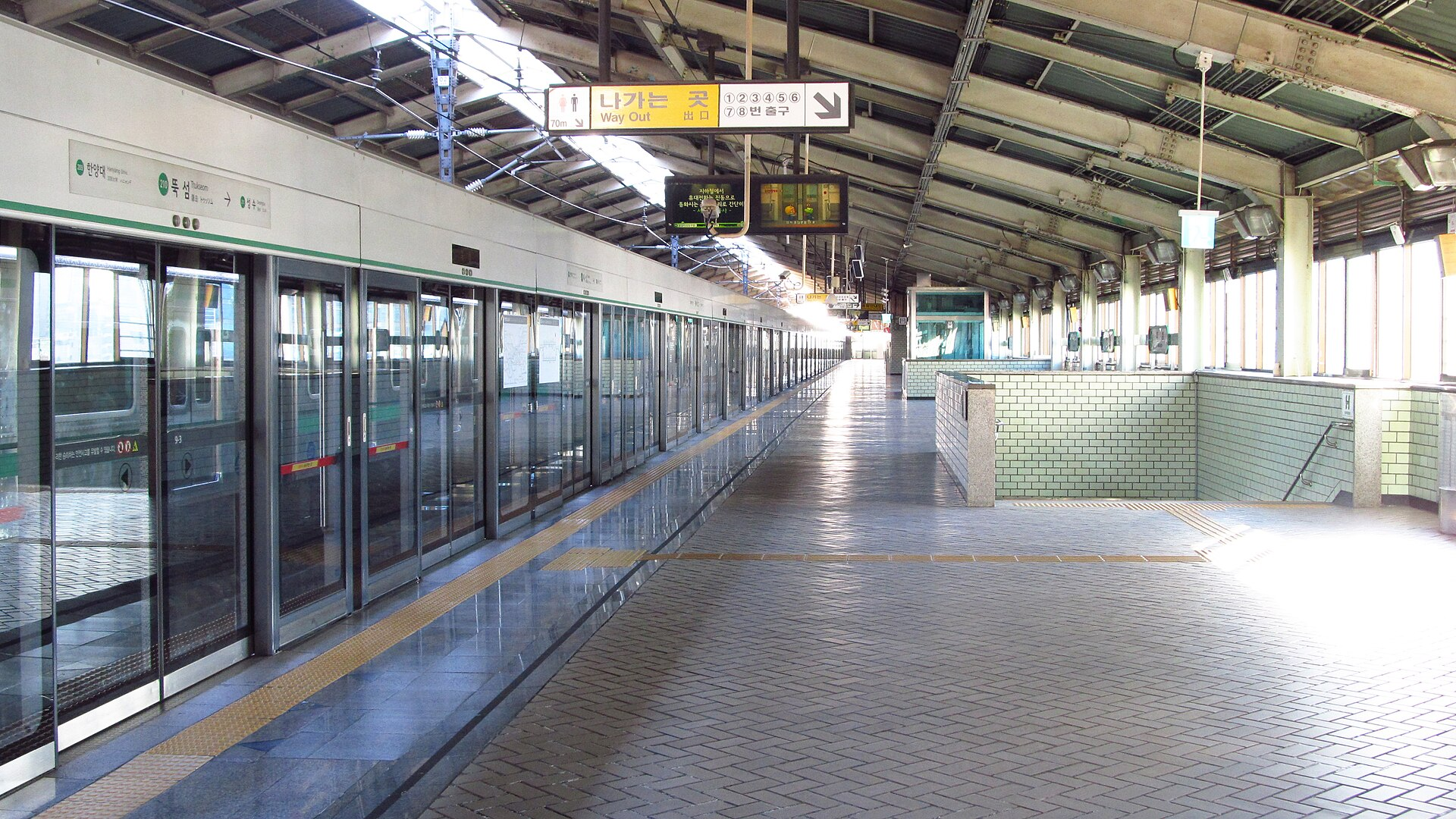
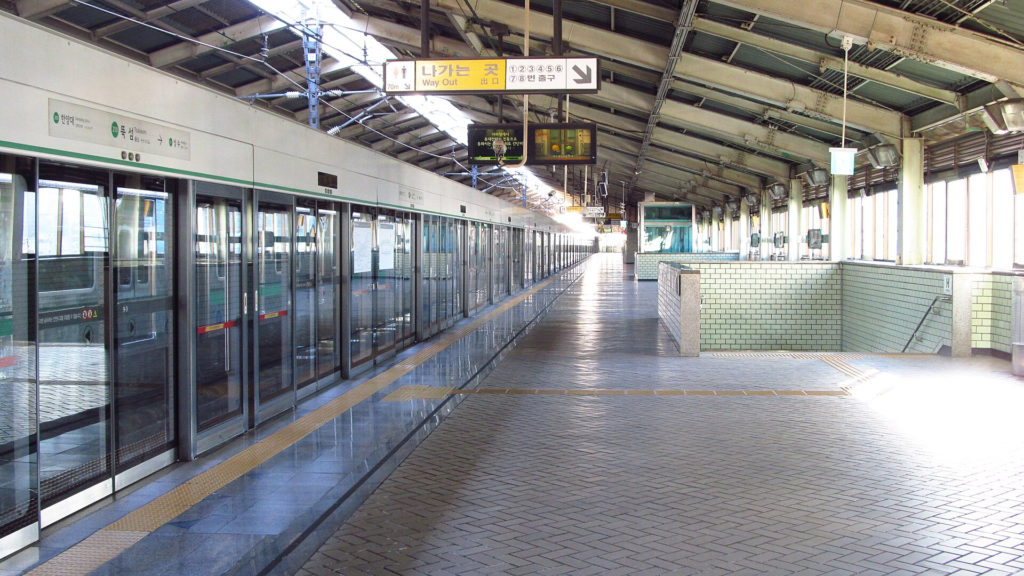
Seongsu Station and Ttukseom Station are both on Line 2 (green). Use Ttukseom Exit 1 for Blue Bottle; Daelim Changgo and Onion are a short walk from Seongsu Station, so check Naver Map for the nearest exit.
From Myeong-dong: walk 5 minutes to Euljiro 1-ga Station, then Line 2 (green) toward Wangsimni, nine stops to Seongsu, about 25 minutes. 1,550 won by card.
From Hongdae: Line 2 (green) from Hongik University Station via City Hall, no transfer, about 40 minutes. 1,550 won plus a small distance surcharge.
From Gangnam: Line 2 (green) toward Jamsil, 11 stops to Seongsu, no transfer, about 25 minutes. 1,550 won.
My subway map shows the loop, and my travel apps guide sets up Naver Map. Cards work almost everywhere here.
Word Of The Stop
텀블러에 주세요 (teombeulleoe juseyo), “in my tumbler, please”. Hand over your cup with the order. If you’re staying, say 먹고 갈게요 (meokgo galgeyo), “I’ll have it here”, and they’ll serve it in a mug or glass.
Map And Directions
- 1Blue Bottle Seongsu 블루보틀 성수Area pin2Ttukseom StationEXIT1
Korea's first Blue Bottle, opened 3 May 2019 at 7 Achasan-ro; roastery behind glass
- 2Cafe Onion Seongsu 카페 어니언 성수2Seongsu StationCheck Naver Map for the exit (a few minutes east)
1970s building left raw; pandoro is the order; 8 Achasan-ro 9-gil
- 3Daelim Changgo 대림창고2Seongsu StationCheck Naver Map for the exit (about 5 min south)
1970s rice mill, 1990s warehouse, now gallery cafe at 78 Seongsu-iro
- 4Grandpa Factory 할아버지공장Area pin2Seongsu StationCheck Naver Map for the exit
Former factory turned cafe, brunch and gallery space; check hours on Naver Map
- 5Seongsu-dong Galbi Alley 성수동 돼지갈비골목2Ttukseom StationEXIT8 (about 200 m)
Outdoor pork ribs since 1975; dinner after the cafe walk
- 6Seoul Forest 서울숲Area pinSeoul Forest StationCheck Naver Map for the exit
Free park opened in 2005; Atelier Street cafes sit on its edge near Exit 4
Last Mile
- Euljiro 1-ga Station → Seongsu Station about 25 min
- Hongik University Station → Seongsu Station about 40 min
- Gangnam Station → Seongsu Station about 25 min
- Ttukseom Station EXIT1 → Daelim Changgo about 2 hours with stops
- Daelim Changgo → Seongsu-dong Galbi Alley about 20 min
Tap a button to open directions on your phone. In Korea, Naver Map and KakaoMap give full walking directions; Google Maps covers subway and bus but, as of September 2026, still has no turn by turn walking or driving here. Pins marked “Area pin” show a neighbourhood, not a door.
Frequently Asked Questions
Where Is The Seongsu Cafe Street?
In Seongsu-dong, Seongdong-gu, between Seongsu and Ttukseom stations on Line 2 (green), with the busiest blocks around Yeonmujang-gil and Seongsu-iro, and a calmer stretch near Seoul Forest.
What Are The Most Famous Cafes In Seongsu?
Daelim Changgo (a 1970s rice mill and warehouse), Cafe Onion (a 1970s building), Grandpa Factory (a former factory) and Blue Bottle Seongsu, Korea’s first Blue Bottle, opened in May 2019.
How Much Is Coffee In Seongsu?
Expect roughly 5,000 to 7,000 won for an Americano or latte at a destination cafe in 2026, and more for signature drinks and pastries. Low cost chains nearby sell hot Americanos from about 1,500 to 1,700 won.
When Is The Best Time To Visit Seongsu Cafes?
Weekday mornings, roughly 10am to noon. Weekend afternoons are the busiest, with pop up queues on Yeonmujang-gil.
Can I Work On A Laptop In Seongsu Cafes?
Usually yes on weekdays, but buy a drink each and don’t spread out at a big table for hours. Some small cafes limit stays or cover their sockets.
Next Stop
- Seongsu Shoe Street: the workshops that were here before the cafes.
- Seongsu Pop Up Stores: how to find this week’s launches.
- Seoul Cafe Culture Guide: the rules, prices and cafe types behind every stop.
Check what’s on in Seoul before you pick your day; big launches can swamp the neighbourhood.
Resources
- Seoul mediahub: Seongsu feature (Korean): Daelim Changgo, Onion, Grandpa Factory and the two halves of Seongsu.
- Naver Map or KakaoMap: search 대림창고, 어니언 성수 or 블루보틀 성수 for live hours and exits.
- 1330 Korea Travel Hotline: call 1330 (+82-2-1330 from abroad) for help in English.
- Unwritten rules guide: queue and cafe etiquette.
How I Checked This
On 14 October 2026 I checked the cafes’ building histories against Seoul’s mediahub (March 2025), Blue Bottle’s arrival against Korea JoongAng Daily (2018) and Etoday (May 2019), rents and Seongdong-gu’s anti gentrification measures against Kyunghyang Shinmun (March 2024), visitor numbers against Segye Ilbo (March 2026), and cup rules against SBS Biz (August 2026), Herald Economy (December 2025) and Bizworld (January 2026). I could not confirm current opening hours for each cafe; check Naver Map on the day.
Sources
- Seoul mediahub: Seongsu, old buildings and new spaces, Mar 2025 (Korean)
- Korea JoongAng Daily: Blue Bottle Coffee to open first in Seongsu, Nov 2018
- Etoday: Blue Bottle Seongsu opening day queues, May 2019 (Korean)
- Kyunghyang Shinmun: pop ups, rents and Seongsu’s anti gentrification zone, Mar 2024 (Korean)
- Segye Ilbo: Seongsu visitors and pop up share, Mar 2026 (Korean)
- SBS Biz: in store disposable cup rules, Aug 2026 (Korean)
- Herald Economy: cup separate charge plan, Dec 2025 (Korean)
- Bizworld: what changes for cafes in 2026, Jan 2026 (Korean)
- Sidae: low cost coffee chain prices, Apr 2025 (Korean)
- Sports Kyunghyang: Seongsu Station crowding, Nov 2025 (Korean)
- Seoul Shinmun: red brick building support extended, Mar 2025 (Korean)
- Polle: Cafe Onion Seongsu address and menu (Korean)
Written by your sunbae. Over 20 years in Korea. We learned the lessons the hard way, so you don’t have to, and we’re here to guide you and help you enjoy Korea. Every fact here is checked against official sources and, wherever possible, on the ground.
Beep Check: verified 14 Oct 2026. Rules, prices and dates change; confirm with the official source before you travel.